
Street Photography in Cairo
Cairo is huge and ancient, with medieval bazaars and a golden brown haze over everything, and most people tolerate a camera, though police and the photo rules demand care.
- Spots
- 8
- Best time
- October to April
- Lens
- 28mm or 35mm
- Photographing people
- Strict: ask first
Cairo is one of the richest cities in the world for street photography, because a city of more than 20 million people lives its life on the street, inside a thousand years of architecture. f.d. walker, who shot 100 cities for his guides, calls its atmosphere one of his favorites anywhere. He points to the signature golden brown haze that settles over walls and skyline and turns into a warm backdrop just before sunset.
It is not an easy city. Touts work the bazaar and police are suspicious of cameras. The rules are also stricter than in Europe. Egypt allows personal photography in public places without a permit, but its 2022 rules say Egyptians should give permission and children should not be photographed. I'd plan for slow, friendly work in the late afternoons and evenings, with a small camera and a lot of asking.
Best street photography spots in Cairo
Khan el-Khalili
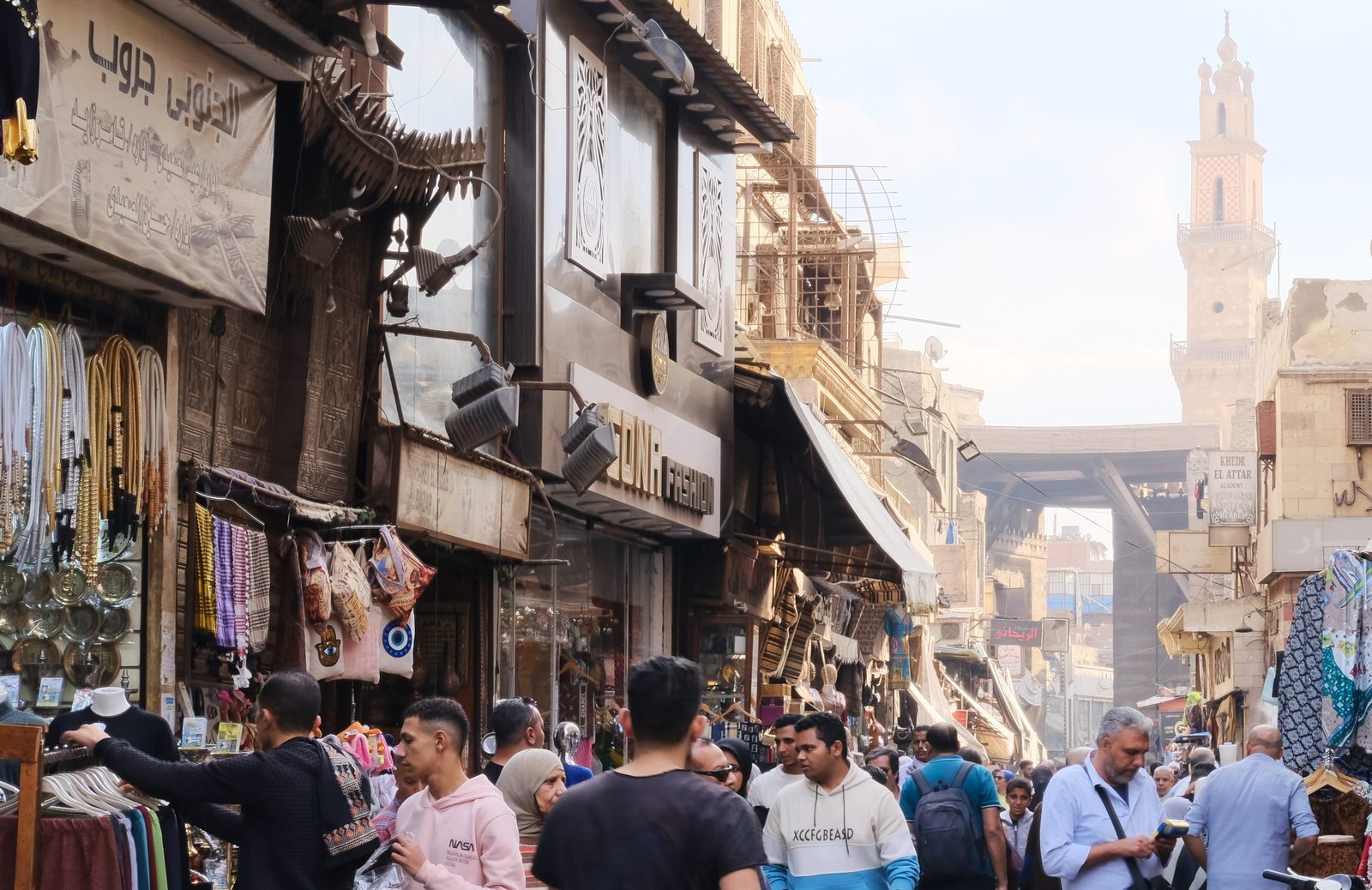
Khan el-Khalili is the great bazaar of Islamic Cairo, founded in the fourteenth century. The main lanes sell souvenirs to tourists, but locals still come for gold and copper, and the side lanes get more local the further you walk. f.d. walker liked the edges best. Late afternoon into the evening is the time, when lanterns switch on and the lanes glow orange. Frame a coppersmith at work in his doorway, lit by a bare bulb, and ask him first. Expect touts. If a stranger offers to show you a great photo spot, it will end with a request for money.
Al-Muizz Street
Al-Muizz is the main street of medieval Cairo, running north from the bazaar past Fatimid and Mamluk mosques and madrasas. The northern stretch is pedestrian and floodlit after sunset, when families stroll and the carved stone glows against a blue sky. That blue hour is the moment. Stand where the street narrows and use the lit facades as a stage for passing figures. A fast lens helps. Mosques are places of worship: dress modestly and do not photograph people praying.
Bab Zuweila & Darb al-Ahmar
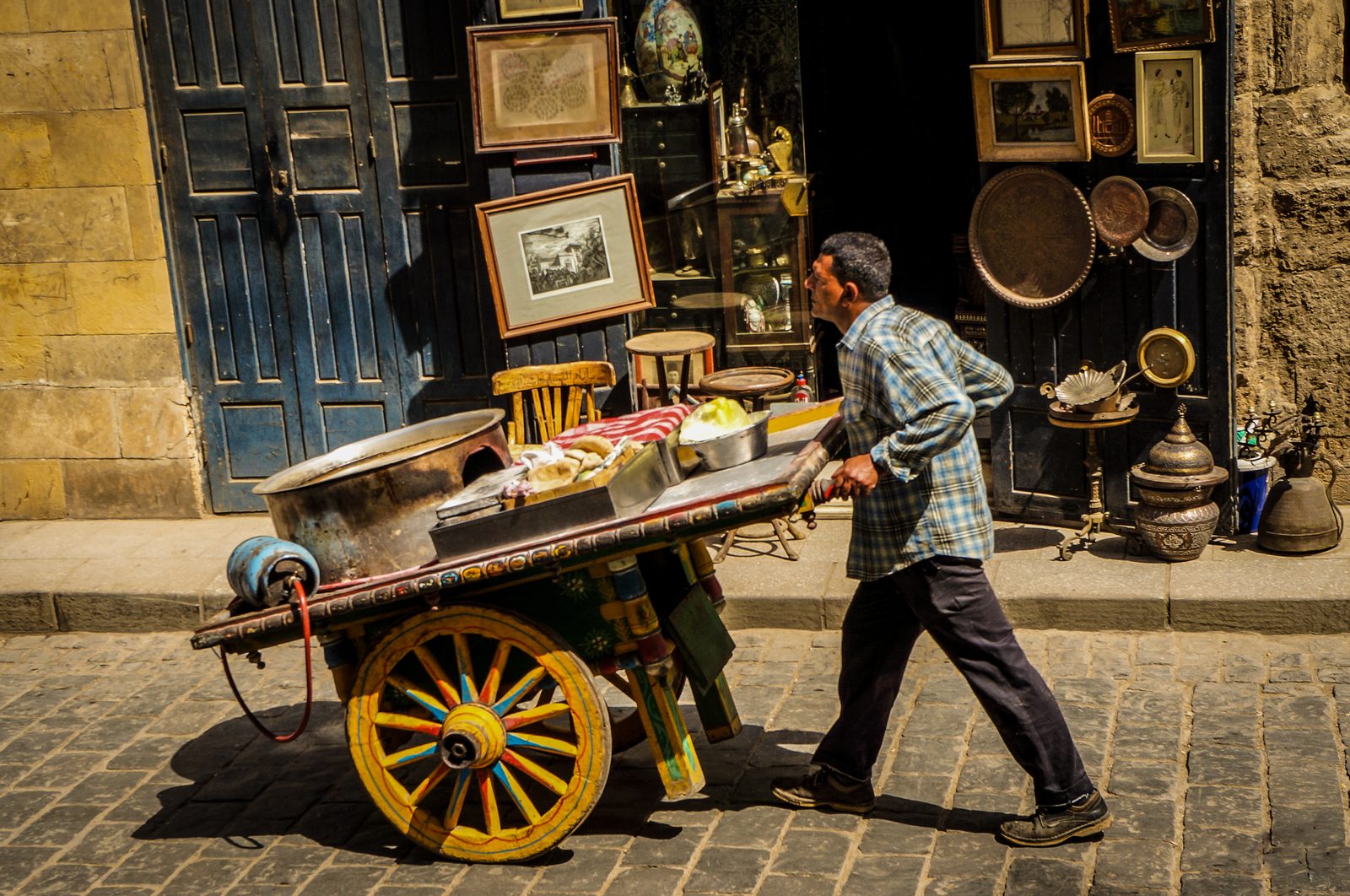
Bab Zuweila is one of the old gates of the Fatimid city, at the south end of the Al-Muizz route. Around and beyond it, Darb al-Ahmar is a working neighborhood, not a museum. Tentmakers and carpenters work in open shops, and far fewer tourists pass through. Morning is good, when bread is being delivered and shops open. I'd walk slowly and let the conversation come before the camera. Many craftsmen will agree to a portrait. This is a residential area, so keep the lens out of homes and away from children.
Al-Azhar Park
Al-Azhar Park is a large landscaped park built on a former rubbish mound, looking over the domes and minarets of Islamic Cairo. f.d. walker called it one of the most memorable parks he has photographed anywhere, and on weekends it fills with local families. Go in the late afternoon and stay for sunset, when couples line the walls and the city turns gold below. Silhouettes against the skyline are the easy picture. There is an entrance fee. Families here are relaxed but private, so ask before photographing anyone recognizable, and leave children out of the frame.
Downtown & Talaat Harb
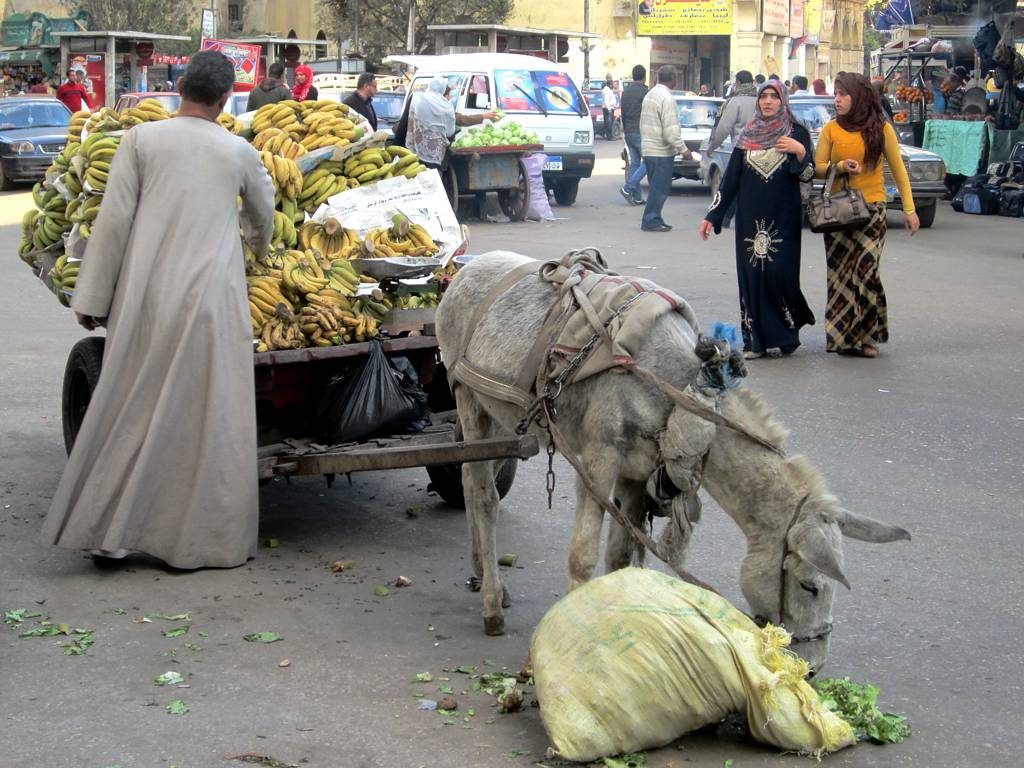
Downtown Cairo was built in the nineteenth century in a European style, with wide streets and grand facades that have faded into a look unique to the city. Today it is the commercial heart: crowded pavements and old cafes busy late into the night. f.d. walker stayed here and found it full of character. Evening is the best time, with shop lights on the crowds. Look for a figure framed by old balconies and signs. Stay well away from Tahrir Square security and any government building, and do not photograph police.
Qasr al-Nil Bridge & the Corniche
The Qasr al-Nil Bridge crosses from Tahrir to Gezira Island, guarded by stone lions at each end. At sunset it becomes a promenade: couples lean on the rails while feluccas move on the Nile below. The low sun from the west backlights people on the bridge, so shoot silhouettes against the water. The Corniche on either bank is quieter. Security posts are common along the river and near hotels and embassies, so keep your lens pointed at the river and the crowd, not at officials.
Coptic Cairo
Coptic Cairo is the oldest part of the city, home to the Hanging Church and some of the oldest churches in Egypt, plus a historic synagogue and mosque nearby. Tourists stay around the main sights. f.d. walker recommends walking into the surrounding streets, where narrow alleys hold vendors and daily life. Morning light in the lanes is good. Photography rules inside churches vary, so look for signs and ask. There is heavy security around the religious sites, which is another reason to keep people small in the frame near the entrances.
City of the Dead
The City of the Dead is a vast historic cemetery east of the old city where many families live and work among the tombs. The low buildings let in plenty of light, and f.d. walker found it quieter and less bleak than people imagine. It is still a poor residential area. Go in daylight, ideally with a local contact or guide, and treat it as someone's neighborhood. Photograph the architecture and the Mamluk domes freely. For people, ask first and accept a no. Do not photograph children.
Photographing people in Cairo
Strict: local law or custom protects people's image. Ask first, or keep faces out of frame.
In 2022 the Egyptian government approved rules that let tourists and residents take personal photos in public places for free, with no permit, as announced by the Ministry of Tourism and Antiquities. The same rules say Egyptian citizens may only be photographed with their permission, forbid photographing children, and ban images that could damage the country's image, a vague phrase PopPhoto flagged. Military and government sites are off limits. Professional lighting gear needs a permit. How strictly this is enforced on the street is unclear. This is general information, not legal advice.
In practice, f.d. walker found locals mostly fine with candid photos, with some refusals, and his only real problems came from police, who stopped him for carrying a camera. I'd ask before any close photo and use a few words of Arabic. See how to photograph strangers.
General information, not legal advice. More in is street photography legal?
What to photograph in Cairo
- Craftsmen. Coppersmiths and tentmakers working in open shops around the bazaar and Darb al-Ahmar.
- Bread on the move. Men carrying trays of flat bread on their heads through traffic.
- Cafe life. Men with shisha and tea in street cafes, often watching football.
- Golden haze. The brown and gold air before sunset, flattening the skyline into layers.
- Lantern light. Bazaar lanes lit orange at night.
- The Nile. Feluccas and couples on the bridges at sunset.
- Faded grandeur. Crumbling downtown facades above busy pavements.
A one-day photo walk
- 9:00, Bab Zuweila and Darb al-Ahmar. Start with shops opening and craftsmen at work. About 2 hours.
- 11:00, Al-Azhar Park. A 15 minute walk east. Shade and views. Lunch at the park.
- 15:30, Khan el-Khalili. Taxi or a 20 minute walk. Work the side lanes as the light drops.
- Sunset, Al-Muizz Street. Walk north from the bazaar, 5 minutes, and stay into the blue hour.
- 20:00, Downtown and Talaat Harb. Taxi or ride hailing, about 15 minutes. Evening crowds and cafes.
- Late, Qasr al-Nil Bridge. A 15 minute walk from Talaat Harb for night scenes on the Nile.
When to shoot
October to April. Summer is very hot. Late afternoon into the evening is the best time of day, when the light turns golden and the streets fill. Ramadan evenings are lively; the dates move each year.
The light
Hazy, golden brown light, especially just before sunset. Midday is harsh and flat. Bazaar lanes at night are lit by lanterns and shop bulbs.
What to bring
A small, discreet camera with a 28mm or 35mm lens. A fast lens for the bazaar at night. Leave tripods and big rigs at home.
Safety
Street crime is low, but touts and scams are common around Khan el-Khalili and downtown. Police may stop you for carrying a camera. Traffic is the real danger.
Tips for Cairo
- Season: October to April. Summer heat makes midday walking hard.
- Time of day: late afternoon to night. The haze turns gold before sunset and the streets fill after dark.
- Ramadan: evenings are lively with lanterns and crowds after sunset. The dates move each year. Be discreet with food and cameras during the day.
- Lens: a 28mm or 35mm on a small camera. A fast lens for lantern lit lanes. See best lens for street photography.
- Exposure: in the bazaar at night, raise ISO rather than using flash. More in street photography settings.
- Transport: use ride hailing apps to avoid haggling over taxi fares.
- Police: never photograph police, soldiers or checkpoints. If stopped, stay calm and show your photos if asked.
- Dress: cover shoulders and knees, especially in Islamic Cairo.
Frequently asked questions
Is street photography legal in Cairo?
STRICT. Egypt's 2022 rules allow personal photography in public places without a permit, but say Egyptian citizens need to give permission, and forbid photographing children and scenes that could damage the country's image. Never photograph police, military or government buildings. Professional lighting gear needs a permit.
Where are the best street photography spots in Cairo?
Start with Khan el-Khalili, Al-Muizz Street, Bab Zuweila & Darb al-Ahmar, Al-Azhar Park. Fourteenth century bazaar of lanes and coppersmiths. Late afternoon into the evening, when the lanterns come on.
When is the best time for street photography in Cairo?
October to April. Summer is very hot. Late afternoon into the evening is the best time of day, when the light turns golden and the streets fill. Ramadan evenings are lively; the dates move each year.
What lens should I bring to Cairo?
A small, discreet camera with a 28mm or 35mm lens. A fast lens for the bazaar at night. Leave tripods and big rigs at home.
Is Cairo safe for street photographers?
Street crime is low, but touts and scams are common around Khan el-Khalili and downtown. Police may stop you for carrying a camera. Traffic is the real danger.