
The biggest street photography clichés are the silhouette against a bright wall, people walking past billboards, umbrellas in the rain, homeless people and strangers staring at their phones. Each has a fresher alternative: show what the light reveals, wait for the billboard to say something, photograph what rain does to people, photograph people who can say no, and find the moment someone looks up.
A cliché is the same world seen the same way. One Reddit user described the front page of a street photography forum: "NYC blizzards. Moody alleys. The same shadowy figure against a wall." I'm Olivier Duong. I've shot most of these clichés myself, and a few of mine are on this page as proof.
What makes something a street photography cliché?
A cliché isn't a bad photo. Many clichés are well composed and nicely lit. That's why they spread. Something worked once and people copied it until it was everywhere.
When I edited a photography magazine, I looked at hundreds of submissions for each issue. Some patterns appeared so often I could call them clichés without a second thought. The problem was never the subject itself. It was that the subject was always presented the same way, with the same framing and the same edit.
Social media speeds it up. The feed rewards what already gets likes, so a trope gets copied thousands of times in a few months. On Reddit, one photographer came back from a workshop calling it a "Banger Factory": a teacher showing students exactly how to frame a trope he'd probably shot a thousand times.
Should you avoid clichés completely?
No. I think clichés are part of the learning process. You can't break the rules until you know them, and shooting a cliché teaches you light and timing. Besides, even a clichéd good picture is your good picture, and it feels great to make it.
The trick is to shoot them knowing they're clichés, then move past them. They're a stepping stone. The real crime is to stop there and become a cliché of yourself, making the same picture for years because it gets likes. That's complacency.
Think of the scene in Dead Poets Society where Robin Williams has his students stand on their desks to see the room differently. Most clichés are fixed by a change of perspective, not a change of subject.
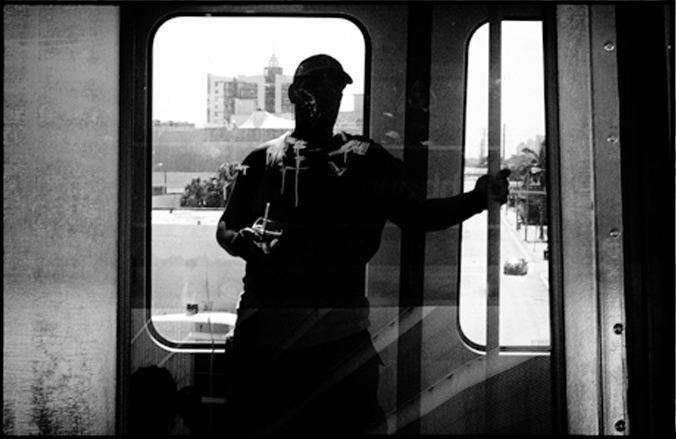
21 street photography clichés and what to shoot instead
1. The silhouette stepping into a shaft of light
High contrast, a black figure, a bright rectangle on a wall. One Redditor summed up the fatigue: "High contrast silhouettes stepping into light! I am sick of this fad." Instead: let the light reveal something, like a face or a gesture, instead of hiding everything. My guide to light and shadow has more ideas.
2. Someone walking past a billboard or mural
A person next to a giant face on a wall. It's easy and rarely says anything. Instead: wait until the person and the image actually relate, in pose or meaning. That's real juxtaposition, not just two things side by side.
3. The umbrella in the rain
A red or black umbrella crossing a wet street, often shot from above. Instead: photograph what rain does to people: running for cover, or sharing an umbrella with a stranger. See my rain photography guide.
4. Homeless people and people sleeping on the street
This is the cliché that hurts real people. It's easy because the subject can't object, and that's the problem. Instead: photograph people who are able to say no. If you're unsure where the line is, read is street photography creepy.
5. Everyone staring at their phones
A row of commuters lit by their screens, as a comment on modern life. It was fresh once. Instead: wait for the moment someone looks up or talks to the person next to them.
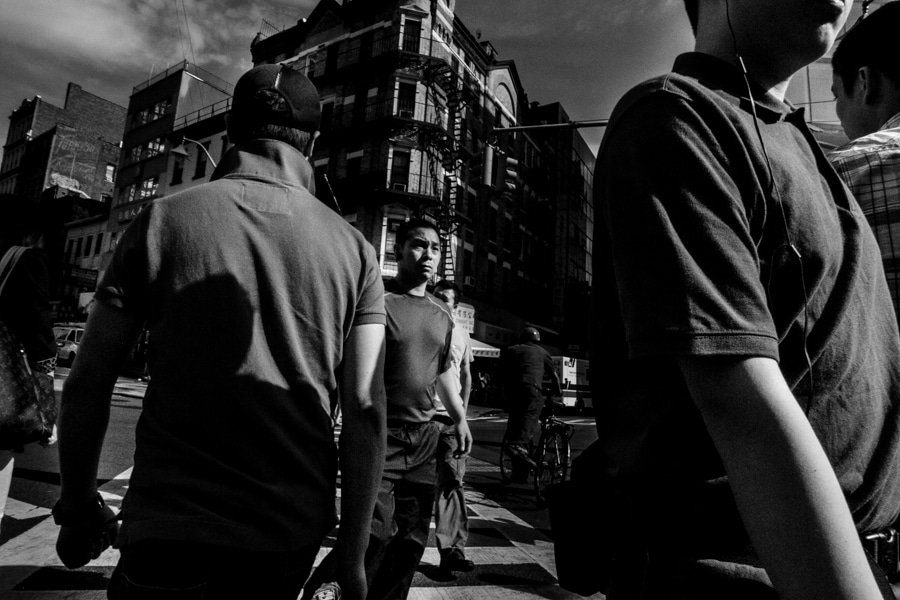
6. Backs of people walking away
Usually a sign of nerves, not a choice. A reply on a Reddit critique said it well: take fewer pictures of the backs of people. Instead: get in front of the action and let people walk toward you. If fear is the reason, start with how to overcome fear of street photography.
7. The upside down puddle reflection
A city flipped in a puddle, shot from the ground. Instead: use reflections to join two worlds into one picture, the way Lee Friedlander combined shop windows with the street.
8. A lone tiny figure in a huge empty frame
One commenter told a stuck photographer he'd done enough of the "lonely person in the distance in an otherwise minimalist shot". Instead: use negative space with a reason, or go close and fill the frame for a while.
9. Pigeons surrounding a person
A Reddit poster called "person surrounded by pigeons" the biggest cliché in the street photography book, then admitted a good shot is a good shot. Instead: if you shoot it, make the person the story, not the birds.
10. The man in a hat, from behind
Another favourite from a Reddit thread on clichés, often seen as a window reflection. Instead: find the face under the hat, or skip the hat and look for a gesture.
11. The restaurant worker on a cigarette break
Apron, back door, phone, smoke. It's everywhere because it's easy to find. Instead: spend time in one place and photograph the work itself, not only the break.
12. The old man on a bench
Wrinkles and a cane in black and white, meant to look deep. Instead: look for interaction or humour. Older people do more than sit.
13. Street musicians and performers
They're performing for everyone, so everyone gets the same picture. Instead: turn around and photograph the crowd reacting.
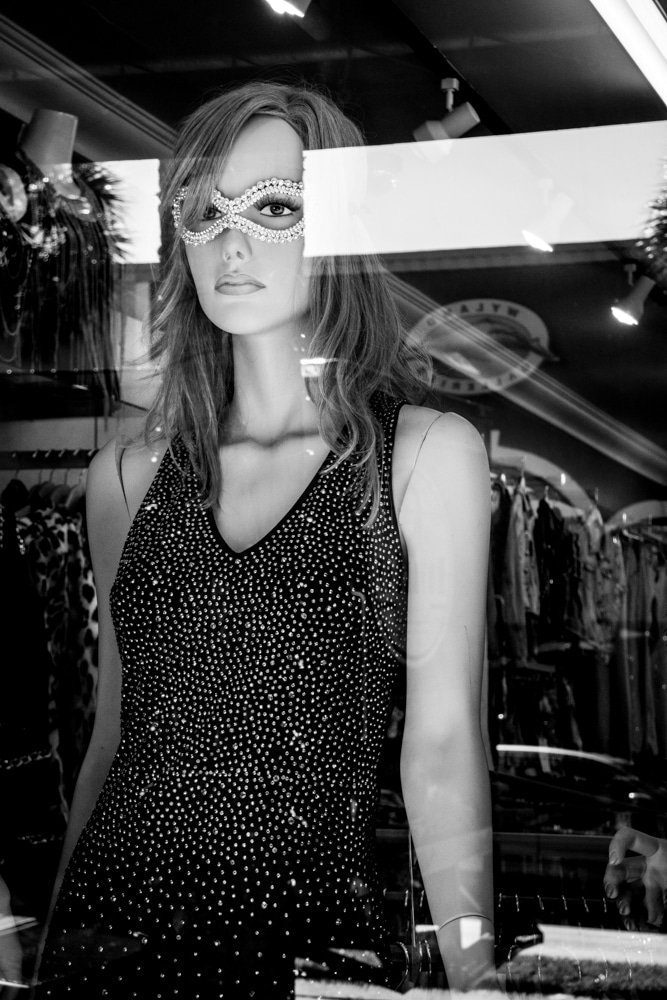
14. Mannequins in shop windows
Plastic people with creepy stares, sometimes with a reflection on top. Instead: wait for a real person to mirror the mannequin's pose, so the joke has a second half.
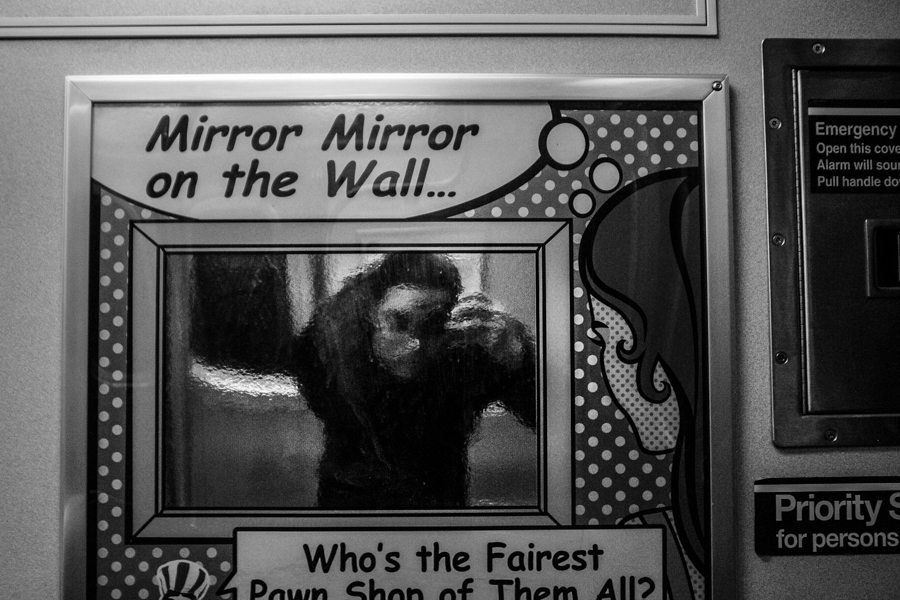
15. The ironic sign
A person under a sign that says something funny about them, or feet beneath a sign. Instead: make sure the person completes the joke. If the sign is funny without the person, you've photographed a sign.
16. Flash in a stranger's face
The close, harsh flash look Bruce Gilden made famous, copied badly by people who miss why he did it. Instead: if you use flash in street photography, use it to shape light, not to startle.
17. The reflection selfie
Vivian Maier made many self portraits in mirrors and shop windows. Now everyone does her shot. Instead: put yourself in the frame with a reason, like Friedlander's shadow falling across his subjects.
18. Gritty, crushed black and white on everything
Heavy grain and crushed blacks don't make a photo meaningful. Instead: choose monochrome when shape and tone matter more than colour. Read black and white photography or try colour photography for a month.
19. Tourists taking photos
People photographing people photographing a landmark. Instead: look for what the tourists don't see, like the workers and the locals.
20. The motion blur crowd with one sharp person
A slow shutter speed, one person still, everyone else streaks. Instead: use motion blur to show a specific feeling, like speed or chaos, not as a filter.
21. Moody alleys and snowstorms in the big city
Fog, snow, steam and neon in New York or Tokyo. Beautiful, and seen a million times. Instead: photograph your own town. Nobody else can take those pictures.
How to get past street photography clichés
You'll never escape every cliché, and you don't need to. What you want is to stop reaching for them by default. What works for me:
- Shoot the cliché, then keep going. Take the obvious frame, then stay and work the scene. The better picture often comes after the obvious one.
- Change your perspective. Get lower, or get closer. Same world, seen differently, is the opposite of a cliché.
- Draw from outside the feed. If your inspiration is the same Instagram accounts as everyone else, your pictures will match theirs. Look at painters and lesser known photographers.
- Ask what the picture is about. A silhouette is a look. A lonely man in a crowd is a subject. Clichés are usually looks without a subject.
- Shoot what you care about. Your family or your own street. Clichés come from shooting what you think street photography should look like.
That last point is the heart of style. If you want to go further, read how to find your photography style. If every picture looks the same because you've stopped growing, read how to keep improving after year one. And if clichés are the only ideas that come, try these ways out of a creative block.
Don't courses just teach clichés?
It's a fair worry, and Reddit has plenty of stories of workshops that do exactly that. A course that teaches you a look will give you that look, and so will everyone else who took it.
When Don Springer and I made Phototactic, our street photography course, we built it around principles instead of looks: picture patterns like the law of proximity and the law of similarity, plus intent and emotion. One lesson is how to find your own voice. The point is to understand why a picture works, so you can make your own instead of copying ours.
The course won't critique your photos and there's no community. It's $297 as one payment with a 60 day money back guarantee. If you're just starting, begin with street photography for beginners.
Frequently Asked Questions
What are the biggest street photography clichés?
The most common are silhouettes stepping into light, people walking past billboards, umbrellas in the rain, homeless people and commuters on their phones. Others include backs of people walking away, puddle reflections, mannequins, ironic signs and reflection selfies. None are banned, but they rarely stand out because so many people have shot them the same way.
Is it bad to shoot street photography clichés?
Not while you're learning. Clichés teach light and timing, and you can't break rules you don't know. The problem is stopping there. Shoot them knowing they're clichés, then look for a fresher angle or a stronger subject.
How do I make my street photography more original?
Draw inspiration from outside photography and from lesser known photographers, not the same popular feeds. Change your perspective physically by getting lower or closer. Shoot places and people you care about. Then ask what each picture is about, since clichés tend to be looks without a subject.
Why do all street photos on Instagram look the same?
Because the algorithm rewards what already gets likes, so photographers copy what works. Shared presets and shared influences make it worse. When everyone learns from the same few sources, they produce the same pictures. Looking further afield is the simplest way out.
Is photographing homeless people a cliché?
Yes, and it's also an ethical problem. It's common because the subject often can't object or walk away, which is exactly why many photographers avoid it. If you want to document hardship, do it as a long term project with consent and context, not as a single dramatic frame.