
Your photography style is what remains after you shoot what you care about for a long time. You find it by subtraction: cut away the pictures you took because they looked cool, and what repeats in the rest is you.
That's slower than buying a preset, and it's the only version that lasts. A photographer on Reddit summed up the alternative: "I look at the Top feed today and it is just a loop. NYC blizzards. Moody alleys. The same shadowy figure against a wall." I'm Olivier Duong. Years of editing other photographers' work for a magazine taught me that the ones with a real style rarely went looking for it.
What is a photography style?
A photography style is the recognisable way one photographer sees. It shows in what they choose to photograph and where they stand. It shows in how they use light and what they leave out of the frame. Editing is part of it, but only a small part.
These often get confused with style:
- A genre is the type of photography: street, portrait photography, landscape photography, wildlife, documentary, urban, wedding. Two street photographers can have completely different photographic styles.
- An editing look is a preset or a colour grade: dark and moody, light and airy, grainy black and white. Anyone can copy it in one click, which is why it isn't a style.
- A technique is a tool: flash, motion blur, silhouettes, the rule of thirds. Techniques serve a style. They aren't one.
- Gear and settings are the camera, the lens, the aperture, shutter speed and ISO. They shape how you work and help you get sharp, well-exposed photos, but a new camera never gave anyone a vision.
Look at Saul Leiter: soft colour and people half hidden behind glass and snow. Or Fan Ho: hard light and geometry in Hong Kong. You'd know either one from a single photograph. That recognition is what people mean by style.
Your choice of subject is most of your style
Ask what makes a good photograph and most answers are about technique: light, composition, a clear focal point, no distracting background. Those make good photographs. They don't make them yours. Plenty of technically perfect, well-composed pictures are forgettable.
What makes a picture yours is mostly your choice of subject and how you feel about it. Two people can stand on the same corner with the same camera. One sees the soft light on a wall. The other sees an old man's hands. Neither is wrong. The difference is what each one's eye goes to first, and that pull is the seed of a style.
Pay attention to it. Notice which scenes make you stop, if you prefer natural light or night, which times of day you love and which angle you keep choosing. The same goes for other genres: a landscape photographer and a travel photographer can both find their style this way. Your attention is information.
Why chasing a style makes you look like everyone else
You become what you focus on. If you study one popular photographer, you start shooting like them. If everyone studies the same few, everyone shoots the same pictures.
I saw this for years as a magazine editor. We asked every photographer who inspired them, and a small group of names covered most answers, with Henri Cartier-Bresson at the top. Same sources, same results. You can't draw water from the same well as everybody else and expect your water to taste different.
Social media makes it worse. The feed rewards what already works, so the same silhouette against a wall gets copied thousands of times. Reddit users call it the "Banger Factory". A trend isn't a style. It's someone else's style, worn out. My list of street photography clichés covers the worst offenders and what to shoot instead.
Find your style by subtraction, not addition
Most advice tells you to add things: a new preset, a new lens, a new technique. Style works the other way. You already have a way of seeing. It's buried under pictures you took because you thought photography was supposed to look like that.
That was my biggest mistake. I started out shooting flowers and buildings because they looked like the photos in magazines. My pictures were well composed and sterile. My classmates' photos were loose, but they had something mine didn't: heart. It took me years to understand that I was shooting what I believed photography was about, not what it meant to me.
Composition and technique can be learned from books. The heart is what decides what's worth photographing in the first place. When it's misplaced, the pictures feel empty, no matter how good the composition is. Your style lives mostly there.
The style audit: an exercise to find your photography style
Do this tonight. It takes about an hour.
- Collect 30 photos you love by other people. Paintings and film stills count too. Don't filter. Just pick what stops you.
- Collect your own 30 favourite photos. Not your most liked. The ones you'd keep if the rest disappeared.
- Write down what repeats. Light or shade? Close or far? Crowds or a single person? Humour or loneliness? Colour or monochrome?
- Cross out anything you shot because it looked impressive. Be honest. If the only reason was "it looked like a real street photo", it goes.
- Name what's left in two words. Mine lean toward light out of darkness and the surreal. Yours will be different.
- Shoot only that for a month. Then repeat the audit.
What you're looking for is the overlap between what moves you in other people's work and what already shows up in yours. That overlap is your starting point. It'll shift over the years, and that's fine.
Take inspiration from outside photography
There's a story about a juggler whose act looked different from everyone else's. Asked for his secret, he said the other jugglers got their inspiration from juggling. He got his from everything but juggling.
Photographers can do the same. W. Eugene Smith said his main influences were theatre and music, and his "Country Doctor" essay for Life looks staged like a play, even though every scene was real. Lee Friedlander photographed jazz musicians early on, and his frames improvise like jazz. Cirque du Soleil rescued a dying art form by looking at theatre instead of other circuses.
Some of my own photographs started far from photography. A cutout silhouette my grandfather had made of himself stayed in my head for years. When church windows lit a groom from the side at a wedding, I saw the cutout and took the shot. Another image came from a comic I read at thirteen. Others come from Caravaggio's paintings and his light coming out of darkness.
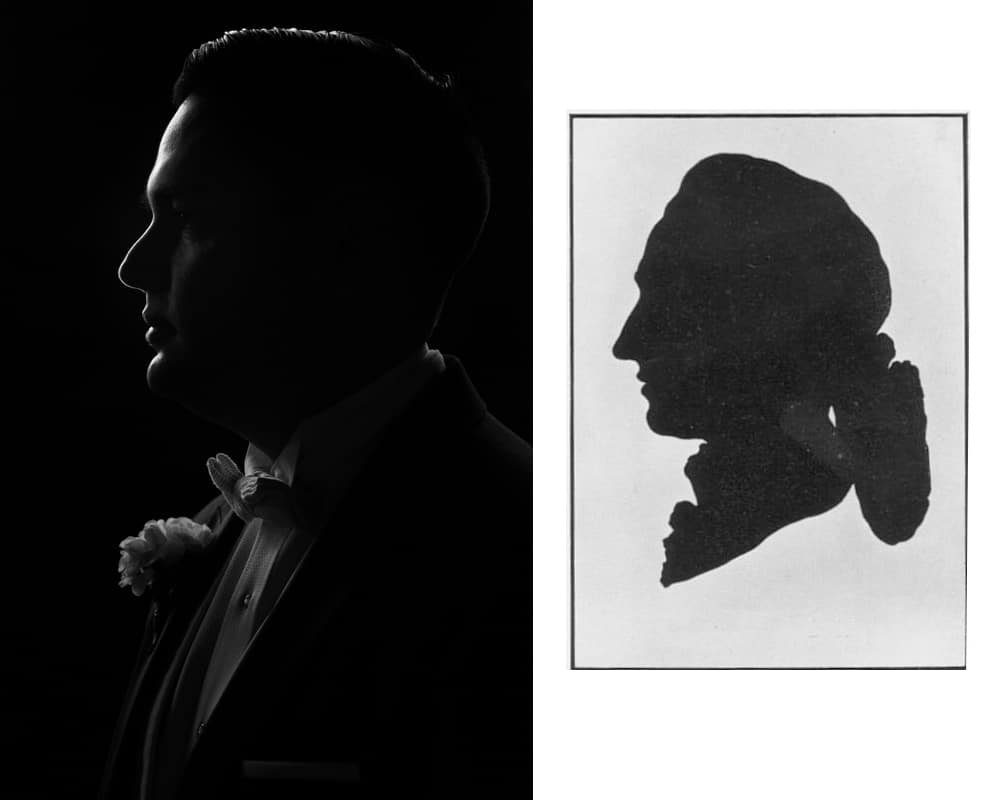
Direct inspiration from other photographers covers ground that's already been walked. Indirect inspiration, from painting, drawing, music, film or anything else in the visual arts, leaves more room for you.
Copy to learn, then make it yours
Copying isn't the enemy. Every painter in the Renaissance learned by copying masters. Austin Kleon wrote a whole book, Steal Like an Artist, on the idea. The line "good artists copy, great artists steal" is usually credited to Picasso, though nobody has found where he said it. Steve Jobs quoted it and admitted Apple had been shameless about stealing great ideas.
The difference is what you do with it. Michael Jackson took dance moves from earlier performers and made something coherent and new. That's influence. Reproducing someone's look shot for shot is a copy, and a copy is a shadow.
My rule: never draw from a single source. Take a little from many places and add yourself. We all have the same cameras and the same world to point them at. The only unique thing in the equation is you.
Limits and consistency make a style visible
Style needs repetition to be seen. As an editor, the photographers who stood out weren't the ones with the flashiest single image. They were the consistent ones, with the same way of seeing frame after frame. It reads as maturity, and viewers trust it.
Limits help you get there: one camera and one lens for months, in one neighbourhood. Friedlander's America by Car puts the inside of a car in nearly every frame, and the book never gets boring because the limit forces him to find new pictures inside it.
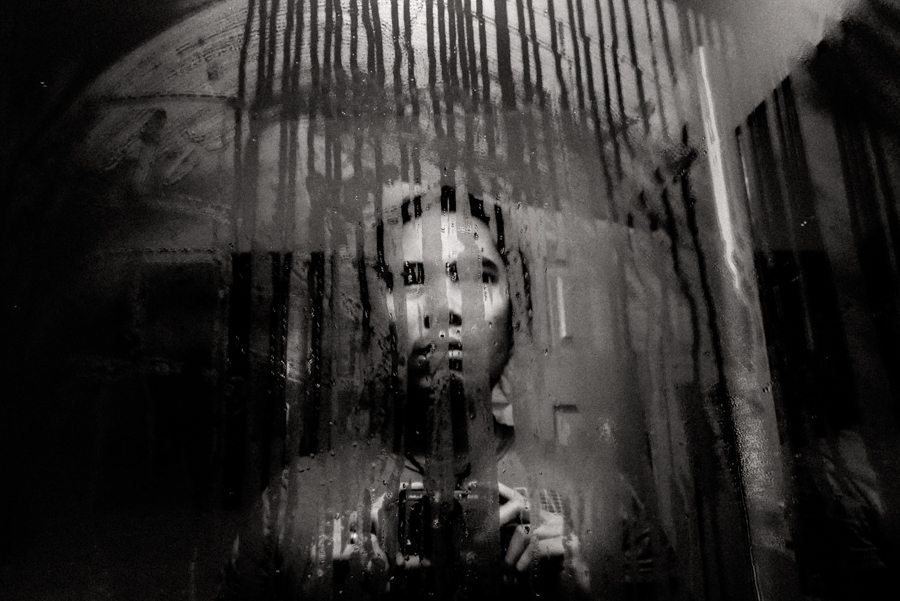
Beginners don't need to be consistent yet. That's the discovery phase, so explore the genres of photography freely and step out of your comfort zone. You'll learn as much from what you dislike as from what you gravitate towards. But keep asking one question at every level: does this represent what I want my photography to be?
Style is what makes a good photograph yours
Technical skill and composition make a photograph readable. Style is why someone remembers it was yours. It's the part that makes you a better photographer instead of a more careful one. If you want the general rules that make a good photograph, read what makes a good photograph and photography composition.
The best photos make you feel something, and feeling comes from the photographer before it reaches the viewer. A great photo holds the viewer's attention because someone cared. Storytelling helps too: a series of images with a clear point of view says more about you than any single frame. Alfred Stieglitz photographed clouds for years and called the series Equivalents: the clouds stood for his feelings, not just the sky. Your style is your emotion made visible, repeated long enough that people can see the pattern.
How long does it take to develop your own photography style?
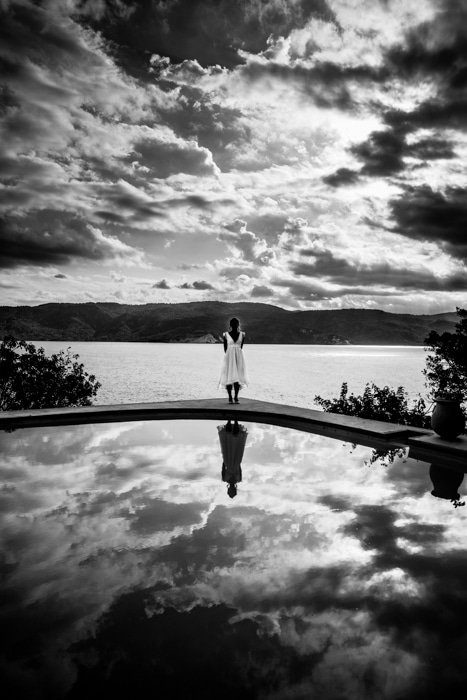
Years. Most photographers only see their style looking back, in their catalog. I found a whole project of surreal images I'd been making for two years without noticing, because I'd never looked at them together.
So don't force it. Shoot what pulls you and review your work in batches. If you feel stuck along the way, read how to keep improving after year one. If the spark is gone completely, try the ideas in photography creative block.
Finding your own voice in street photography
How to find your own voice is one of the lessons in Phototactic, the street photography course Don Springer and I made. The course teaches picture patterns and intent so you can see why an image works, then leaves the choosing to you. It won't hand you a look, and it doesn't review your photos. One student, Chris Tygesen, wrote: "I am on the track to understand how I see the world uniquely and how I can translate that into compelling photographs."
It's $297 as one payment, with a 60 day money back guarantee. If you're just starting out, read street photography for beginners.
Frequently Asked Questions
How do I find my photography style?
By subtraction. Collect the photos you love, by others and by you, and write down what repeats. Cut the pictures you took only because they looked impressive. What's left points to your style. Then shoot that narrow subject for a month and review it. Style shows up over years, not in one session.
What are the different styles of photography?
People often mean genres: street, portrait, landscape, documentary, wedding, fashion, architecture and fine art. Others mean editing looks, like dark and moody or light and airy. A personal style is different from both. It's how one photographer sees, and it can exist inside any genre or editing look.
Is it bad to copy other photographers?
Copying to learn is how most artists start. The problem is stopping there. Study many photographers and other arts, take a little from each, and mix in your own subjects. If your work can be traced to one source, it's a copy. If nobody can pinpoint where it came from, it's influence.
Can editing presets give me a photography style?
No. A preset gives you a look that anyone can buy and apply in one click. Style lives in what you photograph and when you press the shutter. Editing can support it. Many photographers with strong styles use very simple, consistent editing.
How long does it take to find your photography style?
Usually years. Many photographers only notice their style when they look back through their catalog and see the same subjects and light again and again. Shooting what genuinely interests you and reviewing your work in batches speeds it up. Forcing a style early usually produces a trend instead.