
Olivier Duong is a Haitian-French-Vietnamese street photographer and graphic designer who co-founded Inspired Eye, a street photography magazine and website, with Philadelphia photographer Don Springer. He teaches composition the way designers learn it, and he built the Phototactic course around that method.
His street work comes from the places he has lived and travelled: Haiti, where he grew up, then New York, Florida, Hanoi, Japan and Southeast Asia. Most of it is black and white, shot on small cameras such as the Ricoh GR series.

Who is Olivier Duong?
Olivier Duong describes himself as a Haitian-French-Vietnamese graphic designer turned professional photographer. He was born and raised in Haiti and says he is from Jacmel, a town on the south coast. In a 2014 interview with the Haitian culture site L'Union Suite he said he was born and raised in Haiti and spent more than 20 years there.
In that interview he was living in Fort Lauderdale, Florida, working as a wedding and documentary photographer under the name Fstop8. Today he is best known for the things he built around street photography:
- Inspired Eye, the magazine, blog, podcast and newsletter he runs with Don Springer.
- Books and ebooks, including Streetwise Street Photography and Street Photography Blitz, listed on his Amazon author page.
- Articles for other sites. He has written for Digital Photography School, whose author page calls him "an ex-gear head" who "now teaches photographers how to develop their eye, heart and mind."
- Phototactic: Street Photography Secrets, the online street photography course he made with Don.
The course page adds that his work has been featured on sites such as the Huffington Post, DPReview and PetaPixel, and that he has written close to 100 articles about photography. DPReview did cover his blog posts on gear acquisition syndrome, describing him at the time as Florida-based. He has said he speaks six languages, and his Hanoi guide mentions him warning a tourist about a scam in Korean.
A note on the name: a New York creative director called Olivier G. Duong also works in design and photography. This page is about the street photographer behind Inspired Eye, and it doesn't assume the two profiles are the same person.
From graphic design to street photography
Olivier's route into photography started with a camera bought on impulse. He told L'Union Suite that he asked a friend what her "professional looking camera" cost, counted his money and bought one. On the course page he says the next three years went into buying and selling cameras, hoping the next one would make him better, and that the gear didn't fix anything.
He then spent about a year reading blogs and watching YouTube. He came away frustrated: the same one-liners ("rule of thirds", "get closer") repeated everywhere, and teachers illustrating lessons with other photographers' pictures. He hung up the camera for a while.
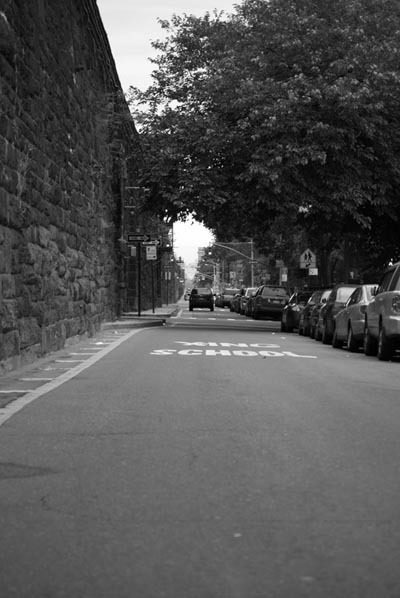
The change came from design school. In 2009 he was a struggling graphic design student in New York. He writes that he watched a classmate design a logo in five minutes and suddenly understood how composition works. He later moved to a design school in Florida, taught a stuck classmate the same idea in a 15 minute session, and wondered if it would work for photography.
It did, by his account. He got his first image published in print, strangers at a bus station asked how to buy one of his prints, and a photographer friend asked how he made them. He sums the idea up in one line: composition = visual elements x arrangement principles. The elements are things like line, shape, space, color and texture. The arrangement principles are the ways designers place them in a frame. You can read the elements side in the elements of photography and the arrangement side in Gestalt principles in photography.
He has also spoken about loss as a turning point. In the 2014 interview he said his mother died in the Haiti earthquake and that he realized he had never photographed her. His lesson from it: express yourself, or regret it.
Inspired Eye: the magazine he started with Don Springer
Inspired Eye began when Olivier met Don Springer online. The accounts differ on the details. The course page says they met on the now defunct Ricoh Forum, the Inspired Eye about page just says "a forum", and Don has said he was an admin at a Micro Four Thirds forum when Olivier noticed his work. Either way, they never needed to meet in person to start working together.
The magazine was a PDF publication about working photographers who weren't famous yet. A forum post from April 2013 announced it as a "new online photography magazine," and by 2014 the photography site MirrorLessons described it as bi-monthly, with issue 8 just out. The Inspired Eye newsletter says it has run since 2012. Around the magazine they added a podcast, ebooks, Lightroom presets and a long run of blog posts on street photography, cameras and locations.
Both founders shoot mostly black and white, and the magazine leaned that way too. Olivier told MirrorLessons he prefers to call street photography "Life photography," because it "breaks the preconceptions of what 'street' actually means."
Olivier Duong's street photography: Haiti, Hanoi, Japan and beyond
Olivier's travel posts on Inspired Eye are written in the first person and illustrated with his own photographs. They give a clear picture of where he has worked.
Haiti
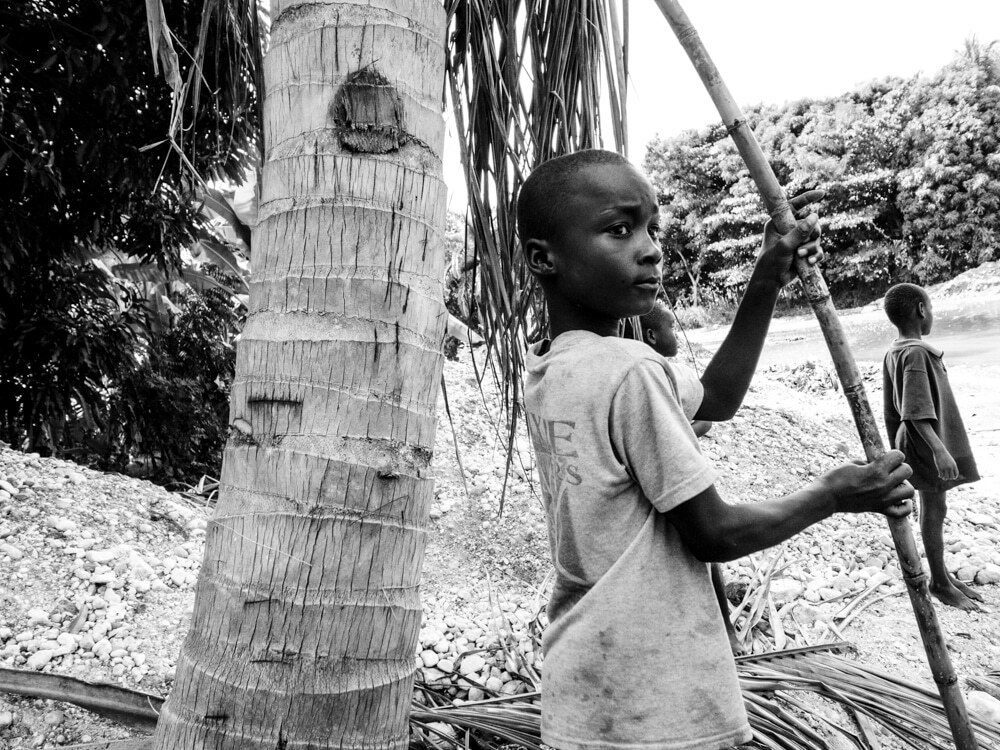
He shot much of his Haiti work in Port-au-Prince and in Jacmel, mostly with a Ricoh GR Digital III, and edited many of the files in Nik Silver Efex. His advice to visitors is blunt: the capital is the most street-friendly place in the country and also the one where you need a local guide, and markets are the best places to start.
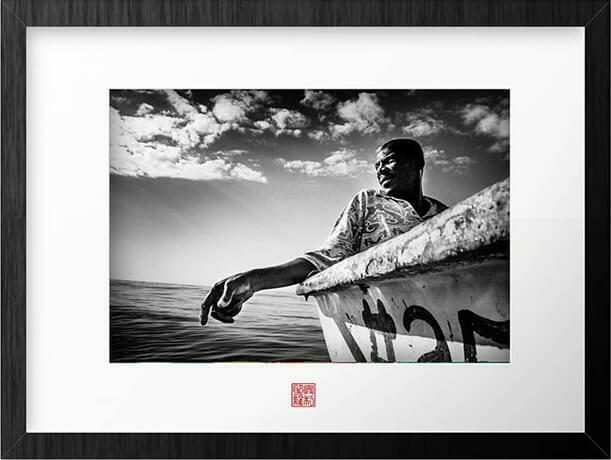
He told L'Union Suite about a favorite frame from a friend's wedding trip: he sat at the front of a boat, saw a man pushing off with a stick, pictured the shot in his head, and a split second later the man made the pose. A wide lens exaggerated the movement. That habit of seeing the picture before it happens is what he later built the course around.
Hanoi
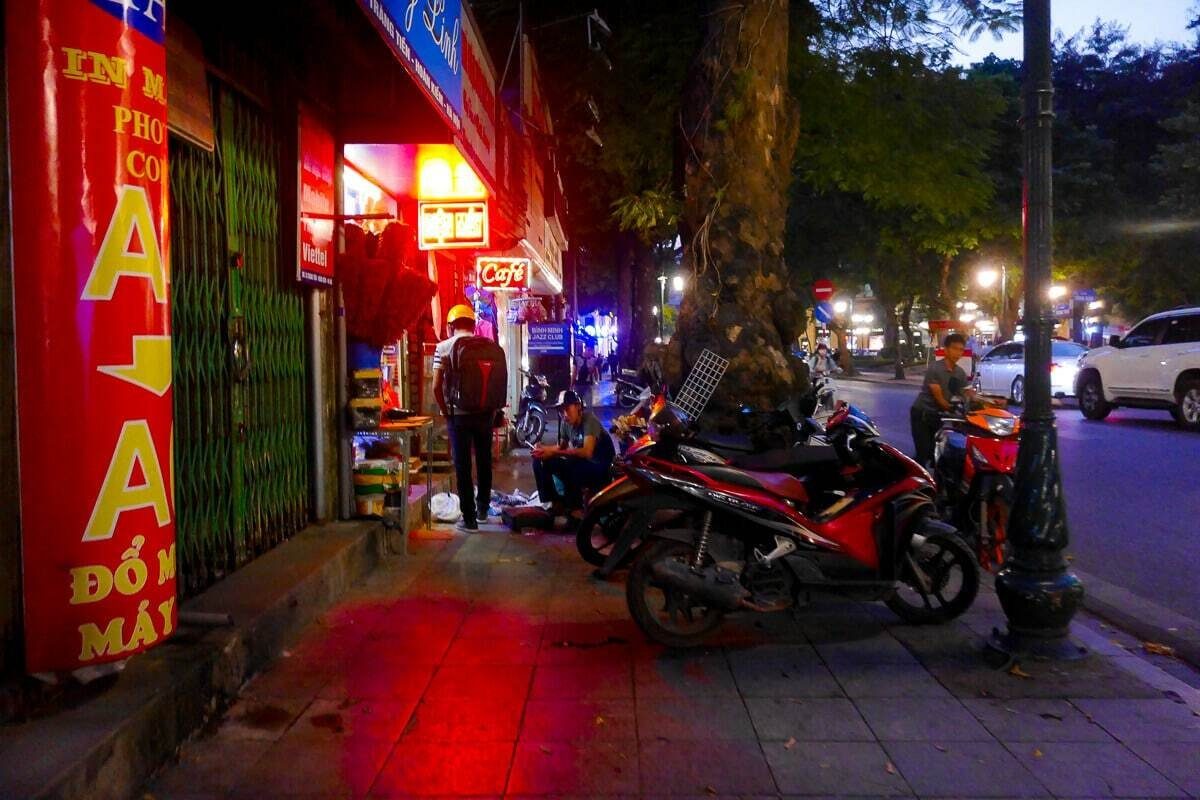
He lived in Hanoi for two years with his family and calls himself a "family nomad." His Hanoi guide points photographers to the Old Quarter near Hoan Kiem Lake and to the city's worn yellow walls, which he uses as flat backdrops so people look like actors on a stage. See our Hanoi street photography guide for the spots.
Japan
He has been to Japan "half a dozen times." His picks for crowds are Shinjuku, Dotonbori, Nipponbashi and Gion. His Japan advice is mostly about behavior: a camera can be misread there, so avoid anything that looks like sneaky photography. Our Tokyo and Kyoto guides build on those posts.
Southeast Asia and elsewhere
Visa runs took him to Penang, where he found most of the city hard to shoot but the Georgetown street art area full of subjects. He has also written guides to Bangkok and Hong Kong. He calls himself "primarily a black and white street photographer," though Penang pulled him toward color.
He has a name for what he looks for: "gentle surrealism," little cracks in everyday reality. He has also said that a critic once complained his pictures were "always about ugly and poverty," and his answer was that he was obsessed with reality and shot it as it came, wealth and happiness included.
How Olivier Duong teaches street photography
Olivier teaches seeing before gear. The same few ideas run through everything he has published.
- Eye, Heart and Mind. A good street photograph needs composition (the eye), emotional charge (the heart) and the thinking behind it (the mind). He says his pictures were "visually impressive" but left no impression until Don pushed him on the emotional side. More in emotion in street photography.
- Picture patterns. Strong photographs repeat a small set of visual structures. He argues that you can't see them until someone points them out, and after that you notice them everywhere. The course calls this the exposure stage.
- Train the subconscious. He drew on language learning for the format: short exposure to a pattern, then practice spotting it in daily life, repeated for at least 10 days. The goal is for pictures to "bubble up" while you walk instead of you running through rules.
- Make, don't take. On Inspired Eye he writes that most photographers only think about what they shoot. The how and the why are where the picture lives.
- Prove it with your own photographs. He refused to teach from other people's street photographs and spent time building a portfolio of his own to show the principles work.
If you want to try this before buying anything, start with how to see like a photographer and photography composition. There's also a free sample lesson.
Why he made the Phototactic course
Olivier says he held back his composition system for two reasons. He first wanted a portfolio that proved it worked, made with his own camera. And he felt his pictures still lacked something he couldn't name.
Don Springer filled that gap. Don had about 50 years of photography behind him and had been mentored by Kneeland "Ding" McNulty, the Philadelphia Museum of Art's curator of prints. Olivier spent about three years combining his design and processing knowledge with Don's experience, then shaped it into short lessons using what he knew about language learning and psychology. Read more about his co-author in our Don Springer profile.
The result is Phototactic: Street Photography Secrets. The course page presents it like this:
- Short videos of 3 to 5 minutes, designed to change your images in as little as 10 days.
- Modules on picture patterns, intent, composition keys (5 laws, 6 elements, 8 arrangement principles), emotion, priming the mind, cheat sheets, editing for a "wow" factor, and fearless street photography.
- Six bonuses, including a live shooting demo, a camera basics course, a lesson on the Renaissance masters and a two hour interview with Don about Garry Winogrand and Minor White.
- One payment of $297, with a 60 day money back guarantee.
The course page says Olivier and Don have mentored dozens of photographers and curated the images of more than 400 others. That describes their background. The course itself has no critique of your photos, no mentoring, no forum and no community. Our Phototactic review covers the downsides, and student results collects what buyers have said.
Frequently Asked Questions
Who is Olivier Duong?
Olivier Duong is a Haitian-French-Vietnamese street photographer and graphic designer. He grew up in Haiti and studied design in the United States. With Don Springer he co-founded Inspired Eye, a street photography magazine and website. He co-created the Phototactic: Street Photography Secrets course and has written books and articles on street photography.
What is Inspired Eye?
Inspired Eye is a street photography site started by Olivier Duong and Don Springer. It began as a PDF magazine featuring working photographers, mostly in black and white, and grew to include a podcast, a newsletter running since 2012, ebooks and many articles on street photography, cameras and locations around the world.
What camera does Olivier Duong use?
He shot much of his early street work, including his Haiti photographs, on the Ricoh GR Digital III, and in 2014 he named the Ricoh GR Digital IV his favorite street camera. His view is that the camera matters much less than training your eye, a lesson he says cost him three years of buying and selling gear.
Does Olivier Duong offer mentoring or photo critiques in his course?
No. Phototactic is a self-paced video course. It has no critique of your photos, no mentoring, no forum and no community. The sales page mentions that Olivier and Don have mentored dozens of photographers in the past, but that is their background, not a feature of the course. You practice on your own with the exercises and cheat sheets.