
The best film for street photography is an ISO 400 black and white film, either Ilford HP5 Plus or Kodak Tri-X 400, pushed one or two stops when the light drops. For colour, load Kodak Portra 400 if you can afford it, or Kodak UltraMax 400 if you can't.
I'm Olivier Duong. I'm not a film stock collector, and I won't pretend to be. Once I sold a Fuji 6x9 along with 19 rolls of Ilford HP5 I never shot. What I do know is how street photographs are made, and the film you choose matters less than one thing: picking one film and learning it well. So this guide keeps it short and practical, with the stocks worth loading and when to use each.
The best 35mm film stocks for street photography at a glance
For street photography you want speed first. ISO 400 film lets you use fast shutter speeds for moving people and small apertures for zone focusing. Everything else is taste. Prices are rough US figures from mid to late 2026, reported by PhotographyTalk and Pellica.
| Film stock | Type | Box speed | Best for | Rough price, 36 exp. |
|---|---|---|---|---|
| Ilford HP5 Plus | Black and white | ISO 400 | All-round street film, pushes well | $10 to $11.50 |
| Kodak Tri-X 400 | Black and white | ISO 400 | Classic grain and punchy contrast | $9 to $10 |
| Kentmere Pan 400 | Black and white | ISO 400 | Practice rolls on a budget | about $8.50 |
| Ilford XP2 Super | Black and white, C-41 | ISO 400 | Any colour lab can develop it | varies |
| Ilford Delta 3200 | Black and white | ISO 1000, rated 3200 | Night street photography | about $19 |
| Kodak Portra 400 | Colour negative | ISO 400 | Natural skin tones, huge latitude | $17 to $18 in a 5-pack |
| Kodak UltraMax 400 | Colour negative | ISO 400 | Cheap, saturated everyday colour | $10 to $11 |
| Kodak Gold 200 | Colour negative | ISO 200 | Warm colour in bright sun | about $9 to $9.50 |
| CineStill 800T | Colour negative, tungsten | ISO 800 | Neon and street lights at night | about $18 |
If you want one answer: shoot HP5 Plus or Tri-X at 400 in the day and at 1600 at dusk, and tell the lab to push the roll.
How to choose a film stock for the street
Two things decide which type of film to buy: how fast it is, and whether it is negative or slide film. Get those right and the rest is taste.
Film speed
Film speed is the ISO number on the box. It tells your light meter how sensitive the film is. ISO 400 is the street standard because it covers both sun and shade. Save faster film for night photography. Most 35mm cameras read the speed from the DX code on the cassette. On older cameras you set it by hand, and the whole roll of film is developed as one, so pick the speed before you load it.
Negative film or slide film
Colour negative film and black and white film both produce a film negative with wide latitude. Reversal film, better known as slide film, produces a positive and needs near perfect exposure. For the street, choose negative film. It is also what most labs develop quickly and cheaply.
Every film on this page comes in 35mm, and most also come in 120 film for medium format cameras. A 35mm roll gives you 24 or 36 shots per roll, against 8 to 16 on 120. For street photography, 35mm film photography is the natural fit, with smaller cameras and a lower cost per frame.
Your first roll: a simple plan
If you want to start shooting film this week, keep it simple. Load HP5 Plus or Tri-X in any 35mm camera you have, from a Pentax K1000 or Nikon FM2 SLR to a rangefinder or a point-and-shoot. Set the camera to ISO 400 and shoot the whole first roll in daylight. Take it to a local lab and ask for develop and scan.
When the scans come back, look at the exposures before the pictures. Are the shadows empty? Then give the next roll more light. Are the highlights fine even where you guessed? That is the latitude of negative film at work. Film has a unique look, but digital cameras record finer detail, so judge the roll on what it teaches you about light, not on sharpness. For camera advice, see the best film camera for beginners.
Best black and white film for street photography
Black and white film is the classic choice for the street because it strips a scene down to light and gesture. Most of the street photographs you know were made on it. It is also cheaper than colour film and easy to develop at home.
Ilford HP5 Plus
HP5 Plus is a fast, medium contrast film with wide exposure latitude, which means it forgives mistakes. Ilford's own data sheet says it gives good prints at meter settings up to EI 3200. That flexibility is why so many street photographers use it as their only film: 400 in the day, 800 or 1600 in the evening. The grain is visible but soft. If you shoot a mix of bright sun and deep shade, HP5 is the easier film to live with.
Kodak Tri-X 400
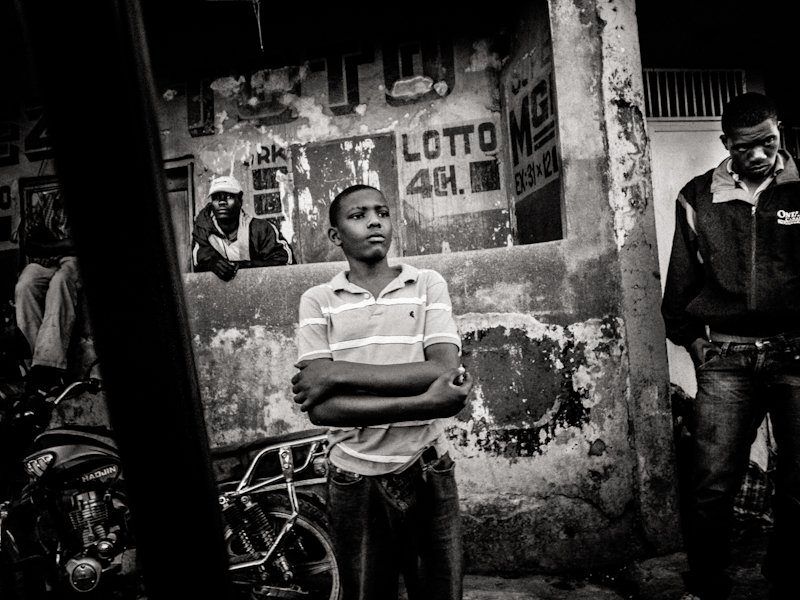
Tri-X has been a photojournalism standard for decades. It has a bit more bite than HP5: slightly punchier contrast and a grain that many photographers describe as grittier. Kodak's data sheet covers push processing for low light, and many photographers push it to 1600 or 3200. It is also one of the few film stocks that got cheaper in 2026. Pick Tri-X if you want contrast straight from the negative.
Budget and practice films
Kentmere Pan 400 is made by Harman, the company behind Ilford, and costs less than HP5. Fomapan 400, sold in the US as Arista EDU Ultra 400, is cheaper still, with a rougher, old-fashioned grain. Both are good for practice rolls, when you are learning a camera and don't want to worry about the cost of each frame.
Ilford XP2 Super
XP2 Super is a black and white film developed in C-41 colour chemistry, so any lab that develops colour film can process it. Ilford says it can be rated anywhere from EI 50 to 800 with standard processing, so you can change speed mid-roll. That makes it a smart first black and white film if you don't have a lab that does black and white. It scans cleanly, with less visible grain than HP5.
Kodak T-Max 400
T-Max 400 has finer grain and a more modern, sharper look than Tri-X. In 2026 Eastman Kodak also started selling the T-Max line under the name Ektapan. It is a good film, but for most street work the classic grain of HP5 or Tri-X is part of the appeal.
Best colour film for street photography
Colour film makes sense on the street when colour is part of the picture, like a red coat against a grey street. If you are drawn to that, read colour photography for how to build a frame around it.
Kodak Portra 400
Portra 400 is the best colour film for street photography if money is no object. It has natural skin tones and enormous exposure latitude, especially on the overexposure side. You can shoot it at 400 in sun and shade on the same roll and still get usable negatives. Labs often push it one or two stops for low light. In March 2026 Eastman Kodak began selling the same film as Ektacolor Pro 400, while Kodak Alaris still sells it as Portra, so you may see both names on the shelf.
Kodak UltraMax 400
UltraMax 400 is the affordable colour option at the same speed. The colours are more saturated and the grain is more obvious than Portra, which suits a lot of street work. It is my pick for colour practice rolls.
Kodak Gold 200
Gold 200 is cheap, with warm colour that looks lovely in bright sun. At ISO 200 it is a stop slower than you want for shade, so keep it for sunny days.
Other colour stocks worth knowing
- Kodak Portra 800. A stop faster than Portra 400 with the same skin tones. Expensive, but the best colour film for dusk.
- Kodak ColorPlus 200. One of the cheapest colour films on sale, with a warm, vintage look. Fine for sunny practice rolls.
- Kodak Ektar 100. Very fine grain and strong colour, but ISO 100 is too slow for most street work unless the sun is bright.
- Lomography Color Negative 400. Saturated colour and good dynamic range at ISO 400, usually sold in 3-packs.
Slide film
Slide film like Kodak Ektachrome E100 gives gorgeous colour on a light table, but it has very little latitude and costs much more to buy and develop. On the street, where light changes every few steps, it punishes you. Try it later, not first.
Best film for night street photography
At night you need speed, so either push an ISO 400 film or load a faster stock.
- HP5 Plus or Tri-X pushed to 1600 or 3200. The simplest option. Expect bigger grain and harder contrast, which suits night streets.
- Ilford Delta 3200. Its true speed is ISO 1000, according to Ilford, and it is designed to be rated at 3200 and pushed. Very grainy, very atmospheric.
- CineStill 800T. A colour film balanced for tungsten light, made from cinema film with the anti-halation layer removed. That gives the red glow around bright lights that people love in neon street photos. In daylight it goes blue unless you use a filter.
- Portra 400 or Portra 800. Pushed one or two stops, both hold up well under street lights, with warmer colour than CineStill.
For settings and ways to find light after dark, read night street photography.
How to push film for street photography
Pushing film means shooting it at a higher ISO than the box speed, then asking the lab to develop it longer to compensate. It is how street photographers use ISO 400 film after sunset.
- Decide before the roll. Every frame on a roll gets the same development, so set your camera's ISO to 800 or 1600 for the whole roll.
- Meter for the shadows you care about. Pushing adds contrast but doesn't create detail in areas that got no light.
- Mark the roll. Write "+1" or "+2" on the cassette with a marker, and tell the lab when you drop it off.
- Expect grain and contrast. That is the look. If you want clean shadows, use a faster film or a digital camera instead.
Each doubling of ISO is one stop: 400 to 800 is a one-stop push, 400 to 1600 is two stops. Most labs charge a little extra per stop.
Pick one film and stick with it
The biggest improvement you can make is not finding the perfect film. It is shooting the same film until you know it by heart.
I made this argument years ago about presets. For most of the history of photography, people used the same film stock over and over and over again, and no one accused them of looking like everyone else. A film stock is a look. The photographer brings the picture. When you use one film for months, you learn exactly how it handles highlights and shadows, and how far you can push it at dusk. You stop thinking about the film and start thinking about the frame.
I felt this with the Epson R-D1, a digital rangefinder I used years ago. Its ISO 1600 files had an organic grain that gave me a Tri-X feel. It wasn't film, but it showed me that the look people want from film is mostly grain and contrast, plus the commitment that comes from habit.
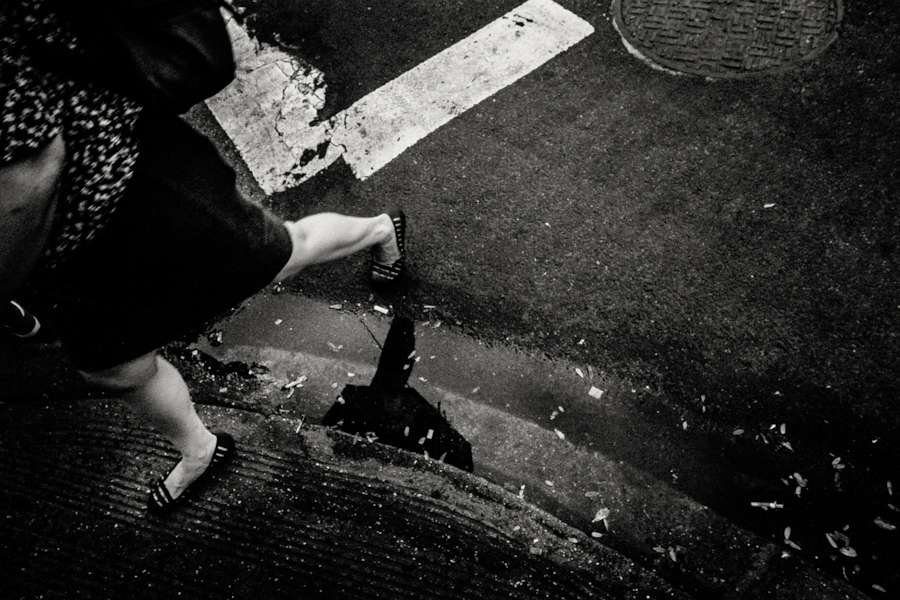
If you are new to film photography, my suggestion is simple: buy ten rolls of HP5 Plus or Tri-X, shoot them all at 400 in daylight, and push the last few to 1600 at dusk. You will learn more from those ten rolls than from ten different stocks, and you will end up with a favorite film you actually understand. If you are still choosing a camera, start with the best film camera for beginners, and for exposure without a meter, the sunny 16 rule.
Getting the most from your film scans
Use a film lab you trust and ask for larger scans if you plan to print. Once the lab sends your scans, you edit them like any file from digital photography. Black and white scans often need a touch of contrast. Colour scans often need white balance correction, because the lab's scanner makes a guess. Keep it light. The goal is to finish what the film started, not to change it into something else. My street photography editing workflow applies to scans too, and black and white photography covers tone in more depth.
For the full picture of shooting film on the street, from cameras to developing, go back to my film street photography guide. And if your photos are technically fine but still don't say much, the film isn't the issue. That is what my online street photography course is about: composition and emotion, taught in short recorded videos, and it works the same with a film camera or a digital one. It doesn't include feedback on your own photos.
Frequently Asked Questions
What film is best for street photography?
ISO 400 black and white film is best for most street photography. Ilford HP5 Plus and Kodak Tri-X 400 are the two classics, and both can be pushed to 1600 or 3200 at night. For colour, Kodak Portra 400 has the most latitude, and Kodak UltraMax 400 is a cheaper option with more saturated colour.
Is HP5 or Tri-X better for street photography?
Neither is better. HP5 Plus is slightly softer in contrast and very forgiving, which makes it easier in mixed light. Tri-X has punchier contrast and grittier grain straight from the negative. Both are ISO 400 and both push well. Pick one and shoot it for months.
What ISO film should I use for street photography?
Use ISO 400 film for street photography. It gives fast enough shutter speeds to freeze people walking and enough depth of field for zone focusing at f/8. Use ISO 200 only in bright sun, and push ISO 400 film to 1600 or use a faster film like Ilford Delta 3200 at night.
Can you push Portra 400?
Yes. Portra 400 is often pushed one or two stops, to EI 800 or 1600, for low light, and many labs offer push processing for colour film. Expect more contrast and some colour shift in the shadows. Because Portra has so much latitude, many photographers also shoot it at 800 with normal development and accept thinner negatives.
What film can any lab develop in black and white?
Ilford XP2 Super is a black and white film developed in standard C-41 colour chemistry, so any lab that processes colour film can develop it. Ilford says you can rate it anywhere from EI 50 to 800 on the same roll with normal processing, which makes it very forgiving for street photography.
Is Kodak Gold 200 good for street photography?
Kodak Gold 200 is good for street photography in bright sun. It is cheap and has warm, pleasant colour. At ISO 200 it is a stop slower than ideal, so in shade or at dusk you will get slow shutter speeds and blur. For all-day street shooting, ISO 400 colour film is safer.