
Street Photography in Rio de Janeiro
Rio lives outdoors, on beaches and samba squares, and most Cariocas are warm about cameras, but theft risk means working light and discreet.
- Spots
- 7
- Best time
- April to October is drier and less hot
- Lens
- 28mm or 35mm
- Photographing people
- Strict: ask first
Rio de Janeiro is very good for street photography because so much of life happens outdoors, in full view: football on the sand and samba in the squares. Shawn Eastman found most Cariocas friendly and many happy to be photographed. The light is strong and tropical, and the mountains give almost every beach frame a backdrop.
The problem is theft. Cameras and phones are real targets here, so the city rewards a light kit and a low profile. I'd carry one small camera and shoot the beaches and Centro in daylight. After dark, use ride hailing between neighborhoods. Brazil also protects the right to one's image, so ask before portraits and be careful how you publish. Go early and late. Midday sun is harsh on faces.
Best street photography spots in Rio de Janeiro
Escadaria Selaron
The Selaron steps climb from Lapa toward Santa Teresa, covered in more than 2,000 tiles collected by the artist Jorge Selaron. By mid morning they are full of people posing, which is its own subject: selfies and tour groups against the color. For a cleaner frame, come very early. I'd stand low at the bottom with a wide lens and wait for one figure on the stairs. The upper end of the steps meets residential streets, so do not wander further up with a camera out.
Arcos da Lapa
The white arches of the old aqueduct stand over Lapa, the center of Rio's nightlife. Shawn Eastman lists Lapa for its historic architecture and graffiti, and the street art here is political and loud. Late afternoon light is good on the arches. On Friday and Saturday nights, the streets under them fill with bars and street music, which is great for slow shutter work and faces lit by stalls. Crowds are also where pickpockets work, so carry the smallest camera you own on a strap.
Santa Teresa & Largo dos Guimaraes
Santa Teresa is a hilltop neighborhood of old mansions and steep cobbled streets with views over the bay. The yellow tram, the bonde, climbs here from Centro. Largo dos Guimaraes is the small square where the tram passes cafes and bars. On weekends, artisans set up along the streets, according to Rio and Learn. Morning light on the facades is good. A frame with the tram rounding a corner and passengers at the open side is the classic. Some streets are quiet and isolated, so stick to the main tram route.
Saara market
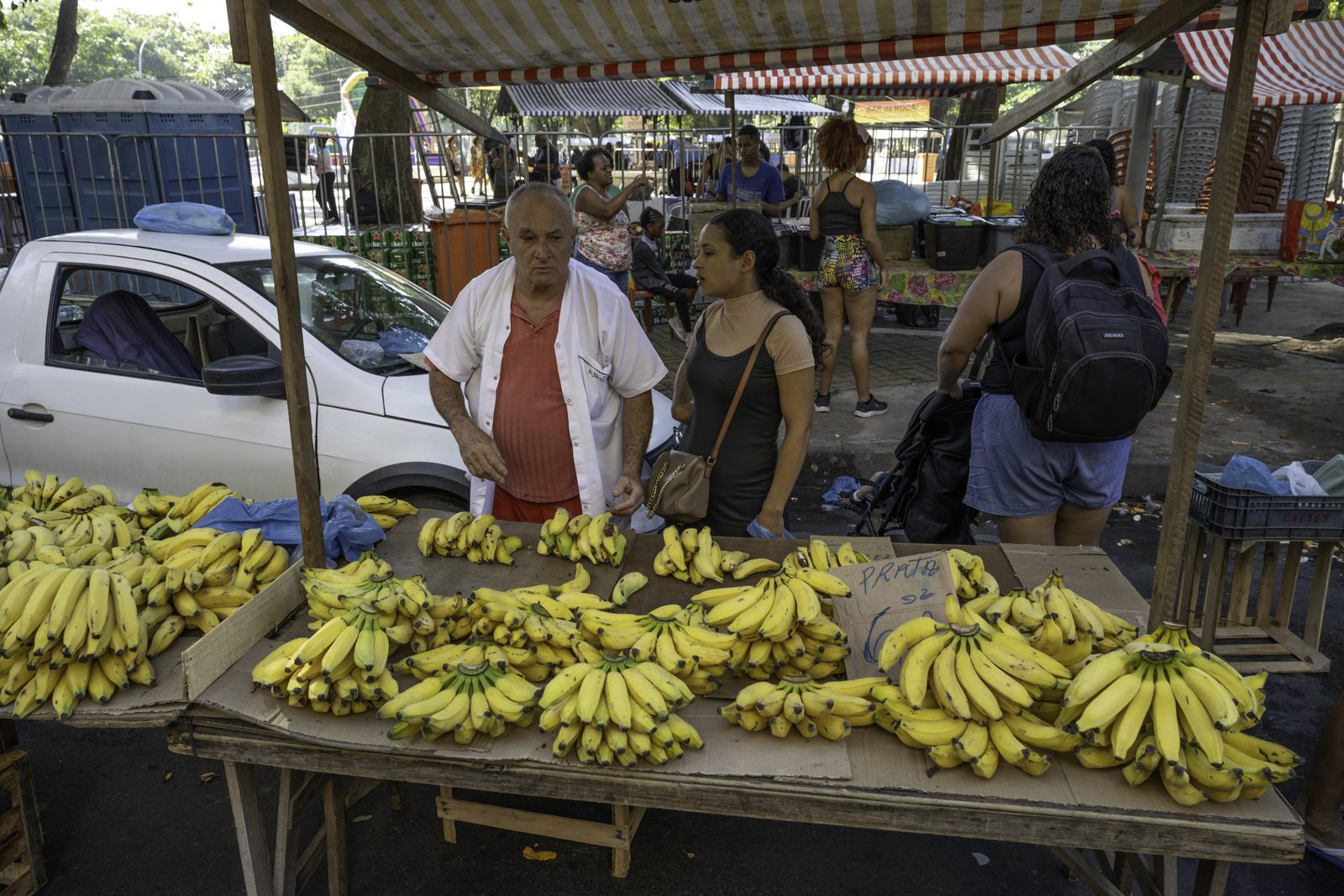
Saara is a dense grid of narrow streets in Centro packed with small shops selling fabric, toys, costumes and party goods. It is where ordinary Cariocas shop, and before Carnival it is overflowing. Weekday daytime is the time. Shade and colored awnings make soft light over the crowd. Look for vendors calling out prices and shoppers loaded with bags. It is crowded, so keep a hand on your camera and move with the flow. Most shops close on Sundays and Centro empties out, which makes it feel less safe.
Pedra do Sal
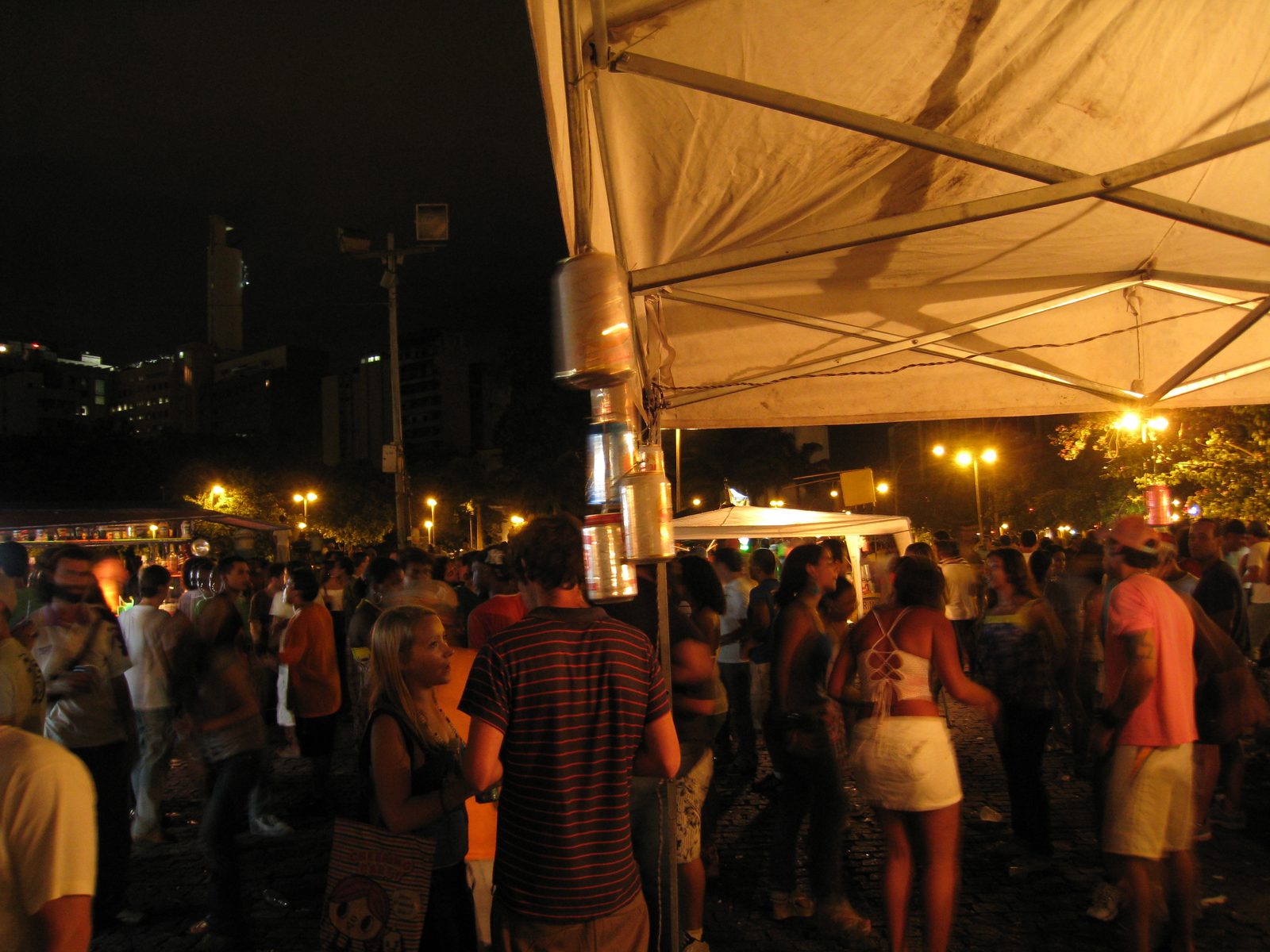
Pedra do Sal is a rock and square in the Saude district, known as Little Africa, and called the birthplace of samba. On Monday and Friday nights from about 19:00, musicians sit around a table and play while hundreds of people sing along. Plan Rio says Monday is more local and traditional, Friday bigger and rowdier. The musicians lit from above with a ring of faces around them is the picture. Plan Rio also advises leaving cameras at home, so bring only a phone or a very small camera, and use ride hailing to leave.
Copacabana Beach
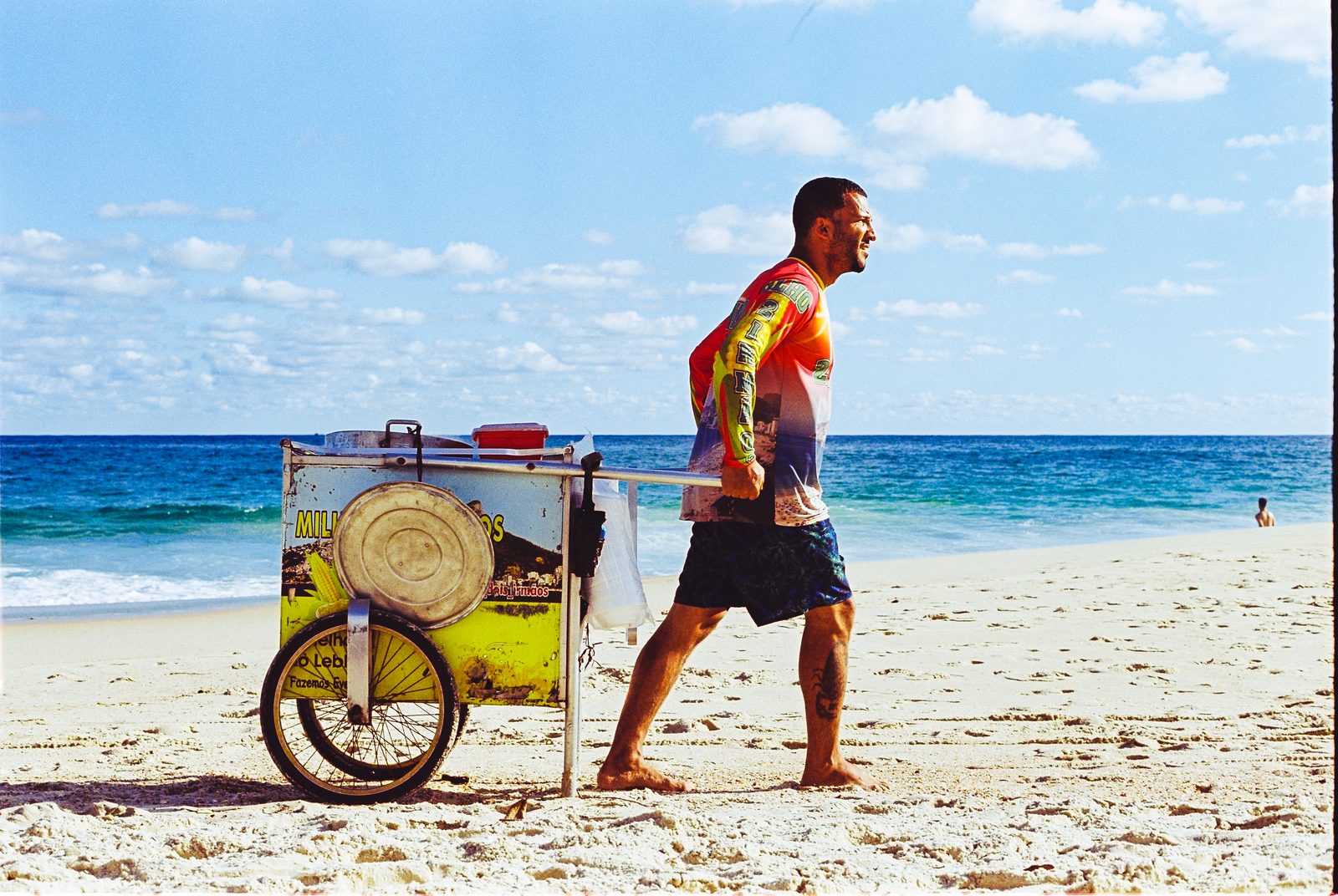
Copacabana is the long beach with the black and white wave pattern promenade. Shawn Eastman suggests shooting beach football and vendors carrying their goods. Early morning brings older locals exercising and fishermen at the Posto 6 end. Late afternoon brings football games. Shoot low with the players against the sea. Never leave your bag on the sand, and do not take expensive gear to the beach on busy weekends.
Arpoador
Arpoador is the rock between Copacabana and Ipanema where locals and visitors gather to watch the sunset. When the sun drops toward the Dois Irmaos peaks, the crowd often applauds. Peter Orsel used a telephoto zoom here to compress the beach and mountains. For street pictures, turn around: silhouettes on the rock against the orange sky, surfers walking in with boards. Arrive an hour early. Leaving after sunset, walk out with the crowd, not alone along the rocks.
Photographing people in Rio de Janeiro
Strict: local law or custom protects people's image. Ask first, or keep faces out of frame.
Brazil protects the right to one's image as a personality right. The Constitution guarantees it, and Article 20 of the Civil Code lets a person stop the use of their image and seek compensation when it harms their honor or is used commercially. As Lantyer explains, this does not mean no one may be photographed. Courts weigh public places and news value against the use of the image. Commercial use of a recognizable person without consent is the clear risk. This is general information, not legal advice.
In practice, Cariocas are open and expressive, and Shawn Eastman found many happy to be photographed. Ask before portraits. Many will pose, and a candid moment often follows. In favelas, go only with a trusted local guide, and follow their lead on who and what not to photograph. See how to photograph strangers.
General information, not legal advice. More in is street photography legal?
What to photograph in Rio de Janeiro
- Beach culture. Football and volleyball on Copacabana and Ipanema.
- Samba. Rodas at Pedra do Sal and music in Lapa.
- Street art. Murals and political graffiti in Lapa and Santa Teresa.
- The bonde. The yellow tram climbing into Santa Teresa.
- Market crowds. Shoppers and sellers in Saara.
- Silhouettes. Figures against sunset sky at Arpoador.
- Carnival blocos. Costumed street parties across the city in the weeks around Carnival.
A one-day photo walk
- 7:00, Escadaria Selaron. Ride hailing from the South Zone, about 20 minutes. Empty steps in soft light.
- 8:00, Arcos da Lapa. Two minutes' walk. Arches and street art.
- 9:30, Santa Teresa. Take the bonde or ride hailing up to Largo dos Guimaraes. About 1.5 hours.
- 11:30, Saara market. Ride hailing or the bonde back to Centro, then a 10 minute walk. Shade for midday.
- 16:00, Copacabana Beach. Metro to Copacabana, about 20 minutes. Football in low light.
- 17:30, Arpoador. A 20 minute walk along the promenade for sunset.
- Monday or Friday night, Pedra do Sal. Ride hailing both ways.
When to shoot
April to October is drier and less hot. Carnival (February or March, dates vary) fills the streets with blocos. Shoot early morning and late afternoon; midday sun is harsh.
The light
Strong tropical sun and high contrast at midday. Soft gold light on the beaches early and late, and warm backlight at Arpoador at sunset.
What to bring
One small, inexpensive looking camera with a 28mm or 35mm lens and a strap. Leave the big zoom at the hotel.
Safety
Real theft risk. Phones and cameras are targets on beaches and in crowds. Carry one small camera and use ride hailing at night. Do not enter favelas without a trusted local guide.
Tips for Rio de Janeiro
- Carnival: February or March, dates vary. Street blocos start weeks before. Carry only a phone or a cheap camera in the crowds.
- Season: April to October is drier and cooler. Summer brings heat and afternoon storms.
- Lens: a 28mm or 35mm prime on a small body. Shawn Eastman recommends a fast lens for movement and expressions. See best lens for street photography.
- Security: use a strap and never leave gear on the sand.
- Transport: Peter Orsel used Uber for early starts. Book ahead of sunrise.
- Hard light: expose for the highlights at midday or wait for the last two hours. More in street photography settings.
- Sundays: Centro empties. Go to the beaches, where the city spends its weekend.
Frequently asked questions
Is street photography legal in Rio de Janeiro?
STRICT on use. The Brazilian Constitution and Civil Code (article 20) protect the right to one's image, and using a recognizable person's image, especially commercially, without consent can lead to damages. Taking photos in public is common and generally tolerated. Ask before portraits.
Where are the best street photography spots in Rio de Janeiro?
Start with Escadaria Selaron, Arcos da Lapa, Santa Teresa & Largo dos Guimaraes, Saara market. Tiled staircase between Lapa and Santa Teresa. Very early morning before the crowds.
When is the best time for street photography in Rio de Janeiro?
April to October is drier and less hot. Carnival (February or March, dates vary) fills the streets with blocos. Shoot early morning and late afternoon; midday sun is harsh.
What lens should I bring to Rio de Janeiro?
One small, inexpensive looking camera with a 28mm or 35mm lens and a strap. Leave the big zoom at the hotel.
Is Rio de Janeiro safe for street photographers?
Real theft risk. Phones and cameras are targets on beaches and in crowds. Carry one small camera and use ride hailing at night. Do not enter favelas without a trusted local guide.
More street photography cities
- Buenos AiresArgentina
- BogotaColombia
- Cape TownSouth Africa
- HavanaCuba