
Street Photography in Bogota
Bogotá is a big, gritty Andean capital with colonial streets and a Sunday when the whole city takes over its roads, but you have to read the streets carefully for safety.
- Spots
- 8
- Best time
- Bogotá sits at about 2,600 m and has spring-like weather all year, with drier spells from December to February and in July and August
- Lens
- 28mm or 35mm
- Photographing people
- Generally allowed
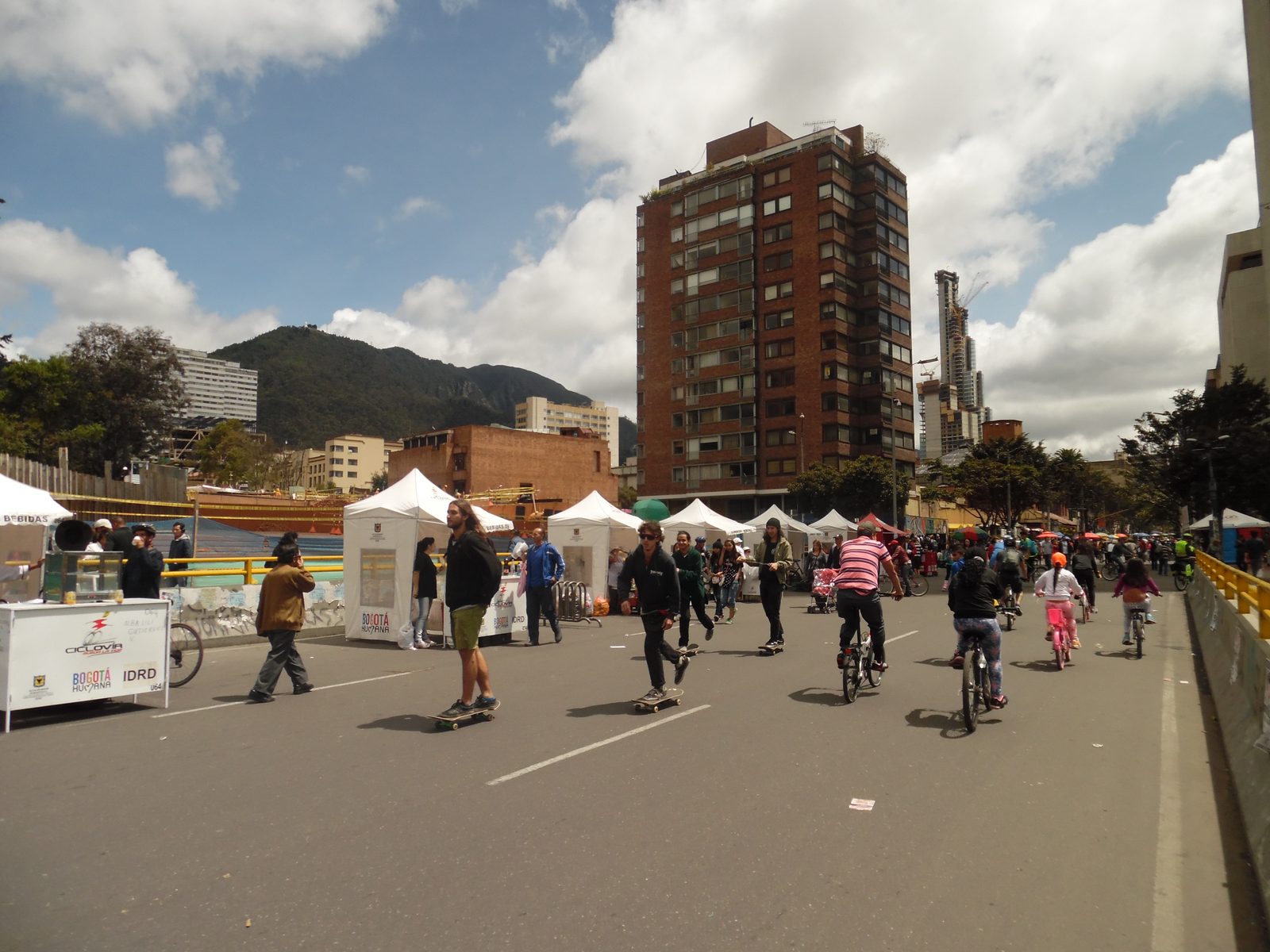
Bogotá is good for street photography because it is a huge, gritty Andean capital where life happens in crowded plazas and on a main street that is pedestrian through the center. F. D. Walker walked Carrera Séptima every day he was there and called it his favorite street in the city, always busy and full of life. Every Sunday, the Ciclovía turns more than 100 km of roads over to cyclists and walkers, and the city pours outside.
The catch is safety. Walker was stopped several times by police who told him to go home before something happened to him, and the UK FCDO reports British nationals robbed at gunpoint in La Candelaria. So plan it. Shoot by day on busy streets, with one small camera. Travel writer Laura Byrne Paquet's guided tour through La Candelaria with local photographer Diego Gordillo is a good model: a local guide takes you further, more safely. I'd spend Sunday on the Séptima and Usaquén.
Best street photography spots in Bogota
Carrera Séptima
Carrera Séptima runs north through the center from La Candelaria and is pedestrian for a long stretch. Walker walked it daily: street vendors, performers, office workers and crowds, and in his view one of the safest streets to walk in the city. Sunday is best, when sections close to traffic for the Ciclovía and families come out. Stand near a street performer and shoot the faces in the circle around them, or stack walkers along the street with a longer lens. Keep the camera strapped on in the crowds.
Chorro de Quevedo
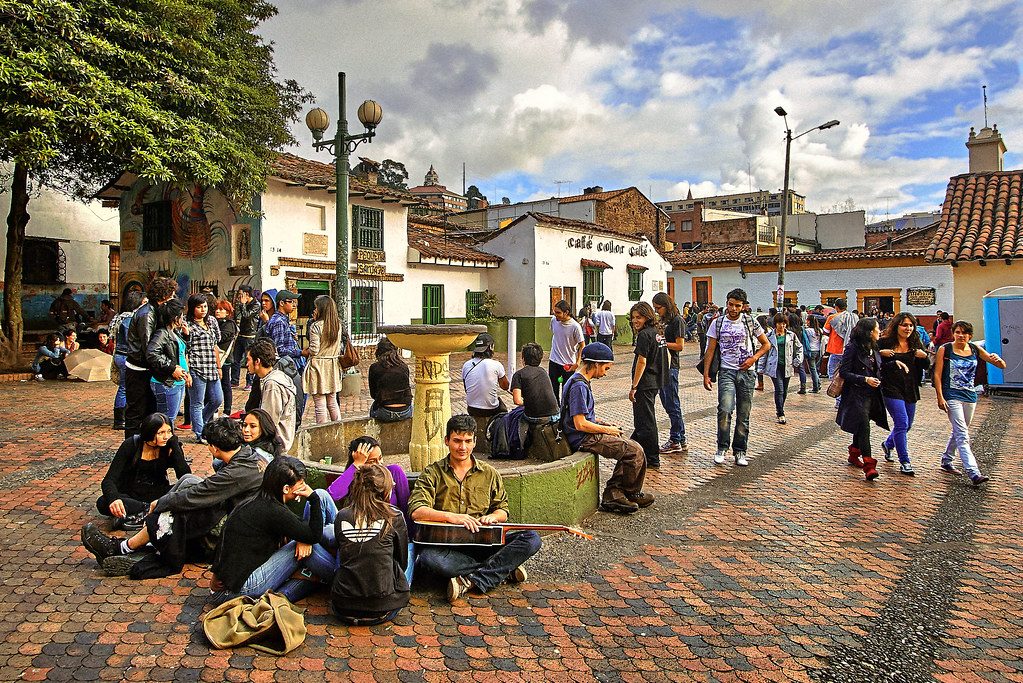
Chorro de Quevedo is a small square in La Candelaria, the colonial old town, said to be where the city was founded. It is surrounded by colorful walls and street art, and draws students and travelers in the afternoon. Walker lists it as a popular place for people watching. Laura Byrne Paquet's guide took her down the quiet cobbled lanes around it, where they shot low to the ground. Use the colored walls as backgrounds and wait for figures. The FCDO reports armed robberies in La Candelaria, so go by day and stay where people are.
Plaza de Bolívar
Plaza de Bolívar is the main square, framed by the cathedral and Congress, with a statue of Simón Bolívar at its center. There are always people and pigeons, and it is a stage for events and protests. Walker stopped here several times a day. Morning light is best, when pigeon sellers and visitors are out and the square is not yet crowded. Get low and use a burst of pigeons as foreground. Do not photograph the guards or government buildings closely, and leave if a protest turns tense.
Plaza de San Victorino
San Victorino is a large square west of the center surrounded by wholesale shops and street markets, with more edge and more characters than Plaza de Bolívar, in Walker's view. He noted a permanent police presence and sex workers among the shoppers. It is one of the busiest pedestrian areas in the city. Come by day and stay at the edges, where you can shoot the flow of shoppers carrying goods. Keep your camera small and your bag in front. This is not a place to linger after dark.
Paloquemao Market
Paloquemao is Bogotá's big market for food and flowers, a large covered hall used by locals and restaurant buyers. Maison XXII notes that flower buying starts in the small hours and peaks early in the morning, when traders carry huge bundles of roses and lilies. Get there by 6:00 for the flower section, then walk through the fruit and meat halls. Frame a vendor behind a wall of flowers, or hands trimming stems. Buy some fruit and ask before close portraits. Take a ride app there and back.
Usaquén
Usaquén is an old colonial village swallowed by the city's north, with a small square and church. On Sundays it hosts a flea market that Walker found upscale but pleasant, with crafts and live music on flower lined streets. It is one of the safer places to walk with a camera. Late morning is best, when the market fills. Shoot musicians with the crowd behind, or the church square from a cafe terrace. Prices are higher than elsewhere, and the crowd leans toward visitors and wealthier families.
Parque de la 93
Parque de la 93 is a small, upscale park in Chapinero surrounded by restaurants and bars. Walker calls it one of the safest and most modern areas to walk. It suits an evening session when the rest of the city is less safe. Come at dusk, when office workers meet for drinks and restaurant lights come on. Shoot people crossing the lawn against lit terraces, or dog walkers on the paths. It is polished rather than gritty, which is exactly why it works at night.
Parque Simón Bolívar
Parque Simón Bolívar is a huge metropolitan park, larger than Central Park according to Walker, with a lake and an outdoor gym. On weekends it fills with families and joggers, and it hosts big concerts such as Rock al Parque. Come on a Sunday morning, when the Ciclovía brings cyclists nearby. Frame rowers on the lake or kids flying kites on the lawns. It is spread out, so pick one area rather than trying to cover the whole park.
Photographing people in Bogota
Taking photographs of people in public is generally legal in Colombia. The UK FCDO says photographing military or strategic government sites is illegal. Publishing identifiable people carries privacy considerations, so ask when you plan a close portrait for publication. This is general information, not legal advice.
People in Bogotá are often open and chatty, and many do not mind a camera. The bigger issue is attention. Walker was repeatedly warned by police and locals about walking alone with a camera, and the FCDO advises against displaying cameras. Diego Gordillo showed Laura Byrne Paquet how to work low and fast in La Candelaria, and she chose not to publish photos that clearly show faces. Buy something from vendors before you ask. Avoid photographing people who look like they do not want to be seen. More in how to photograph strangers.
General information, not legal advice. More in is street photography legal?
What to photograph in Bogota
- Ciclovía Sundays: cyclists and skaters taking over car-free roads.
- Street vendors with carts of fruit and coffee on the Séptima.
- Ruanas and hats: wool ponchos worn against the cold in the old town.
- Graffiti, from La Candelaria to the city's big mural walls.
- Pigeons and the people who feed them in Plaza de Bolívar.
- Police, everywhere, as Walker noted. Photograph with care.
- Emerald traders doing deals on the sidewalks near Avenida Jiménez, a scene Bogotá is known for. Keep your distance.
- Umbrellas in the afternoon drizzle.
- Flower sellers with armfuls of roses at Paloquemao.
A one-day photo walk
A Sunday route.
- 6:00, Paloquemao Market. Ride app from your hotel. Flower traders at dawn, then the fruit halls.
- 8:30, Plaza de Bolívar. About 15 minutes by ride app. Pigeons and morning light.
- 9:30, Chorro de Quevedo. A 10 minute walk up through La Candelaria.
- 10:30, Carrera Séptima. Walk north along the Ciclovía for an hour or two.
- 13:30, Usaquén. About 40 minutes by ride app north. The Sunday market.
- 17:30, Parque de la 93. About 20 minutes by ride app. Dusk and restaurant lights. Take a ride app home.
When to shoot
Bogotá sits at about 2,600 m and has spring-like weather all year, with drier spells from December to February and in July and August. Sunday is the day: the Ciclovía closes over 100 km of roads to cars from 7:00 to 14:00, on Sundays and holidays. Paloquemao is best early in the morning.
The light
High altitude light that flips between hard sun and fast moving cloud. Overcast and drizzle are common, which suits color work on La Candelaria's walls. Mornings are often clearer than afternoons.
What to bring
A small camera with a 28mm or 35mm lens, kept low and strapped on. A light rain cover. Leave the big zoom at home.
Safety
The UK FCDO says street crime, including armed robbery, is a problem in Bogotá, and that British nationals have been robbed at gunpoint in La Candelaria. It warns of drugging with scopolamine and criminals posing as police, and advises against displaying cameras. Use ride apps, not street taxis, and avoid walking at night.
Tips for Bogota
- Ciclovía: Sundays and holidays, 7:00 to 14:00, over 100 km of car-free roads. The best street day of the week.
- Safety: use ride apps, not street taxis. The FCDO warns of criminals posing as police and of scopolamine drugging.
- Altitude: at about 2,600 m, take it easy on the first day.
- Weather: carry a rain cover. Afternoon drizzle is common, and clouds move fast.
- Exposure: the light changes by the minute. Use auto ISO. See street photography settings.
- Guide: a local photographer guide makes La Candelaria and the markets safer and easier.
- Night: stay in Chapinero or the 93 area after dark.
Frequently asked questions
Is street photography legal in Bogota?
Photographing people in public is generally legal in Colombia. Photographing military or strategic government sites is illegal, according to the UK FCDO. Many people are relaxed about cameras, but ask before close portraits, and be careful around police and protests. General information, not legal advice.
Where are the best street photography spots in Bogota?
Start with Carrera Séptima, Chorro de Quevedo, Plaza de Bolívar, Plaza de San Victorino. The city's main north south street, pedestrian through the center. Street vendors and performers every day, best on Sundays.
When is the best time for street photography in Bogota?
Bogotá sits at about 2,600 m and has spring-like weather all year, with drier spells from December to February and in July and August. Sunday is the day: the Ciclovía closes over 100 km of roads to cars from 7:00 to 14:00, on Sundays and holidays. Paloquemao is best early in the morning.
What lens should I bring to Bogota?
A small camera with a 28mm or 35mm lens, kept low and strapped on. A light rain cover. Leave the big zoom at home.
Is Bogota safe for street photographers?
The UK FCDO says street crime, including armed robbery, is a problem in Bogotá, and that British nationals have been robbed at gunpoint in La Candelaria. It warns of drugging with scopolamine and criminals posing as police, and advises against displaying cameras. Use ride apps, not street taxis, and avoid walking at night.