
Street Photography in Jakarta
Jakarta is hard to walk, but people are open to cameras, and the old port and the car free Sunday give you dense, friendly street life.
- Spots
- 7
- Best time
- Dry season, roughly May to September
- Lens
- 35mm
- Photographing people
- Generally allowed
Jakarta is good for street photography because the people are open to a camera. Sebastian Jacobitz came from Berlin and found people welcoming rather than hostile, happy to let him get close and try different angles. Jamie of Follow the Boat counts it among his favorite cities for the same reason: most people simply don't care about a tourist with a camera.
The city itself is the hard part. It is enormous and walking is difficult, with broken sidewalks and scooters everywhere. So I'd pick one area per half day. The old north, from the harbor down through Chinatown, is one. The car free Sunday in the center is another. Midday is hot enough that people stay indoors, so plan for early mornings and evenings, when food stalls light up the back streets.
Best street photography spots in Jakarta
Kota Tua & Fatahillah Square
Kota Tua is the old town, the walled Dutch settlement of Batavia built in the 1600s. Its center is Fatahillah Square, with the Fatahillah Museum on one side and restored colonial buildings with tall shuttered windows around it. On weekends the square fills with local visitors, which is good for crowd scenes. It is also good after dark. Jamie of Follow the Boat shot here at night and found canteens and market traders open late in the back streets just off the square. Use a shuttered window or an arch as a frame and wait for one figure to fill it. Pickpockets work weekend crowds, so keep your bag in front.
Sunda Kelapa Harbour
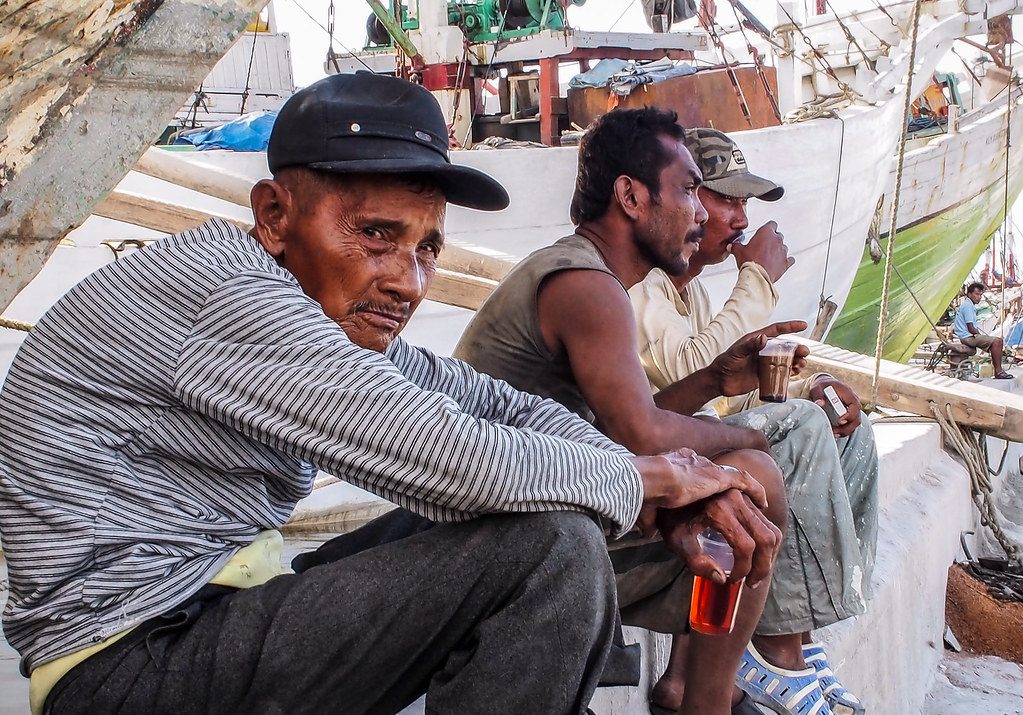
Sunda Kelapa is the old port just north of Kota Tua, and it still works. Painted wooden pinisi schooners, built by Bugis shipwrights from South Sulawesi, tie up along the quay while dockworkers carry cargo on and off by hand. Local photographer Nico Harold calls it his favorite place for street work in Jakarta. The workers are used to cameras and often friendly. On weekday afternoons, kids who live beside the harbor jump off the ships for fun. If they spot you shooting, they may ask for a cheap drink. Stand low on the quay and shoot along the hulls for depth. It is an active industrial site: don't block busy workers and watch for moving equipment.
Jakarta Kota Station
Jakarta Kota Station, at the edge of the old town, was first built in 1887 and rebuilt in 1929 in an Art Deco style with a big arched roof. It is a terminus for commuter trains, so rush hour brings waves of people flowing through the hall. The arched roof and the long platforms give you strong lines and repeating shapes. I'd come at the evening rush and stand at the end of the hall, shooting back toward the light so the crowd turns to silhouettes. Rules for photography inside stations can change, so if staff ask you to stop, stop. It is a short walk from Fatahillah Square.
Glodok & Petak Sembilan
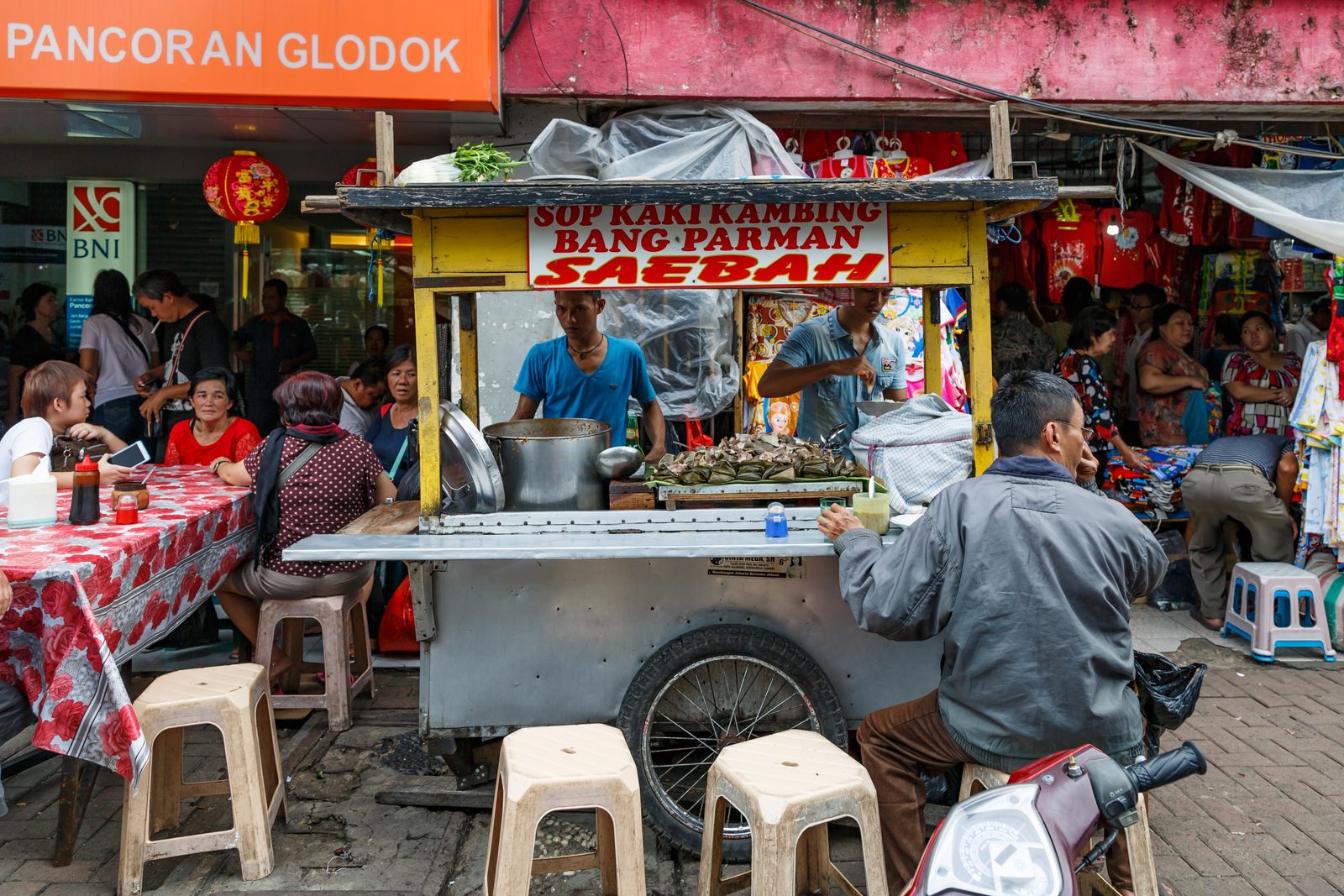
Glodok is Jakarta's Chinatown. It began long before Indonesia existed, as the area where the Dutch required Batavia's Chinese residents to live. Today it is a tangle of markets and old houses around Petak Sembilan, with temples including the Vihara Dharma Bhakti. Mornings are best, when the market lanes are busiest and light cuts into narrow streets. Inside the temple compound, incense smoke catches the light, but people are there to pray: keep your distance and don't use flash. Look for a vendor lit by a single gap between awnings. The area is busiest around Chinese New Year, which is good for pictures and bad for elbow room.
Lapangan Banteng
Lapangan Banteng is a public square next to the Cathedral and the Istiqlal Mosque, revitalized in 2018 around the West Irian Liberation Monument. The redesign gave it a fountain pool, and on weekend afternoons there is often a colorful dancing fountain show that pulls families in. Lomography's community lists it as one of the good open spaces for street photography in the city. Come in the late afternoon and stay for the show. Shoot the crowd lit by the fountain lights, or silhouette people against the spray. A running track circles the park, so early mornings give you joggers against the monument.
Car Free Day, Thamrin & Bundaran HI
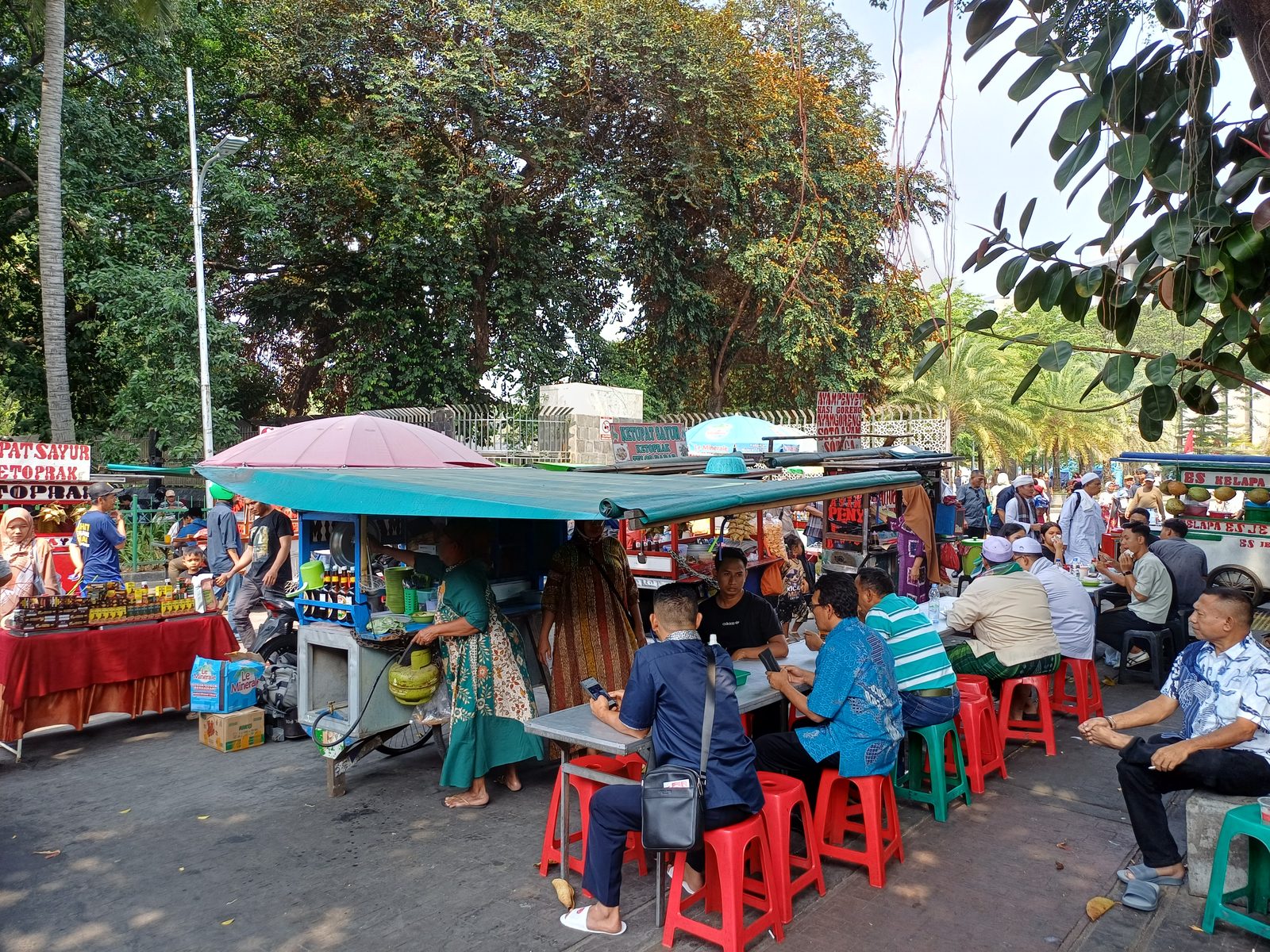
Every Sunday morning, Jalan Sudirman and Jalan Thamrin close to cars and turn into one long promenade. Thousands of people come out to exercise, and hundreds of vendors set up along the road selling food and much more. Bundaran HI, the roundabout with the Selamat Datang Monument, is the center of it. Sebastian Jacobitz calls it one of the best places for street photography in Jakarta and met the local street photography community there. Arrive early, as the cars vanish soon after dawn. Work the exercise classes near Grand Indonesia and the vendors under the towers. It gets very crowded, so hold your camera close.
Blok M & M Bloc Space
Blok M in South Jakarta is a shopping and nightlife district, and M Bloc Space on Jalan Panglima Polim has become a hub for artists and musicians. Lomography recommends it for the afternoons when a band or musician is playing. The nearby Panglima Polim streets are full of small coffee shops and a young crowd that is used to cameras. Come here for portraits of young Jakarta rather than markets. Shoot the audience, not the band. The area is well connected by MRT, which saves you the traffic.
Photographing people in Jakarta
Photographing people in public places in Indonesia is generally tolerated, and I know of no general ban on street photography. Indonesia's Copyright Law, No. 28 of 2014, has a special rule for portraits: the person in the picture controls commercial use of their image, so advertising or promotion needs their written consent. Military sites and some government buildings are off limits. This is general information, not legal advice. See is street photography legal.
In practice, Jakarta is easy. Sebastian Jacobitz learned from local photographers that chatting and smiling opens every door, and harbor workers at Sunda Kelapa are happy to talk about their lives. Most people are Muslim, so dress modestly. Ask before close portraits of women and don't photograph people during prayer. At Sunda Kelapa's Eid prayers, Nico Harold suggests waiting until the prayer ends. More in how to photograph strangers.
General information, not legal advice. More in is street photography legal?
What to photograph in Jakarta
- Dockworkers and pinisi schooners at Sunda Kelapa, carrying cargo along gangplanks.
- Colonial facades in Kota Tua, with shuttered windows as frames.
- Night canteens and market traders under bare bulbs in the back streets.
- Commuters pouring through Jakarta Kota Station at rush hour.
- Car Free Day: joggers and exercise classes on a wide empty avenue.
- Chinatown temples and incense smoke in Glodok.
- Scooters. They are everywhere, and panning on a passing rider gives you motion.
- Street food carts and their regulars, lit by a single lamp after dark.
- Harbor kids leaping off ship decks into the water on weekday afternoons. Use burst mode.
- Young Jakarta at gigs and coffee shops around Blok M.
A one-day photo walk
- 7:00, Sunda Kelapa Harbour. Start while it is cool and the dockworkers are busy. About 1.5 hours.
- 9:00, Kota Tua and Fatahillah Square. A 20 minute walk or a short ride south. Work the square and the side streets.
- 10:30, Jakarta Kota Station. Five minutes from the square. Shoot the hall and the platforms.
- 11:00, Glodok and Petak Sembilan. About 15 minutes' walk south. Markets, then lunch and a rest through the heat.
- 16:30, Lapangan Banteng. Ride about 20 to 30 minutes, depending on traffic. Stay for the fountain show if it is a weekend.
- After dark, back to Kota Tua. For the night canteens around the square. On a Sunday, swap the morning for Car Free Day on Thamrin instead.
When to shoot
Dry season, roughly May to September. Sunday mornings for Car Free Day, early mornings or evenings elsewhere. Midday heat keeps people indoors.
The light
Tropical sun that is harsh by 10:00. Haze often softens it. Evening street life runs under warm stall lights and fluorescent tubes.
What to bring
Small and light: an X100 or Ricoh GR type camera, or a compact body with a 35mm. Flash works well at night.
Safety
Traffic is the main danger; sidewalks are broken or missing. Watch for pickpockets in crowds. Some rougher market areas are better visited with a local photographer.
Tips for Jakarta
- Season: the dry months, roughly May to September. The wet season brings heavy afternoon rain and flooding in low areas.
- Heat: shoot before 10:00 and after 16:00. Carry water and take a break in a cafe or mall at midday, as locals do.
- Camera: Sebastian Jacobitz used an X100F and a Ricoh GR; Jamie used a Sony A7C with a 35mm. Small and quiet works here. See best camera for street photography.
- Transport: the MRT runs along the Car Free Day route, with several stations inside the car free zone. Use ride hailing for everything else.
- Go with locals: Jakarta has an active street photography community that often meets at Car Free Day. For rougher market areas, go with them rather than alone.
- Eid: Sunda Kelapa hosts mass prayers for Eid al-Fitr and Eid al-Adha. Dates move each year with the Islamic calendar.
- Night settings: the back streets are dark, so push ISO or try flash. See street photography settings.
Frequently asked questions
Is street photography legal in Jakarta?
Photographing people in public is generally tolerated and people are friendly. Indonesia's Copyright Law (No. 28 of 2014) gives people in portraits control over commercial use: advertising needs written consent. Be respectful at prayers and ask before close portraits of women.
Where are the best street photography spots in Jakarta?
Start with Kota Tua & Fatahillah Square, Sunda Kelapa Harbour, Jakarta Kota Station, Glodok & Petak Sembilan. Old Batavia's colonial square. Weekend crowds by day, food stalls after dark.
When is the best time for street photography in Jakarta?
Dry season, roughly May to September. Sunday mornings for Car Free Day, early mornings or evenings elsewhere. Midday heat keeps people indoors.
What lens should I bring to Jakarta?
Small and light: an X100 or Ricoh GR type camera, or a compact body with a 35mm. Flash works well at night.
Is Jakarta safe for street photographers?
Traffic is the main danger; sidewalks are broken or missing. Watch for pickpockets in crowds. Some rougher market areas are better visited with a local photographer.
More street photography cities
- YogyakartaIndonesia
- SingaporeSingapore
- Kuala LumpurMalaysia
- Ho Chi Minh CityVietnam