
Street Photography in Marrakech
Chaos and color in the medina: snake charmers, souks and year-round sun, with a real challenge for your people skills.
- Spots
- 6
- Best time
- October to April
- Lens
- 28mm or 35mm
- Photographing people
- Strict: ask first
Marrakech is one of the richest and hardest cities in the world for street photography. It is rich because the medina never stops: souks organized by trade and a main square full of storytellers and food stalls every night. It is hard because many people don't want to be photographed, or want money for it. F.D. Walker of Shooter Files ranks it among the best cities he has shot for sheer opportunity, while warning it is not a street photography friendly city.
Treat it as a test of approach. Dan Morris found it easier than the forums suggest, as long as he asked before close portraits and respected every no. The light helps: Marrakech gets over 300 days of sun a year, and the red walls glow in the morning and late afternoon. Keep the middle of the day for shade under the reed roofs of the souks, and let the market do the work.
Best street photography spots in Marrakech
Jemaa el-Fnaa
Jemaa el-Fnaa is the main square, and it changes by the hour. It is half empty by day, then fills from late afternoon with juice stands, henna artists, musicians and food stalls. F.D. Walker's favorite time is about an hour before sunset, when the light is best and the crowd is building. Abdellah Azizi, a Marrakech photographer, prefers dawn, when the square is empty except for lone bread sellers. Performers expect payment for photos, so agree a price first or keep them out of your frame. For a clean composition, shoot from the edge of the square with food stall smoke backlit by the setting sun.
Medina souks
The souks north of the square are a maze of covered alleys, organized by trade. Dan Morris describes shafts of sun falling through the slatted reed roofs, creating high-contrast pockets of light. Find one and wait for a figure to walk into it. Come in the morning as shops open, or late afternoon when the light angle is lower. Vendors often don't want their products photographed up close, and Azizi notes that buying something can change that fast. Hustlers will tell you you're going the wrong way. F.D. Walker's advice: ignore them, because it usually means you're heading away from the tourist core.
Mellah (Jewish Quarter)
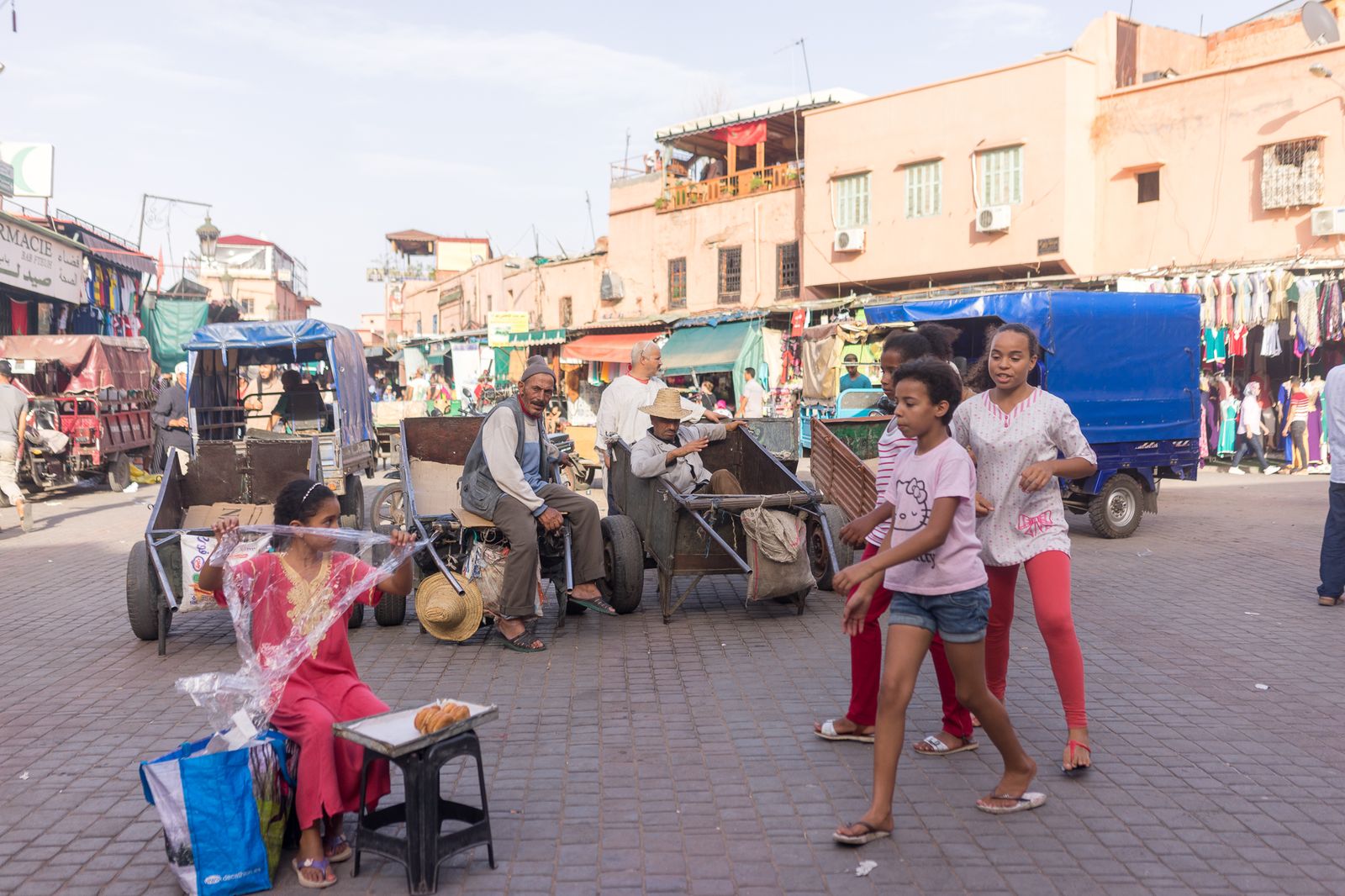
The Mellah is the old Jewish quarter, walled and now mixed, near the palaces. F.D. Walker found it more authentic and less touristy than the medina, and easier to find yourself alone with locals. People are more curious about foreigners in the quiet parts, which cuts both ways: more engagement, and more eyes on your camera. Come in the late morning or late afternoon. Look for long, narrow lanes with a single figure at the end and hard shadow across the walls. It is a residential area, so keep it slow and friendly, and ask before a close portrait.
Place des Ferblantiers
Place des Ferblantiers, the tinsmiths' square, sits at the edge of the Mellah between the Bahia and El Badi palaces. Artisans hammer lanterns and tin goods in small workshops around the square, and the palace visitors keep the surrounding streets busy. The metalwork is the subject: hammers and hanging lanterns throwing patterned shadows. Come in the late afternoon, when light slants into the workshops. Frame a craftsman through a hanging row of lanterns. Artisans are working, so ask first and expect to be asked to buy something or tip. Keep the royal palace grounds out of your frame.
Rahba Kedima (spice square)
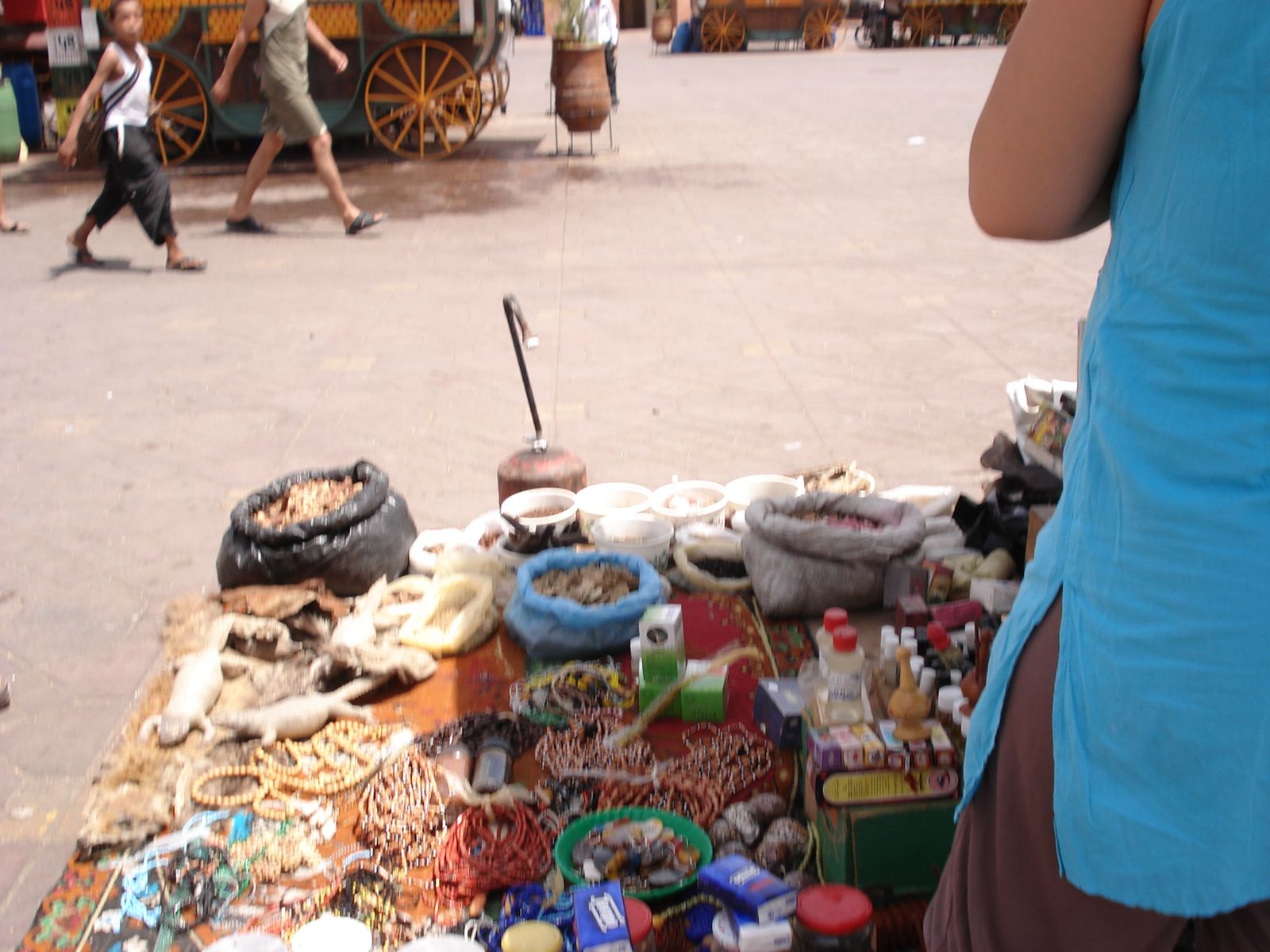
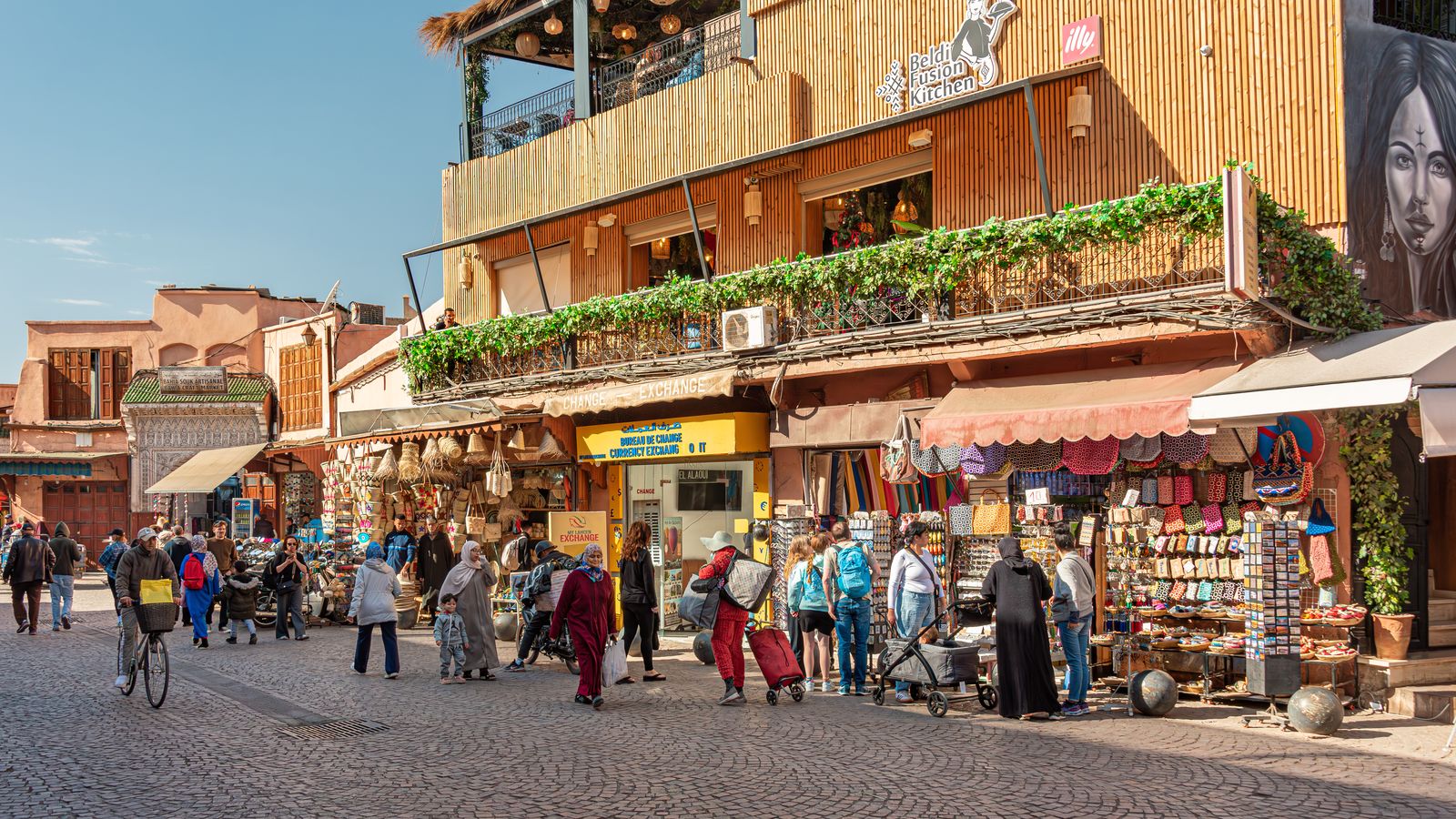
Rahba Kedima is a small square in the souks where vendors sell spices, dried herbs, baskets and hats. It gives you color in piles and sacks, plus shoppers bargaining. The rooftop cafés around the square let you shoot down on the scene without being in anyone's face, which solves a lot of the consent problem. Come mid-morning, when the square is busy and the light is still soft. From above, look for a single figure crossing the square with a long shadow. At ground level, buy some spices first. Vendors will then usually let you photograph their stall.
Tanneries (Bab Debbagh)
The tanneries near Bab Debbagh are where workers treat hides in open pits of dye and lime. The scene is raw and strong for documentary work. Expect to be met by men offering to guide you in, often with a sprig of mint for the smell, and then asking for money on the way out. Agree a price before you follow anyone. Come in the morning when the workers are active and the sun is lower. Shoot from the edge of the pits with a wide lens to show the grid of vats and the people working them. The workers are doing hard, dirty labor, so ask before close portraits.
Photographing people in Marrakech
Strict: local law or custom protects people's image. Ask first, or keep faces out of frame.
Taking photos in public places in Morocco is generally legal. Two lines are firm. Government buildings, police, the military and royal palaces are off-limits, and F.D. Walker was made to delete a frame that happened to include the back wall of a government building. The penal code, amended in 2018, also punishes capturing or spreading someone's private information or image without consent. This is general information, not legal advice.
The culture is the bigger hurdle. Many Moroccans, especially women and older people, don't want to be photographed. Performers want payment. Ask first: Abdellah Azizi suggests a greeting and mumkin sura? (may I take a photo?). If someone says no, smile and move on. Never photograph a child without a parent's permission. MarocMama suggests 5 to 10 dirhams if someone asks for money. For candids, F.D. Walker shoots confidently, then looks away as if thinking about something else.
General information, not legal advice. More in is street photography legal?
What to photograph in Marrakech
- Light through the souk roofs. Dan Morris uses these high-contrast pockets as stages and waits for a subject to walk in.
- Red and green. F.D. Walker points out the red walls against orange trees and gardens, a pairing he says few cities share.
- Donkeys and motorbikes in the same narrow alley.
- Craftsmen at work in the metal and leather souks.
- The grand taxi street outside the medina walls on the northeast side, full of old white Mercedes sedans and drivers calling for passengers.
- Food stalls at night in Jemaa el-Fnaa, lit by bare bulbs and smoke.
- Shadows. Long, hard lines across walls and lanes.
A one-day photo walk
- 6:30, Jemaa el-Fnaa at dawn. Empty square and soft light, as Abdellah Azizi suggests. About 45 minutes.
- 8:00, Medina souks. Walk north into the souks as shops open. About 2 hours.
- 10:00, Rahba Kedima. Inside the souks. Coffee on a rooftop and shoot down on the square.
- 11:00, Tanneries at Bab Debbagh. A 20 minute walk northeast. Agree a price with any guide first.
- 15:30, Place des Ferblantiers and the Mellah. A petit taxi from Bab Debbagh takes about 15 minutes. Rest through the midday heat first.
- 18:00, Jemaa el-Fnaa. A 15 minute walk north, arriving about an hour before sunset. Stay into the night.
When to shoot
October to April; mornings and evenings (midday sun is harsh).
The light
Harsh sun at midday; warm light on red walls at golden hour.
What to bring
Small, silent camera; 28mm or 35mm; shoot from the hip in crowds.
Safety
Fairly safe around the medina (6/10); know how the hustlers work.
Tips for Marrakech
- Season: October to April. Summer afternoons are extremely hot, so shoot early and late.
- Camera: small and silent. Dan Morris used a Fujifilm X100VI with a silent shutter. See best camera for street photography.
- Lens: 28mm or 35mm for the tight alleys. More in best lens for street photography.
- Dress: cover shoulders and knees. It reduces stares and earns respect, according to Azizi.
- Drones: leave yours at home unless you have a permit.
- Maison de la Photographie in the medina shows historic photographs of Moroccan street life. Visit it early in your trip for inspiration.
- Ramadan changes the rhythm. Streets are quiet in the afternoon and busy after sunset. Dates shift each year.
Frequently asked questions
Is street photography legal in Marrakech?
STRICT (cultural). Legal in public, but many people object, may ask for payment or ask you to delete (Shooter Files people score 3/10). Ask before close portraits; never photograph police or royal palaces.
Where are the best street photography spots in Marrakech?
Start with Jemaa el-Fnaa, Medina souks, Mellah (Jewish Quarter), Place des Ferblantiers. Best an hour before sunset and into the night.
When is the best time for street photography in Marrakech?
October to April; mornings and evenings (midday sun is harsh).
What lens should I bring to Marrakech?
Small, silent camera; 28mm or 35mm; shoot from the hip in crowds.
Is Marrakech safe for street photographers?
Fairly safe around the medina (6/10); know how the hustlers work.