
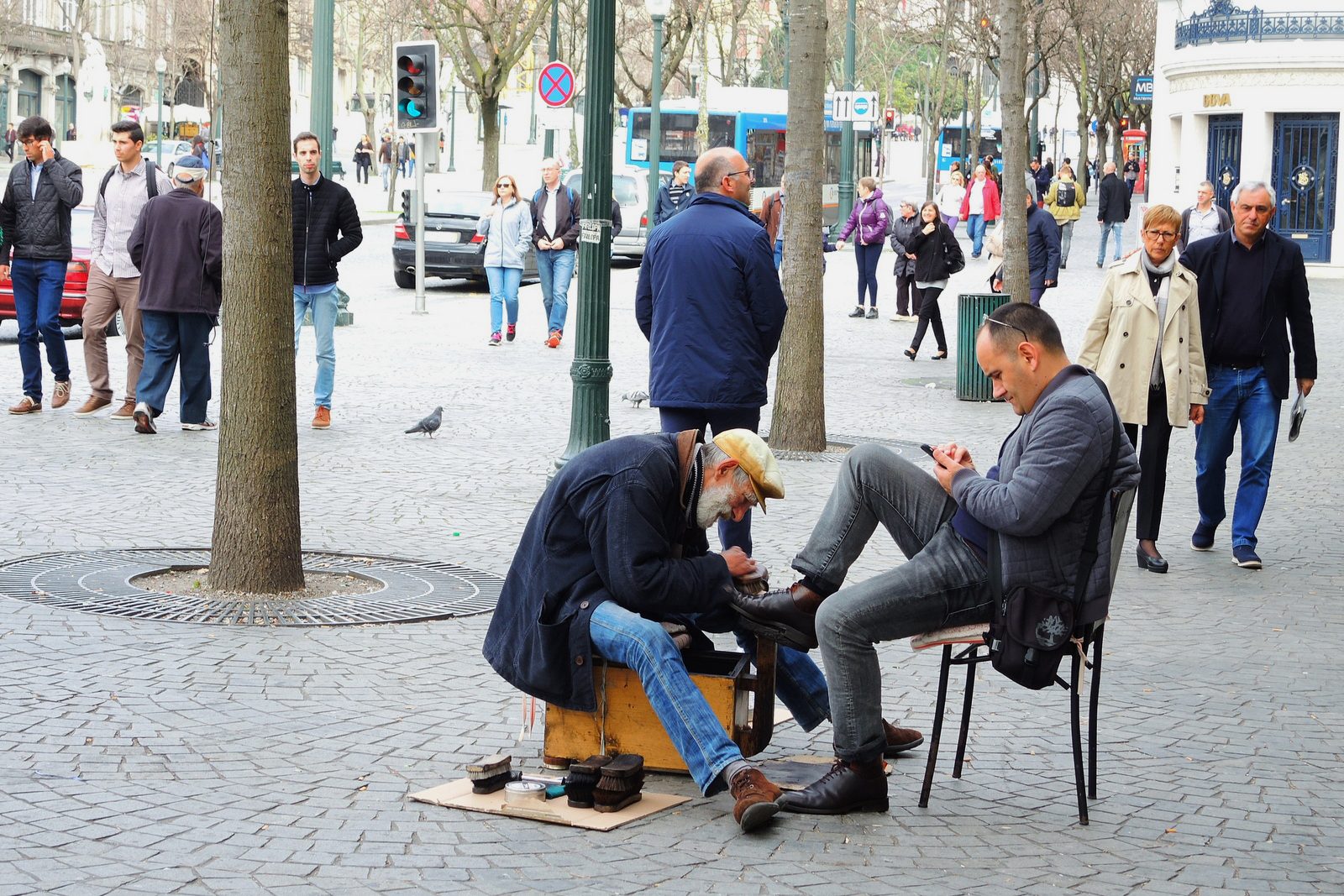
Street Photography in Porto
Porto is small and walkable, with steep tiled lanes above a river full of light, and its people are among the most relaxed about cameras in Europe.
- Spots
- 8
- Best time
- Spring and autumn for mild weather
- Lens
- 50mm or 28mm
- Photographing people
- Strict: ask first
Porto is one of the best small cities in Europe for street photography because it is compact and steep, with light and texture everywhere. Houses stack up from the Douro with shaded lanes between them, and the iron bridge frames the view. Roman Fox, who spent two weeks shooting there, calls it one of the best spots in Europe for street and travel photography and one of the most relaxed places he has shot.
People are friendly and the center is safe on foot. The catch is popularity. Summer brings heavy crowds to Ribeira and the bridge, so I'd shoot the river at sunrise and move into the back streets as the day fills up. In winter, fog and rain replace the crowds, which suits moody pictures.
Best street photography spots in Porto
Ribeira waterfront
Ribeira is the postcard: narrow, colorful houses leaning on each other along the Douro, with cafe tables along the quay. Roman Fox starts his Porto plan here at sunrise, and that is the time I'd pick too, before the restaurants set up and the tour boats fill. Walk the quay, then go one or two streets back into the lanes, where he found the best light of the day. A good frame is a figure on a stairway between houses with a strip of river behind. By midday the quay is packed with visitors. Mind the edge of the quay, which has no railing in places.
Ponte Luis I
The Ponte Luis I is a two level iron bridge finished in 1886. The upper deck carries the metro and people on foot, the lower deck carries cars and people along the river. Roman Fox recommends the top deck at golden hour and again at sunset. The Wandering Lens notes long exposures with the metro trains crossing. For street work, use the walkway as a stage: silhouettes against the sky, people leaning on the railing, a train sliding past behind them. A 24 to 70mm zoom is useful here. The upper deck is high and windy, and trains pass close, so keep to the walkway.
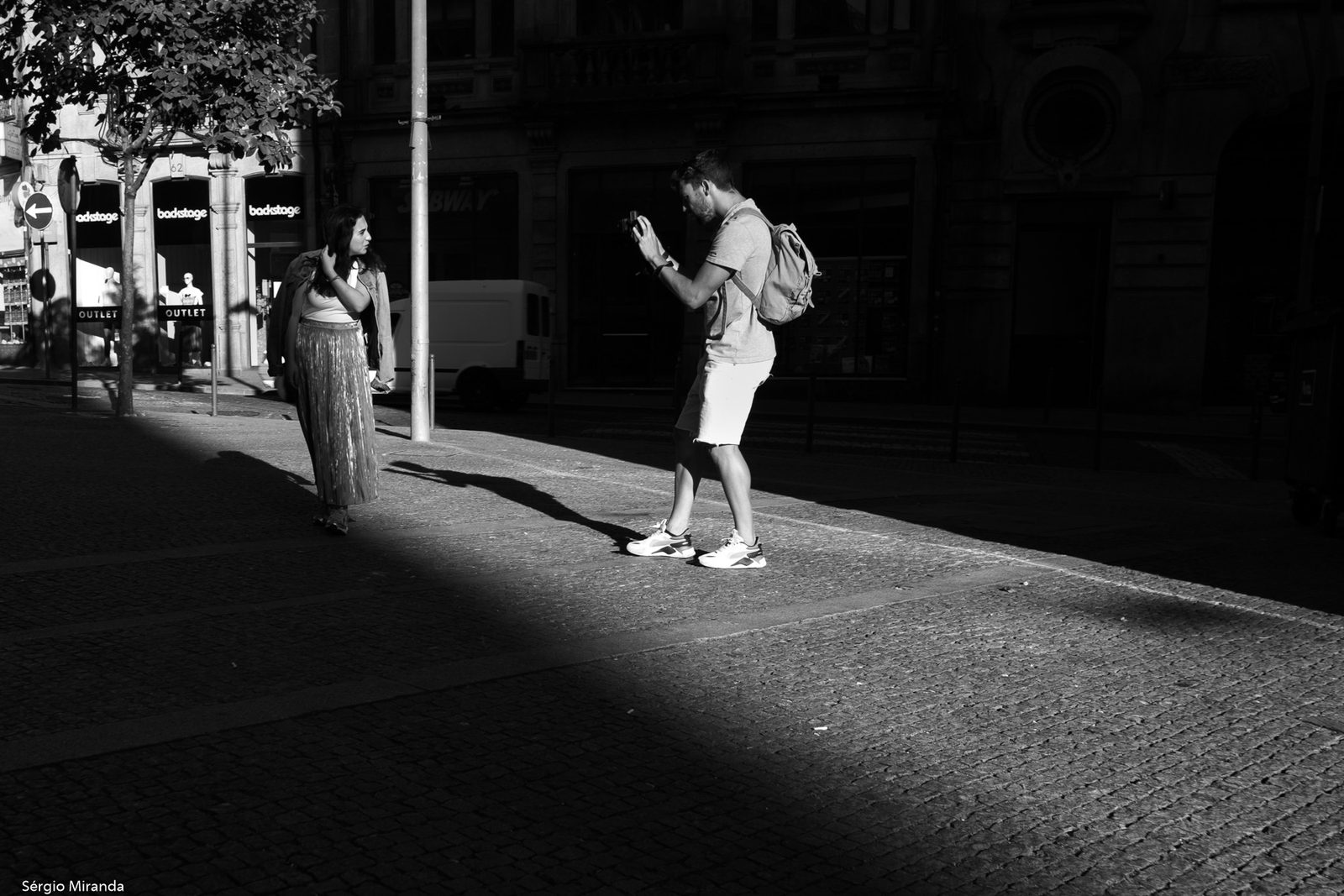
Sao Bento Station
Sao Bento is a working train station with an entrance hall covered in blue and white tiles showing scenes from Portuguese history. It is also a tourist stop, so you will have people in every frame. The Wandering Lens suggests using that: work the crowd with shadows and long exposures of travelers moving past the walls. I'd come early in the morning, when commuters outnumber visitors. Stand with the tiles as a backdrop and wait for one person to cross a clean patch of wall. Commuters are on their way to work, so keep out of the flow toward the platforms.
Mercado do Bolhao
Bolhao is the historic city market, reopened after a long restoration. Stalls sell fish, fruit, flowers and food on two levels around an open courtyard. The Wandering Lens liked the interior from the ground floor and from the balconies, which let you look down on stalls and shoppers. Morning is when vendors are setting out produce and locals shop. A balcony frame, with a vendor and a customer framed by crates of fruit below, works well. Security told the Wandering Lens photographer to put a tripod away, as tripods are not allowed inside. Buy something and ask before a close portrait of a vendor.
Rua de Santa Catarina & Capela das Almas
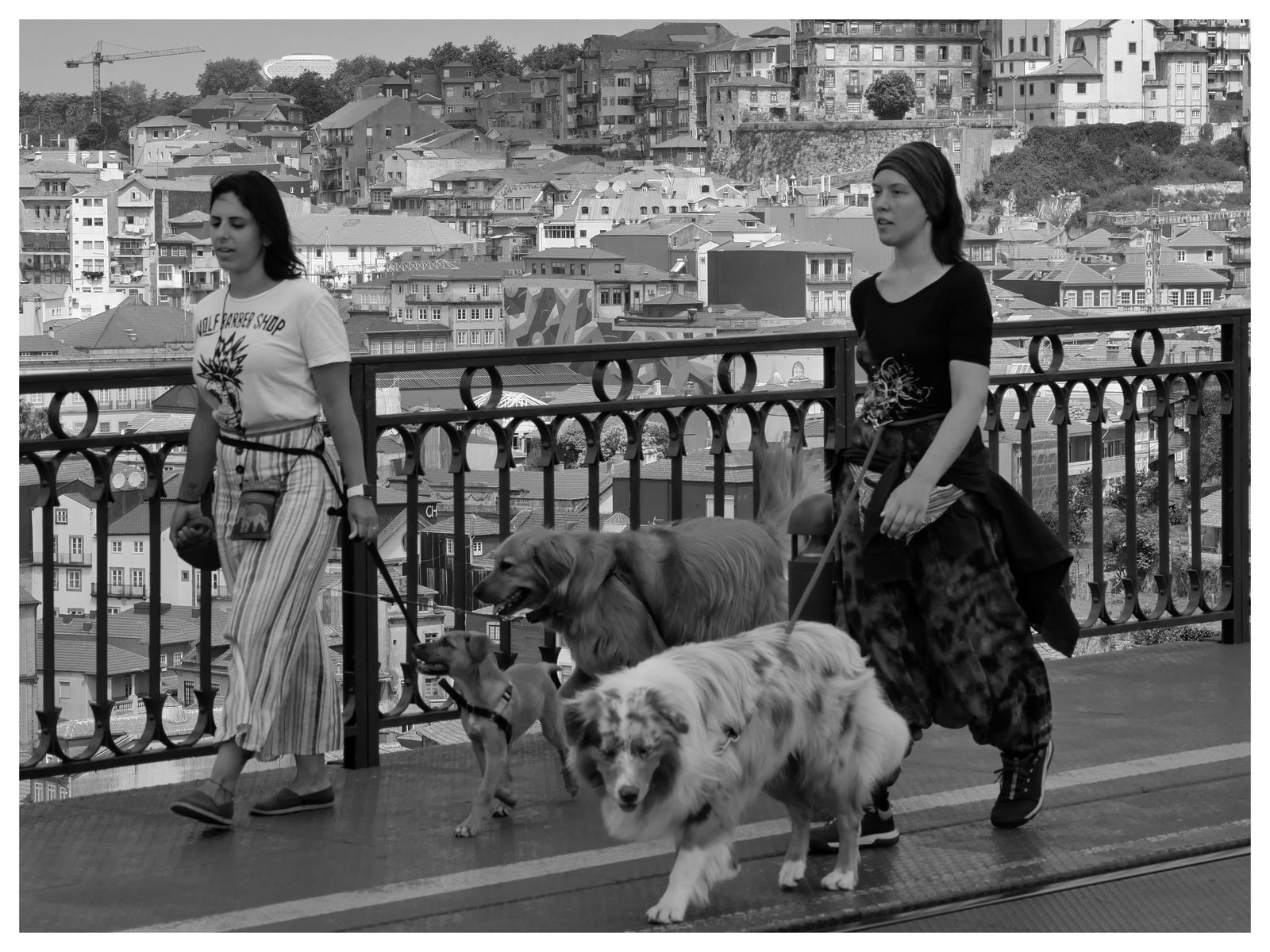
Santa Catarina is Porto's main shopping street, pedestrian for most of its length and busy all day. At the corner with Rua de Fernandes Tomas stands the Capela das Almas, covered in blue and white azulejo panels. The tiles make a patterned wall behind people walking past, and that is the picture: a single figure crossing the blue. Late afternoon light is good here. The corner gets crowded with people photographing the chapel, so use them as subjects too. The street is also a good place to practice candid work in a crowd, since people are busy shopping.
Miragaia
Miragaia is the old riverside quarter just west of Ribeira, and it is much quieter. Washing hangs on the balconies and stairways climb up from the river. It is one of the places recommended for fewer crowds than the center. I'd come in the afternoon, when the sun falls along the lanes toward the river. Look for residents on doorsteps and cats in doorways. Because it is residential, keep it low key and make the place the subject. Ask before a portrait, and do not shoot into open doors or windows.
Cais de Gaia & Serra do Pilar
Cross the river to Vila Nova de Gaia for the view back at Ribeira. The quay has rabelo boats, the old port wine barges, moored in front of the port cellars. The Wandering Lens calls it a favorite stroll at any time of day. Above the bridge on this side is the Serra do Pilar monastery viewpoint, a classic sunset spot that gets very crowded. Arrive early or shoot the crowd itself: rows of people watching the sun set over the city. The Wandering Lens noted that some building lights switch off at midnight, so do not leave the night shot too late.
Foz do Douro
Foz is where the Douro reaches the Atlantic, about 6 kilometers from the center. Roman Fox walked there along the river and found good photos on the way. At the end is a long pier with a lighthouse, where waves break over the walls and people watch the spray. That spray against a figure is the picture. Wind and low sun in the late afternoon help. The breakwater and pier can be dangerous in heavy seas, and Roman Fox warns about the waves, so stay off wet walls when the sea is up.
Photographing people in Porto
Strict: local law or custom protects people's image. Ask first, or keep faces out of frame.
Taking a photo in a public place in Portugal is legal. Publishing is where the law bites. Article 79 of the Civil Code protects the direito a imagem: a recognizable person's portrait cannot be shown or sold without their consent. As Lisbon in Photo explains, images framed in public places or at public events, where people are part of the scene, are the exception. A tight portrait of one stranger is not. Roman Fox gives the common rule of thumb: personal and artistic use is generally accepted, commercial use needs permission. This is general information, not legal advice.
In practice, Porto is relaxed about cameras and Roman Fox found the attitude to photographers very positive. Older residents in Miragaia and Ribeira do notice a lens. Shoot the scene, and when you want a face, ask. A smile and a phrase in Portuguese go a long way. See is street photography legal.
General information, not legal advice. More in is street photography legal?
What to photograph in Porto
- Azulejos. Blue and white tile walls at Sao Bento and on church walls across the center. A clean backdrop for a single figure.
- Stairways. Steep steps between houses in Ribeira and Miragaia, with light falling in strips.
- The bridge. Walkers and metro trains on the upper deck of the Ponte Luis I, often as silhouettes.
- Washing lines. Laundry across balconies in the old quarters.
- Market life. Vendors and shoppers in Bolhao.
- River people. Fishermen and walkers along the quays.
- Fog and rain. Winter weather softens the river and makes reflections on the stone.
A one-day photo walk
- Sunrise, Ribeira waterfront. Work the quay and the lanes behind it. About 1.5 hours.
- 8:30, Ponte Luis I lower deck, then Cais de Gaia. Cross the river on foot, 10 minutes, and shoot back toward Ribeira.
- 10:00, Sao Bento Station. Walk back and climb up, about 15 minutes. Then 10 minutes on to Mercado do Bolhao for late morning trade.
- 12:30, Rua de Santa Catarina and Capela das Almas. Two minutes from the market. Lunch nearby.
- 15:00, Miragaia. A 20 minute walk downhill and west. Afternoon light in the lanes.
- 16:30, Foz do Douro. Take historic tram line 1 along the river, or walk about 1 hour and 15 minutes.
- Sunset, upper deck of the bridge or Serra do Pilar. Taxi or bus back to the center.
When to shoot
Spring and autumn for mild weather. Summer is sunny and busy, so shoot at sunrise. Winter brings fog and rain. The Sao Joao festival on the night of 23 June is the biggest street event.
The light
Warm low sun along the Douro at both ends of the day, deep shade in the narrow lanes behind the river. Fog and drizzle in winter give soft, moody light.
What to bring
A 50mm prime suits the city's distances; a 28mm for tight lanes. A zoom helps on the bridge and viewpoints.
Safety
Safe and relaxed. Watch for pickpockets in crowds at Ribeira and on the bridge, and for slippery steep streets.
Tips for Porto
- Sao Joao, 23 June: Porto's biggest night. Crowds tap each other with plastic hammers, and fireworks go up over the Douro at midnight. See Portugal Confidential. Keep your camera on a strap in the crush.
- Lens: Roman Fox found a 50mm prime the most useful, with a 28mm and a 24 to 70mm zoom as backups. See best lens for street photography.
- Crowds: in summer, shoot Ribeira and the bridge before 9:00.
- Winter: expect fog and rain. Use it for reflections on the stone and soft light on the river.
- Shoes: the streets are steep and the stone is slippery when wet.
- Tripods: not allowed inside the Bolhao market. Brace on a railing instead.
- Hard light: in the lanes, expose for the sunlit patch and let the shade go dark. More in street photography settings.
Frequently asked questions
Is street photography legal in Porto?
STRICT on publishing. Portuguese Civil Code article 79 protects the right to one's image. Photos in public places and at public events are generally allowed, but publishing or selling a close portrait of a recognizable stranger needs consent.
Where are the best street photography spots in Porto?
Start with Ribeira waterfront, Ponte Luis I, Sao Bento Station, Mercado do Bolhao. Colorful riverside houses and cafe crowds. Sunrise before the tourists.
When is the best time for street photography in Porto?
Spring and autumn for mild weather. Summer is sunny and busy, so shoot at sunrise. Winter brings fog and rain. The Sao Joao festival on the night of 23 June is the biggest street event.
What lens should I bring to Porto?
A 50mm prime suits the city's distances; a 28mm for tight lanes. A zoom helps on the bridge and viewpoints.
Is Porto safe for street photographers?
Safe and relaxed. Watch for pickpockets in crowds at Ribeira and on the bridge, and for slippery steep streets.