
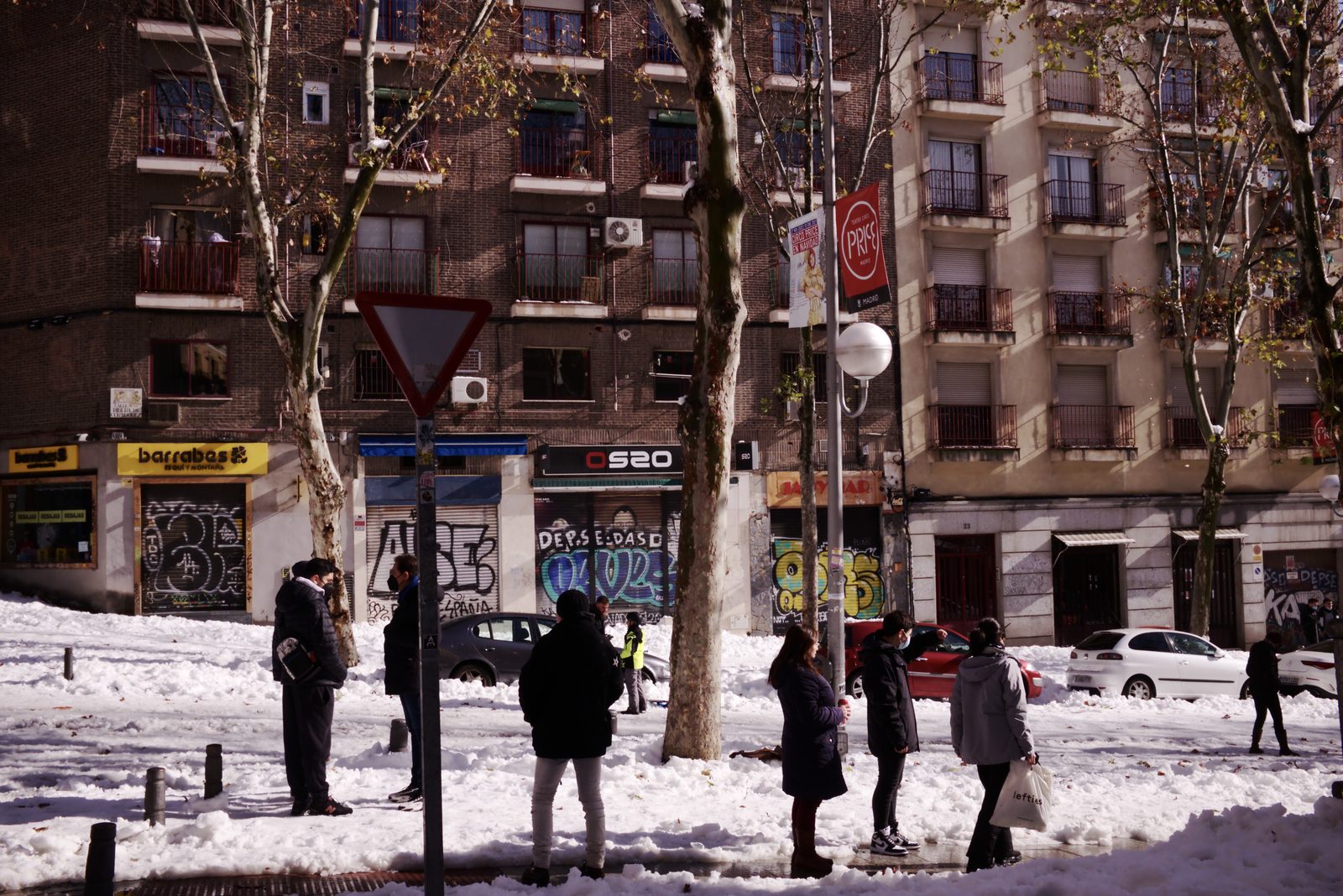
Street Photography in Madrid
Madrid lives outdoors and late under hard, clear light, and every Sunday a flea market fills streets it has used since the 18th century.
- Spots
- 8
- Best time
- April to early June and September to mid-October
- Lens
- 28mm or 35mm
- Photographing people
- Strict: ask first
Madrid is good for street photography because its people live outside and late, under some of the clearest light in Europe. The Chasing Hippoz guide describes lunch at 14:00 and dinner at 22:00, with the city only going quiet around 2:00. That rhythm puts crowds on the plazas from morning to midnight. Ben Holbrook, writing in Driftwood Journals, points to the clarity of the light and the colour of the streets, and calls Madrid one of the most underrated cities in Europe.
The city is large, but the best street areas sit close together in the historic centre, from Sol down to the old barrios in the south. Sunday is the key day, because El Rastro turns a whole hillside into a flea market. I'd plan around the light. Shoot early and late, and spend the hot middle of the day indoors, as the locals do. Spain also has strong image rights, which matter more when you publish than when you shoot.
Best street photography spots in Madrid
Puerta del Sol
Puerta del Sol is Madrid's central square and the point from which the city's radial streets spread out. Alfonso Calero, writing for Australian Photography, uses it as the starting point for his photo walks. It is busy all day with people meeting and pouring out of the metro. The open square gives you hard sun and long shadows in the morning and late afternoon. Try standing at the metro exit and catching people as they step into the light. Pickpockets work the crowds here, so keep your bag in front.
Gran Vía & the Metrópolis Building
Gran Vía is the grand boulevard of theatres and shops that starts at the Metrópolis Building on Calle de Alcalá. Chasing Hippoz notes that golden hour turns its stone facades amber, and that the lit marquees and traffic read well after dark. For street work, the wide pavements carry a steady flow of shoppers and theatregoers. Use a short telephoto from the middle of the street to compress walkers against the facades. At night, look for faces lit by shop windows. Crossings are busy, so shoot from the pavement.
Plaza Mayor
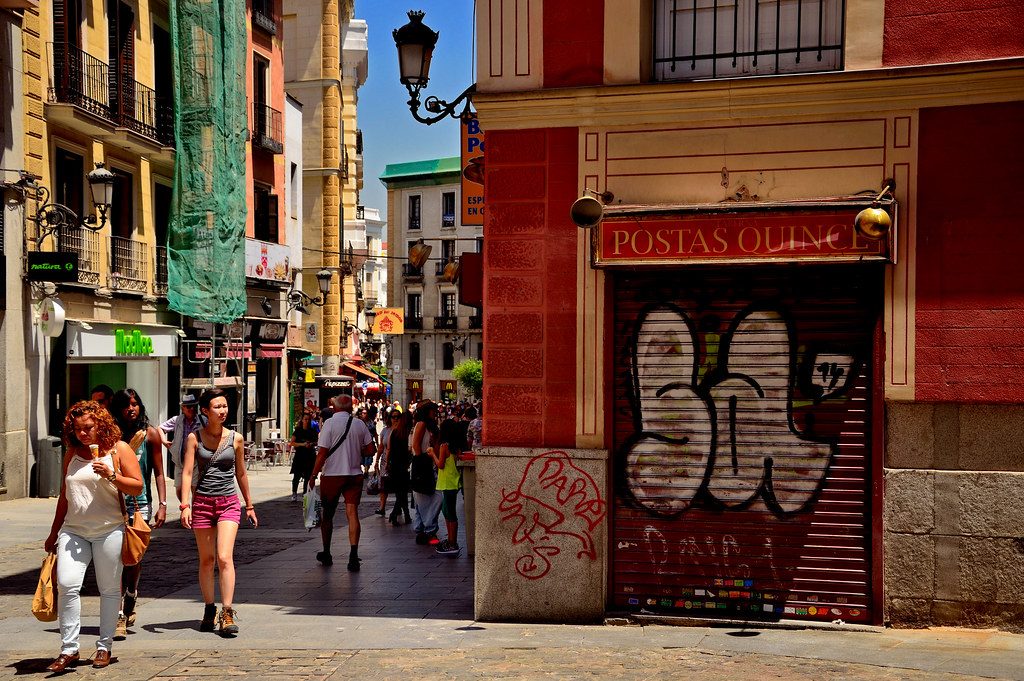
Plaza Mayor is the enclosed, arcaded square at the heart of old Madrid, and Calero calls it one of the city's most vibrant. The arcades give you deep shade framing a bright, open square, which is ideal for silhouettes. Stand under an arch in the late afternoon and wait for a figure to cross the sunlit cobbles. The square fills with visitors and cafe tables, so there is always movement. Blue hour works well too, when the lamps come on. Keep an eye on your valuables near the busy cafes.
El Rastro (Plaza de Cascorro & Ribera de Curtidores)
El Rastro is Madrid's open-air flea market, held on Sundays and public holidays from Plaza de Cascorro down the steep Ribera de Curtidores. Tourism Madrid says to arrive before 11:00 to avoid the crowds, or come at midday for the atmosphere and stay until closing around 15:00. Chasing Hippoz calls it one of the best street photography environments in the city. Shoot down the slope for a sea of heads and awnings. Work close with a wide lens around the stalls, and ask before portraits. It is packed, so carry little and watch your pockets.
La Latina & Cava Baja
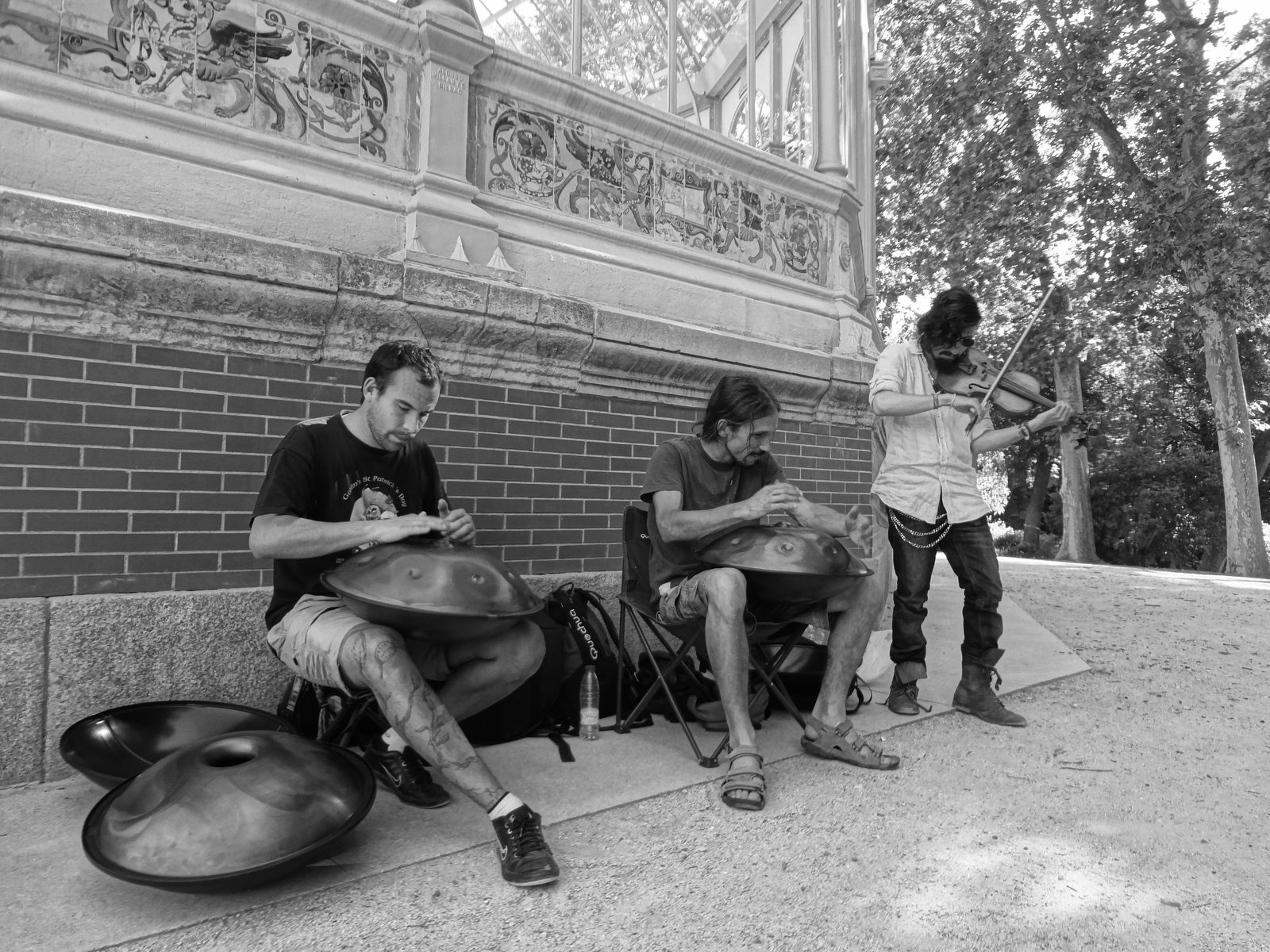
La Latina is the old quarter just west of the Rastro, and Calle de la Cava Baja is its tapas street. Chasing Hippoz describes locals moving from bar to bar here on Sunday afternoons after the market closes. The street is narrow, so the light is soft and the bar doorways glow as the day ends. Stand across from a busy doorway and wait for gestures at the bar. Weekday afternoons are much quieter, as Calero notes. Stay out of the way of waiters, and ask before shooting inside a bar.
Lavapiés
Lavapiés is a steep, multicultural barrio east of the Rastro, with a mix of old Madrid residents and newer communities from across the world. Tourism Madrid places El Rastro where La Latina meets Lavapiés, so the two are easy to combine. Look for daily life around Plaza de Lavapiés and street art on the side walls. The slopes give you strong diagonals. Late afternoon light runs down the streets. This is a residential area, so work slowly and don't shoot into homes. Some residents are wary of cameras; respect a no.
Malasaña (Plaza del Dos de Mayo)
Malasaña is the bohemian neighbourhood north of Gran Vía, centred on Plaza del Dos de Mayo. Chasing Hippoz recommends it for street photography and murals, and suggests a smaller, less conspicuous camera there. The square fills with families in the day and terraces at night. Pair people with the painted walls, or work the narrow streets as the light drops. Evening is the best time. The area gets loud late on weekends, and people on terraces may not want to be photographed, so read the table before you raise the camera.
Retiro Park (Palacio de Cristal)
El Retiro is the city's great park, big enough that Calero warns you might get lost. Chasing Hippoz arrived at 6:30 and found only joggers and an old man feeding pigeons near the Palacio de Cristal, the glass pavilion. That early hour is the one I'd target for quiet street frames: lone figures in low orange light. Weekends bring families and rowers on the lake. Use the pavilion's glass for reflections with people moving past. The park is large, so plan a route and bring water in summer.
Photographing people in Madrid
Strict: local law or custom protects people's image. Ask first, or keep faces out of frame.
Spain protects the right to your own image. Article 18 of the Constitution guarantees it, and Organic Law 1/1982 treats capturing or publishing someone's image without consent as an unlawful intrusion, with exceptions. According to Conesa Legal's summary, those exceptions include public figures photographed at public events or in public places, and people who appear only incidentally in images of a public event. Using someone's image for advertising or commercial purposes needs consent. Street photography is widely practised, and taking pictures in public is rarely a problem; the legal risk comes with publishing a clear portrait of one identifiable person. This is general information, not legal advice. See is street photography legal.
Madrileños are generally friendly and used to cameras in the centre. For close portraits you plan to publish, ask; people usually say yes. See how to photograph strangers.
General information, not legal advice. More in is street photography legal?
What to photograph in Madrid
- Hard light and shadow. Clear skies most of the year give you graphic shadows on plazas and facades.
- Late crowds. People fill the streets well into the night, lit by shop windows and bars.
- The Rastro. Bargaining at the stalls, and characters such as the wafer seller in traditional chulapo dress that Tourism Madrid mentions.
- Arcades and archways in Plaza Mayor that frame bright squares.
- Tapas bars in La Latina, with doorways full of standing drinkers.
- Murals in Malasaña and Lavapiés.
- Park life in Retiro at dawn and on weekends.
- Festivals such as San Isidro in May, with traditional dress in the streets.
A one-day photo walk
- 7:00, Retiro Park. Low light and early joggers at the Palacio de Cristal. About an hour.
- 9:00, Puerta del Sol. About 25 minutes on foot west, or the metro. Catch the morning rush from the metro exits.
- 10:00, Plaza Mayor. Five minutes on foot. Work the arches while shadows are long.
- 11:00, El Rastro (Sundays) or Lavapiés. Ten minutes south. Stay through midday.
- 14:00, La Latina and Cava Baja. A few minutes west. Lunch, then rest through the hot afternoon.
- 19:00, Gran Vía to Malasaña. About 20 minutes north. Golden hour on Gran Vía, then night on Plaza del Dos de Mayo.
When to shoot
April to early June and September to mid-October. Early mornings and the long evenings; summer afternoons are hot and empty. Sundays for El Rastro, May for the San Isidro festival.
The light
Clear and hard, with strong shadows most of the year. Harsh overhead sun in summer from about 14:00 to 18:00. Golden hour is late: around 20:30 in April and after 21:30 in June and July.
What to bring
A 28mm or 35mm prime for plazas and the Rastro. A short telephoto for Gran Vía. Water and a hat for summer walks.
Safety
Safe overall. Pickpockets work the crowds at Puerta del Sol and the Rastro, and on the metro. Keep bags zipped and in front.
Tips for Madrid
- Timing: shoot from dawn to about 13:00 and from 18:00 into the night. Summer afternoons are too hot and too empty.
- El Rastro: Sundays and public holidays, until about 15:00. Before 11:00 for space, midday for crowds.
- Late light: golden hour is around 20:30 in April and after 21:30 in June and July, per Chasing Hippoz.
- Seasons: April to early June and September to mid-October are the best windows.
- San Isidro: the city's festival in May brings traditional dress and outdoor events.
- Exposure: in hard sun, expose for the highlights and let shadows go black. See street photography settings.
- Lens: a 28mm or 35mm for the Rastro and plazas. See best lens for street photography.
- Pickpockets: common in the Rastro crowds and on the metro. Keep your bag in front.
Frequently asked questions
Is street photography legal in Madrid?
STRICT on publishing. Spain's Constitution (Article 18) and Organic Law 1/1982 protect the right to one's own image. Capturing or publishing a person's image without consent can be an unlawful intrusion, with exceptions for public figures in public and for people who appear only incidentally in images of public events. Commercial use needs consent. Taking pictures in the street is common, but ask before publishing close portraits. General information, not legal advice.
Where are the best street photography spots in Madrid?
Start with Puerta del Sol, Gran Vía & the Metrópolis Building, Plaza Mayor, El Rastro (Plaza de Cascorro & Ribera de Curtidores). The city's central square and main meeting point. Crowds all day and busy metro exits.
When is the best time for street photography in Madrid?
April to early June and September to mid-October. Early mornings and the long evenings; summer afternoons are hot and empty. Sundays for El Rastro, May for the San Isidro festival.
What lens should I bring to Madrid?
A 28mm or 35mm prime for plazas and the Rastro. A short telephoto for Gran Vía. Water and a hat for summer walks.
Is Madrid safe for street photographers?
Safe overall. Pickpockets work the crowds at Puerta del Sol and the Rastro, and on the metro. Keep bags zipped and in front.