
Street Photography in Lisbon
Hills, trams and hard Atlantic light that throws graphic shadows across tiled streets; the whole city is photogenic.
- Spots
- 8
- Best time
- Spring and autumn
- Lens
- 35mm or 50mm
- Photographing people
- Strict: ask first
Lisbon is one of the best cities in Europe for street photography because of its light. The sun is bright and low for much of the year, and pale stone and tiled facades throw hard shadows you can build a whole frame around. Add the yellow trams grinding up the hills and you have graphic pictures on every corner. Eric Kim says the whole city is amazing. Nick Gunn calls it the best place he has photographed in years.
It is also safe, and English is widely spoken, which makes it an easy city to learn in. The challenge is noon. Summer midday light is flat on the ground and harsh on faces, so I'd plan the day around sunrise and the last two hours before sunset, and use the middle for shade and coffee.
Best street photography spots in Lisbon
Alfama & Graca
Alfama is the oldest district in Lisbon, a maze of stairways, courtyards, tiny squares and laundry lines that tumbles down from the castle to the river. Graça sits above it and feels more residential. Go early for neighbors on doorsteps and soft light in the lanes, or after dark, when Nick Gunn found musicians playing in alleys and corners. Look for a staircase with a patch of sun on it and wait for one figure to climb through. The cobbles are polished smooth and slippery, so wear shoes with grip.
Tram 28E
Tram 28E runs from Martim Moniz up through Graça and Alfama, down through Baixa and on to Estrela. It is the classic Lisbon picture, and the classic tourist queue. Roman Fox suggests riding before 8:00 to avoid the crush, and using burst mode, because the trams move faster than you expect on the curves. The best frames usually come from the street, not on board: find a tight bend, pre-focus where the tram will pass, and wait for a face at the window or a pedestrian pressed to the wall. Pickpockets work the crowded cars, so keep your bag in front.
Baixa & Rua Augusta
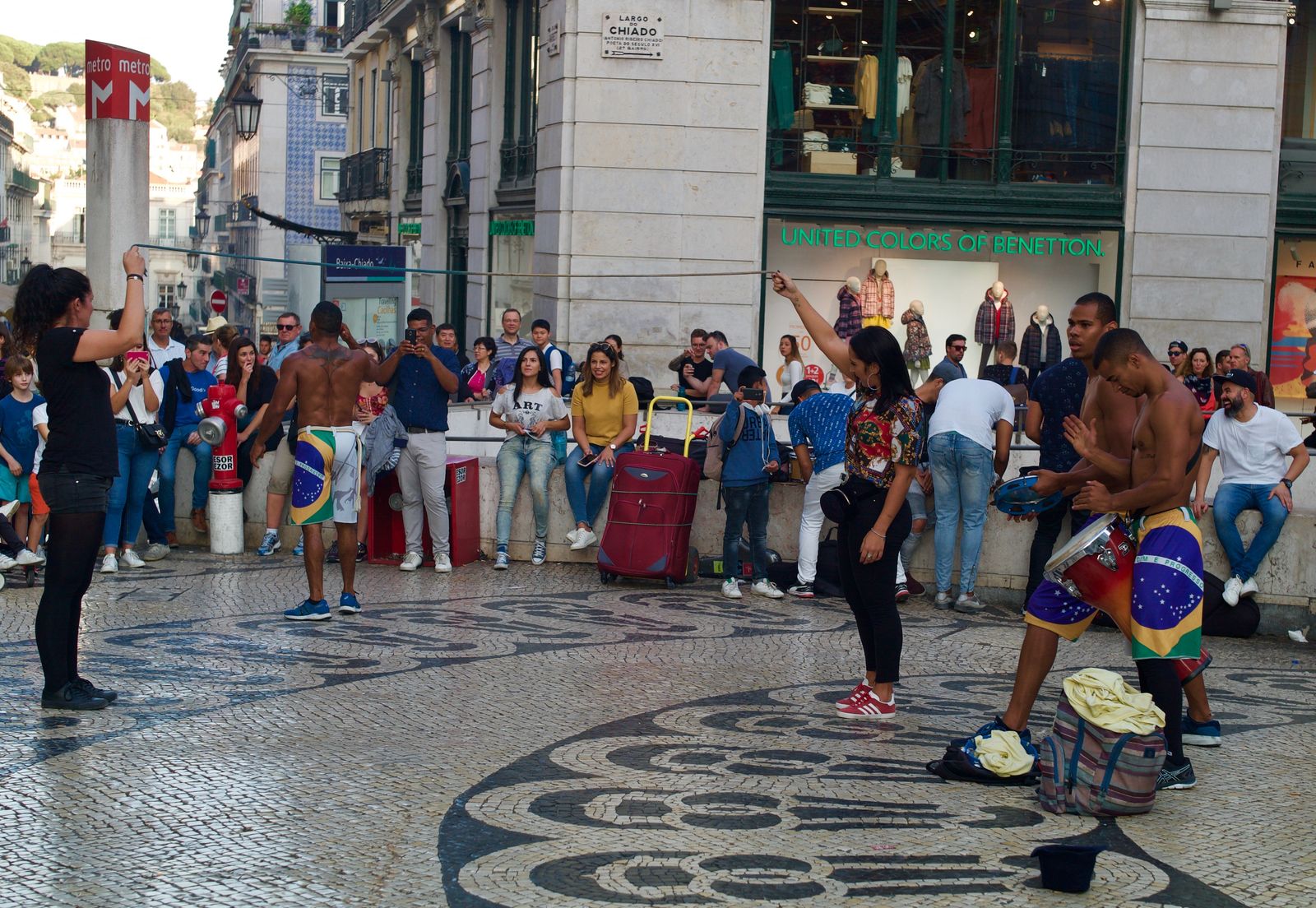
Baixa is the flat grid rebuilt after the 1755 earthquake, and Rua Augusta is its pedestrian spine, running down to the triumphal arch. The long straight streets channel crowds and light. Roman Fox calls it reflection heaven: shop windows and polished stone mirror everything when the sun is out. Early morning gives you long shadows and commuters instead of tour groups. Stand at a cross street and shoot along it, so the sidewalk pattern leads toward the walkers. Street performers draw tight crowds by midday, which is good for layers. Expect touts offering sunglasses and worse.
Praca do Comercio
The big riverside square opens onto the Tagus at the end of Rua Augusta. Nick Gunn liked the mix of old and new trams crossing it, and stayed through sunset to use passersby as frames for the bridge in the distance. The square is wide and yellow, so it works best late in the day when people cast long shadows across it. Walk down to the Cais das Colunas steps at the water, where people sit and watch the sunset, and shoot them in silhouette against the river. Keep an eye on your gear in the crowd at dusk.
Bairro Alto
Bairro Alto has two lives. By day it is quiet and local, and Nick Gunn found it less crowded than other districts, with residents going about their day. By night the grid of narrow streets fills with people drinking outside the bars until late. For night work, bump your ISO and shoot the crowd lit by bar doorways, or stand at an intersection and frame a single lit face against a dark street. The late crowd is drunk and relaxed, so keep it friendly and put the camera down if someone objects.
Mouraria & Martim Moniz
Mouraria is the most mixed neighborhood in the center. Mark Seymour calls it a street photographer's dream, with Portuguese life alongside South Asian and African shops and plenty of street art. Rua do Benformoso is the busiest street for daily life. Come in the late morning or late afternoon, when the lanes have shade and pockets of light. Use murals as backgrounds and wait for a passerby to echo the painted figure. This is a residential area with less tourist traffic, so work slowly and ask before close portraits.
Cais do Sodre
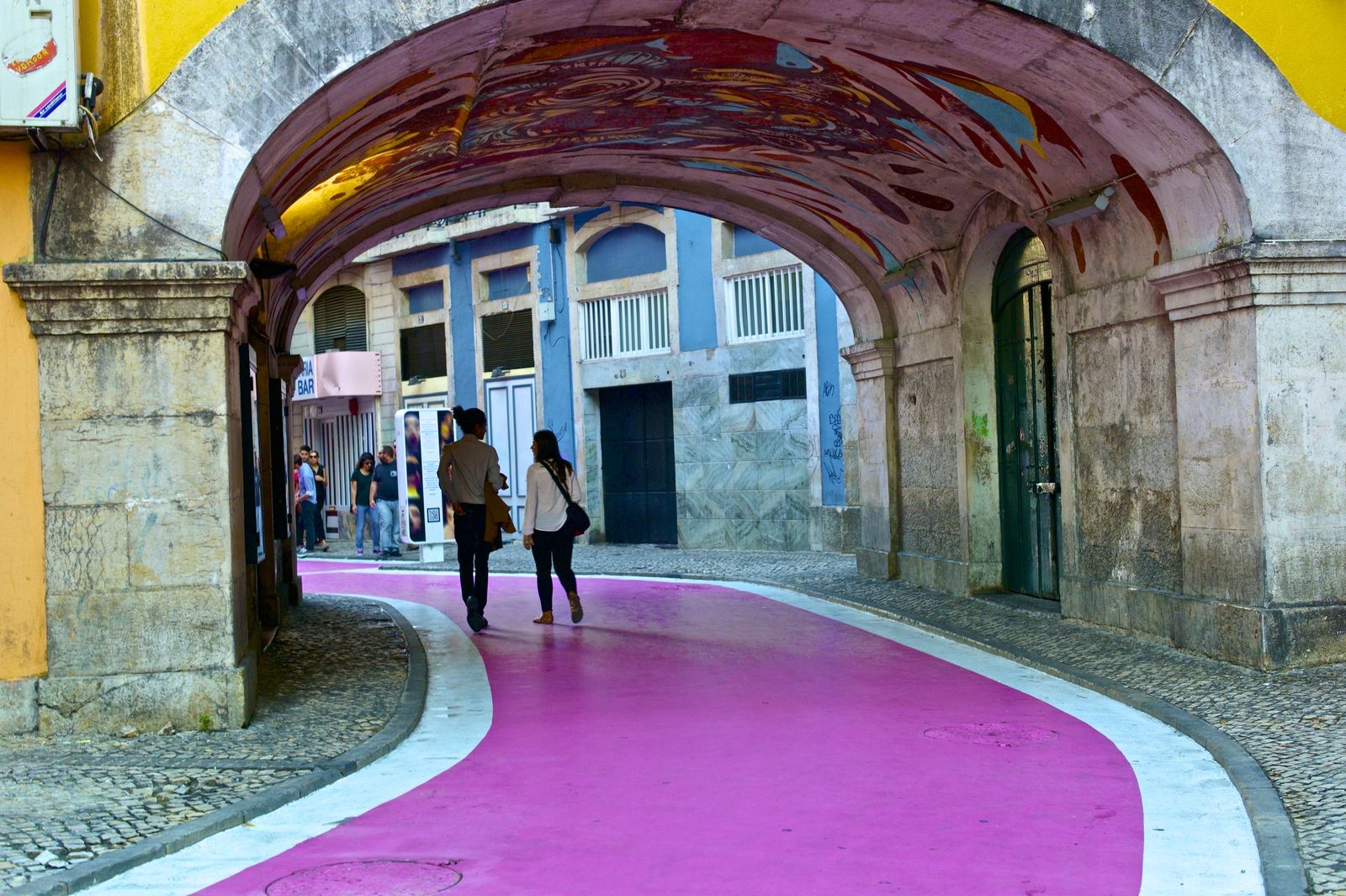
Cais do Sodré is a transport hub by the river, with trains to Cascais and ferries across the Tagus, so it has commuter crowds at rush hour. Behind the station, Rua Nova do Carvalho, painted pink and known as Pink Street, fills with bar crowds at night. The ferry terminal is good for silhouettes against the water. I'd come at the evening rush, shoot commuters streaming off the boats, then walk to Pink Street after dark. Stand under the road bridge that crosses the street and let the colored street frame the people moving through. Late at night, keep your camera close.
Miradouros (viewpoints)
A miradouro is a viewpoint, and Lisbon has dozens because of its hills. Nick Gunn suggests saving them all in your map app so you notice when one is near. Portas do Sol in Alfama and Senhora do Monte in Graça are popular for sunset. They are exposed and hot at noon, so visit at sunrise or sunset. For street work, turn your back on the view. Shoot the people watching it: couples leaning on the railing or a line of silhouettes. The famous ones are packed at sunset, so arrive early and find your spot.
Photographing people in Lisbon
Strict: local law or custom protects people's image. Ask first, or keep faces out of frame.
Taking a photo in a public place in Portugal is legal. The rule that matters is about publishing. Article 79 of the Civil Code protects the direito à imagem: a recognizable person's portrait cannot be shown or sold without consent. As Lisbon in Photo explains, the exception is an image framed in a public place or at a public event, where people are part of the scene. A tight portrait of one stranger falls outside that. Anything that harms someone's honor or decency needs consent regardless. Shooting into a home or courtyard is not street photography. This is general information, not legal advice.
In practice, Lisbon is relaxed about cameras, but older residents in Alfama and Mouraria notice a lens. Make the place the subject. When you want a face, ask. A sentence and a smile get a yes more often than you'd think.
General information, not legal advice. More in is street photography legal?
What to photograph in Lisbon
- Light and shadow. Hard sun on pale walls and staircases is the city's signature, and the World Street Photo Awards suggests using it for minimalist frames.
- Trams. Yellow cars on steep curves, with passengers at the windows.
- Azulejos. Tiled facades that make a patterned background for a single figure.
- Calçada. The black and white stone paving gives you leading lines and reflections after rain.
- Neighbors talking across balconies or sitting outside in Alfama and Mouraria.
- Fado and bar crowds in Alfama and Bairro Alto at night.
- Street art in Mouraria and on the walls around Graça.
- Fog. Mornings off the river can soften Baixa and the waterfront.
A one-day photo walk
- 7:00, Tram 28E from Martim Moniz. Ride up to Graça before the queues. About 20 minutes.
- 8:00, Alfama and Graça. Walk down through the lanes on foot. Stop at Senhora do Monte and Portas do Sol. About 2 hours.
- 11:00, Mouraria. A 15 minute walk down to Rua do Benformoso for shade and daily life.
- 13:00, Baixa and Rua Augusta. A 10 minute walk. Lunch, then work reflections and street performers.
- 17:30, Praça do Comércio. Five minutes south. Stay for golden hour and the sunset crowd at the Cais das Colunas. In summer sunset is after 20:30, so start later.
- After dark, Bairro Alto. A 20 minute uphill walk from Baixa. Finish with Cais do Sodré and Pink Street, 15 minutes downhill.
When to shoot
Spring and autumn. Sunrise and sunset; summer midday light is harsh.
The light
Bright, contrasty sun: excellent for shadow play, hard at noon.
What to bring
35mm or 50mm prime covers most situations.
Safety
Very safe and relaxed.
Tips for Lisbon
- Season: spring and autumn. Summer noon is harsh and hot. Roman Fox shot in February and still had sun most days.
- Lens: a 35mm or 50mm prime covers most of the city. Roman Fox found a 28mm to 135mm range covered four weeks of shooting. See best lens for street photography.
- Exposure: in hard light, expose for the highlights and let shadows go black. More in street photography settings.
- Festas de Lisboa, June: the Santo António night of 12 to 13 June fills Alfama and Mouraria with street parties and grilled sardines, and the marchas parade down Avenida da Liberdade.
- Shoes: the stone paving is slippery, worst when wet. Wear grippy soles.
- Walk Alfama to Belém: Roman Fox's day walk out through the city and back along the river is around 11 miles.
Frequently asked questions
Is street photography legal in Lisbon?
STRICT. Portuguese Civil Code article 79 protects the right to one's image; publishing without consent is restricted, with exceptions for public places and events. Take care with close portraits.
Where are the best street photography spots in Lisbon?
Start with Alfama & Graca, Tram 28E, Baixa & Rua Augusta, Praca do Comercio. Winding lanes, fado and neighbors.
When is the best time for street photography in Lisbon?
Spring and autumn. Sunrise and sunset; summer midday light is harsh.
What lens should I bring to Lisbon?
35mm or 50mm prime covers most situations.
Is Lisbon safe for street photographers?
Very safe and relaxed.
More street photography cities
Further reading: the Inspired Eye guide to Lisbon.