
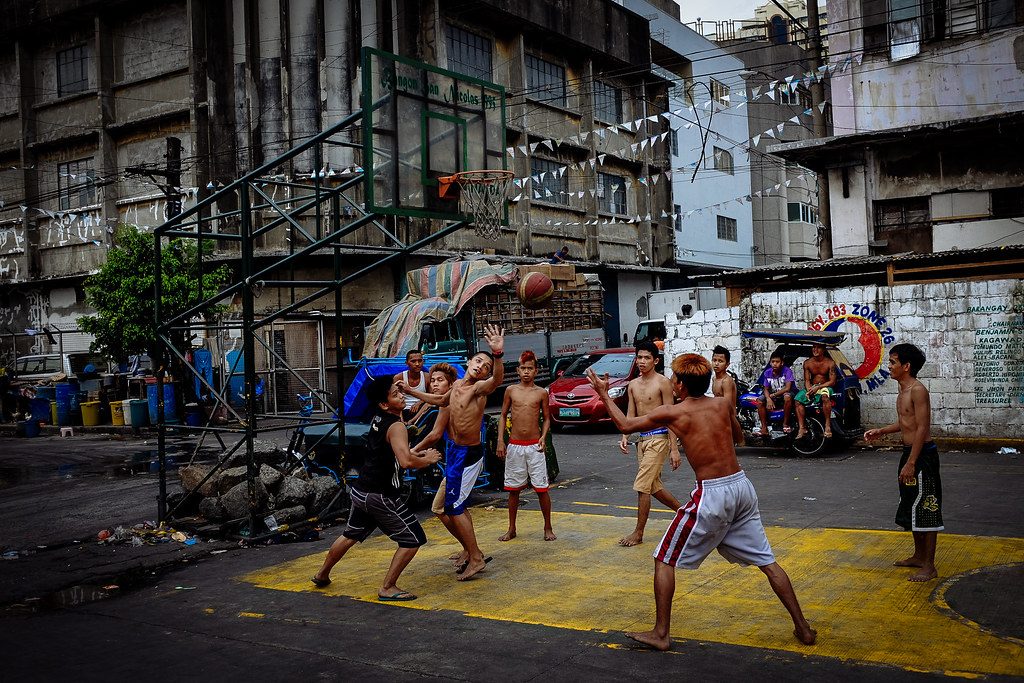
Street Photography in Manila
Old Manila packs markets and churches into a few walkable districts, and many Filipinos react to a camera with a smile rather than suspicion.
- Spots
- 8
- Best time
- December to April, the dry season
- Lens
- 24mm or 35mm
- Photographing people
- Generally allowed
Manila is very good for street photography because the old districts north and south of the Pasig River are crowded and open, and most people there don't mind a camera. Binondo and Quiapo sit next to each other, so you can walk from a Chinatown temple to a Catholic basilica to a wholesale market in under an hour. Roel Hernandez, a Filipino street photographer, calls Binondo the street photography capital of the Philippines.
The catch is safety and heat. Divisoria and parts of Quiapo have real pickpocket problems, and the midday sun is brutal. I'd bring a small camera, start early, rest at noon, and come back out for the late afternoon light, when the shadows get long and the river lights come on. Many Filipinos pose the moment they see a lens, so candid work takes patience.
Best street photography spots in Manila
Binondo & Ongpin Street
Binondo was founded in 1594 and is often called the oldest Chinatown in the world. Ongpin Street is its spine, lined with dumpling shops and traditional medicine stores. The side streets are tighter and busier. Roel Hernandez says people here are used to cameras, so you can bring almost anything. Sony Fugaban walked it from golden hour into night and found the lit signs and dragon statues most striking after dusk. Stand at a corner where a queue forms outside a food shop and work the faces and the steam. Traffic squeezes through the narrow lanes, so keep one eye behind you.
Quiapo Church & Plaza Miranda
The Minor Basilica of the Black Nazarene faces Plaza Miranda, and the square around it is a market as much as a shrine. Vendors sell candles and herbal remedies a few steps from people praying. Crown Asia describes it as devotion and haggling tangled together. Fridays are the big devotion day, so the crowds are thickest then. I'd stand at the edge of the plaza and frame worshippers against the stalls. Inside the church, stay quiet and skip flash. On January 9 the Traslacion procession draws enormous crowds; it is a serious crush, not a casual photo walk.
Hidalgo Street
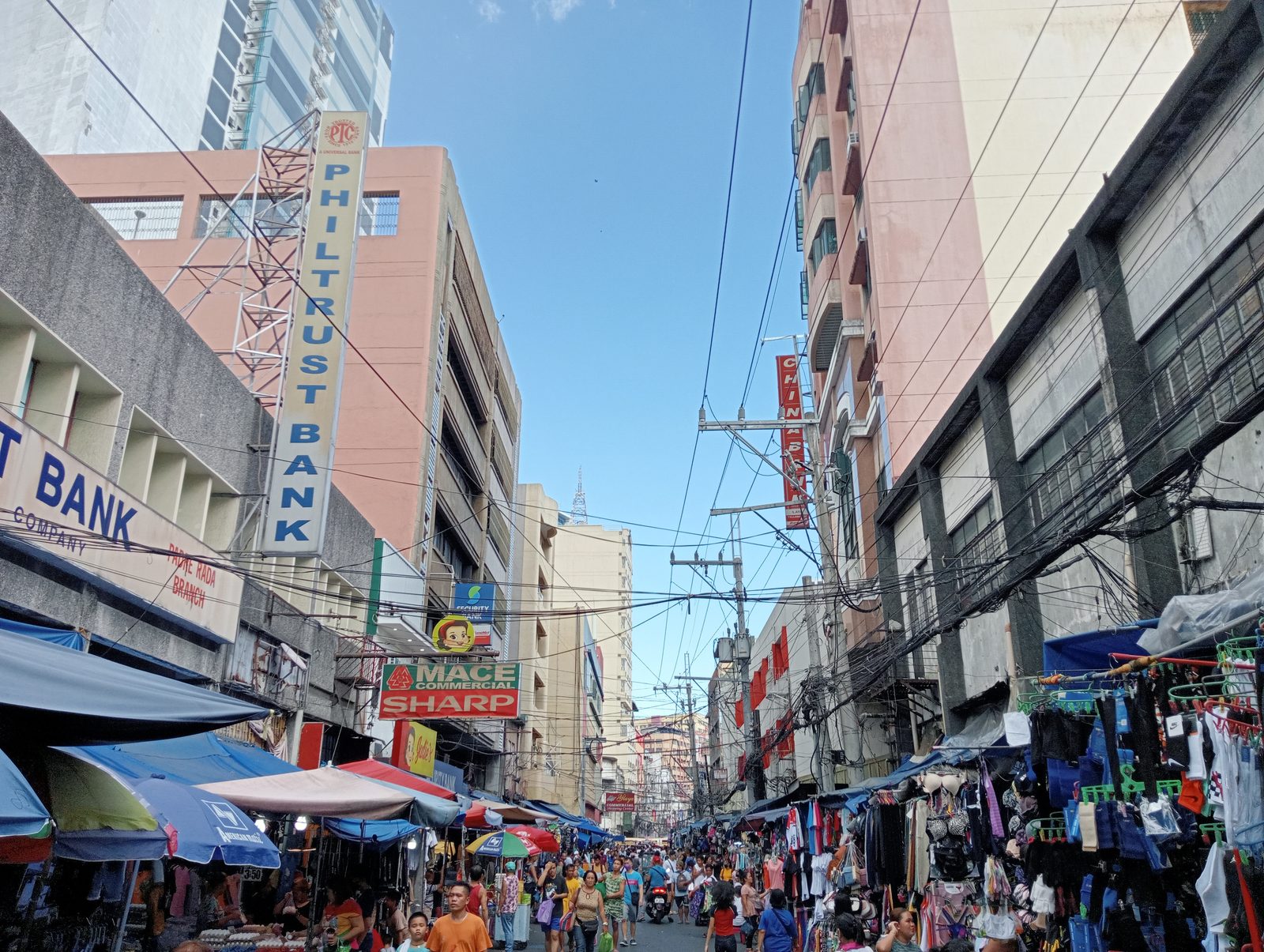
Hidalgo Street runs off Plaza Miranda and is Manila's camera street. Lomography notes the shops selling vintage cameras and the repairmen the local film community knows by name. It is also a street of old houses and small workshops, which gives you people at work framed by doorways. Come in the late morning when shops are open and the street is in partial shade. Ask a repairman if you can shoot his hands at the bench; most photographers here are customers, so the welcome is warmer than in the market. Watch for motorbikes on the narrow road.
Divisoria
Divisoria is the city's giant bargain market, with stalls on the street and malls packed with wholesale goods. The crowd density is extraordinary, and that is the picture: bodies and goods layered under tarps. Early weekday mornings are calmer and the light is lower. The photographer behind I Dreamed Of This shot here with a pocket camera and had no problems, but many travelers warn about snatchers. I'd keep the camera on a wrist strap and move on rather than linger. Don't wander deep into Tondo on your own.
Escolta Street
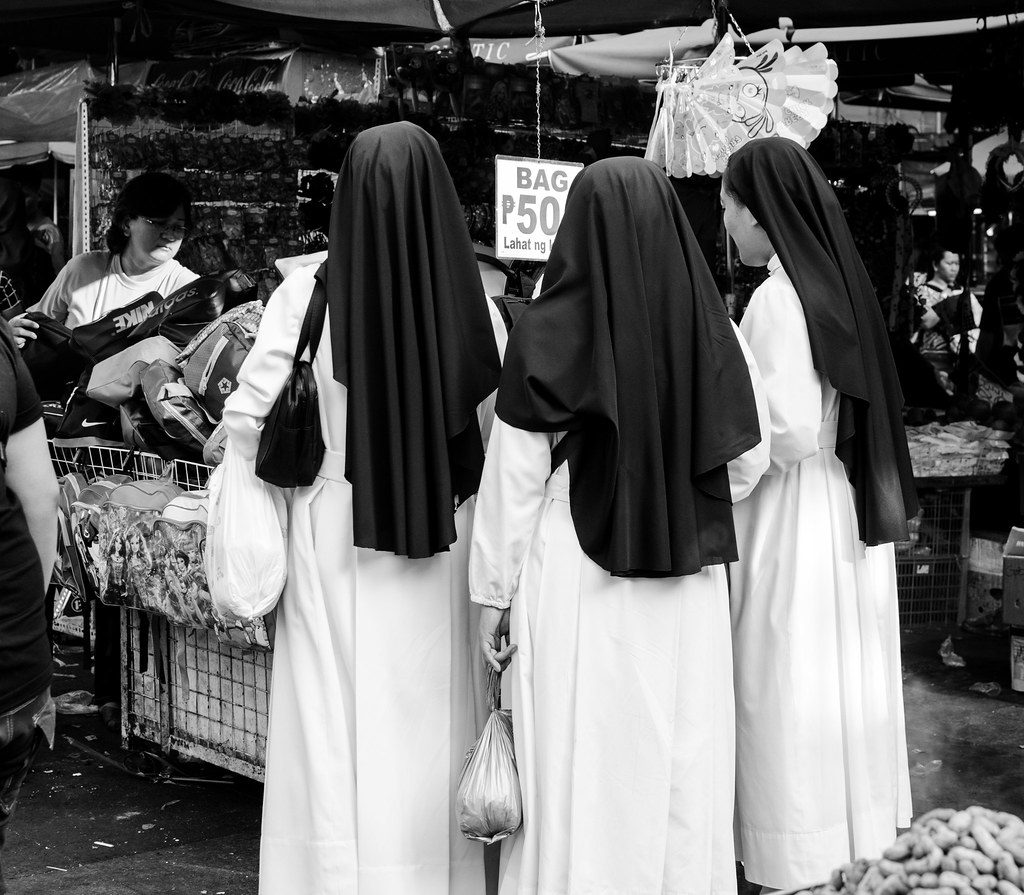
Escolta was Manila's main business street before the war. Buildings like the Regina Building and the First United Building still stand, and the street now has a small creative scene. It is calmer than Binondo next door. Use the facades as a stage: find an ornate doorway or a strip of shade and wait for a single figure to walk into it. Late afternoon light rakes along the fronts nicely. Lomography points out that the Pasig River Ferry ends near here, which is an easy way to arrive. Some buildings are private, so shoot from the street.
Jones Bridge & Pasig River Esplanade
The esplanade is a restored riverside walk between Binondo and Intramuros, and Jones Bridge crosses the Pasig right beside it. Lomography recommends it from sunset until dark, when the lamps and bridges light up. People come to walk and take selfies, so you get relaxed subjects. Shoot walkers in silhouette against the sky over the water, or use the bridge railings as leading lines. With a steady surface you can drag the shutter for car trails. The river smells in the heat, and the area empties late, so leave with the crowd.
Intramuros
Intramuros is the old Spanish walled city, with Manila Cathedral and San Agustin Church on cobbled streets. Horse drawn calesas and school groups give you subjects against old stone. Roel Hernandez says a full day here works, but notes that some sites restrict cameras while allowing compacts. Weekday afternoons are quieter, and late light on the walls is warm. Try framing a figure through an arch or a gate. It is more touristy than Binondo, so expect touts offering rides. Check signs before shooting inside churches and museums.
Poblacion, Makati
Poblacion is the old core of Makati and now its nightlife district. Crown Asia describes neon lit bars and people from all walks of life spilling onto the side streets. It is a night spot, so come after 20:00. Raise your ISO and shoot people lit by bar signs. Stand at an intersection and wait for someone to cross a pool of light. It is a taxi or Grab ride from old Manila, around 30 to 60 minutes depending on traffic. Crowds are drunk and friendly late at night; keep it light and put the camera away if asked.
Photographing people in Manila
Taking photos of people in public is generally legal in the Philippines. The law firm Respicio & Co. notes that problems arise when a photo invades privacy or defames someone, and with commercial use without consent. The Data Privacy Act can cover images of identifiable people, and it has exemptions for journalistic and artistic work. The voyeurism law covers intimate images and private areas. Photography is banned near Malacañang Palace. This is general information, not legal advice. More in is street photography legal.
Socially, Manila is one of the easiest cities for a camera. The I Dreamed Of This photographer found people light up and start posing as soon as they see one. That is good for portraits and bad for candids. A smile and a word of Tagalog help. Ask before photographing people praying up close, and be gentle around people who are clearly poor or sleeping rough.
General information, not legal advice. More in is street photography legal?
What to photograph in Manila
- Jeepneys. Chrome and hand painted, with passengers hanging off the back. Shoot them at corners where they slow down.
- Devotion in public. Candle sellers and people praying on the steps around Quiapo.
- Market density. Divisoria and the Quiapo stalls stack people and goods into layered frames.
- Chinatown food. Queues and steam outside the Binondo dumpling shops.
- Old facades. Prewar buildings on Escolta and Spanish stone in Intramuros as backdrops for a single figure.
- Kids and posers. Many people ask to be photographed. Take the picture, then stay until they forget you.
- Neon. Poblacion and the Binondo signs after dark.
A one-day photo walk
- 7:00, Divisoria. Start early while it is cooler and less crowded. About 1 hour, then walk 10 minutes to Binondo.
- 8:30, Binondo and Ongpin Street. Breakfast dumplings and the side streets. About 2 hours.
- 11:00, Quiapo Church and Hidalgo Street. A 15 minute walk or a short jeepney ride east. Shoot the plaza, then the camera shops.
- 13:00, rest. The sun is overhead. Eat and cool off indoors.
- 15:30, Escolta Street. Back west, about 15 minutes. Facades in raking light.
- 17:00, Jones Bridge and Pasig River Esplanade. A 5 minute walk. Stay through sunset, around 17:30 to 18:30 depending on the season, then cross into Intramuros or take a car to Poblacion for the night.
When to shoot
December to April, the dry season. Early morning for markets, late afternoon into dusk for Binondo and the river. January 9 (Black Nazarene) and Chinese New Year bring huge crowds.
The light
Tropical and strong. Hard overhead sun from late morning, dramatic late afternoon shadows, fast sunsets.
What to bring
A compact or small camera with a 24mm to 35mm lens. Discretion matters more than reach.
Safety
Pickpockets and phone snatchers work Divisoria and Quiapo. Carry a small camera with a hand on it, and do not wander deep into Tondo alone.
Tips for Manila
- Season: December to April is dry. June to October brings heavy rain and typhoons, which can cancel a day.
- Camera: a compact or small mirrorless with a 24mm to 35mm lens. See best camera for street photography.
- Security: wrist strap, no swinging bag, phone in a front pocket in Divisoria and Quiapo.
- Midday: shoot in shade under market tarps, or rest. Hard sun from 10:30 to 15:00 is flat and hot.
- Events: the Feast of the Black Nazarene on January 9 and Chinese New Year in Binondo (late January or February) are huge. Go with a local and minimal gear.
- Getting around: the LRT 1 and LRT 2 lines reach Binondo and Quiapo. The Pasig River Ferry is slow but photogenic.
- Candids: if someone poses, take the posed frame, then lower the camera and wait. The natural moment usually comes a minute later. More in how to photograph strangers.
Frequently asked questions
Is street photography legal in Manila?
Photographing people in public is generally legal in the Philippines. The Data Privacy Act can apply to identifiable people, with exemptions for journalistic and artistic work. Photography is prohibited around Malacanang Palace. Ask before close portraits.
Where are the best street photography spots in Manila?
Start with Binondo & Ongpin Street, Quiapo Church & Plaza Miranda, Hidalgo Street, Divisoria. The world's oldest Chinatown. Food stalls, temples, dragon lamps and dense side streets.
When is the best time for street photography in Manila?
December to April, the dry season. Early morning for markets, late afternoon into dusk for Binondo and the river. January 9 (Black Nazarene) and Chinese New Year bring huge crowds.
What lens should I bring to Manila?
A compact or small camera with a 24mm to 35mm lens. Discretion matters more than reach.
Is Manila safe for street photographers?
Pickpockets and phone snatchers work Divisoria and Quiapo. Carry a small camera with a hand on it, and do not wander deep into Tondo alone.