
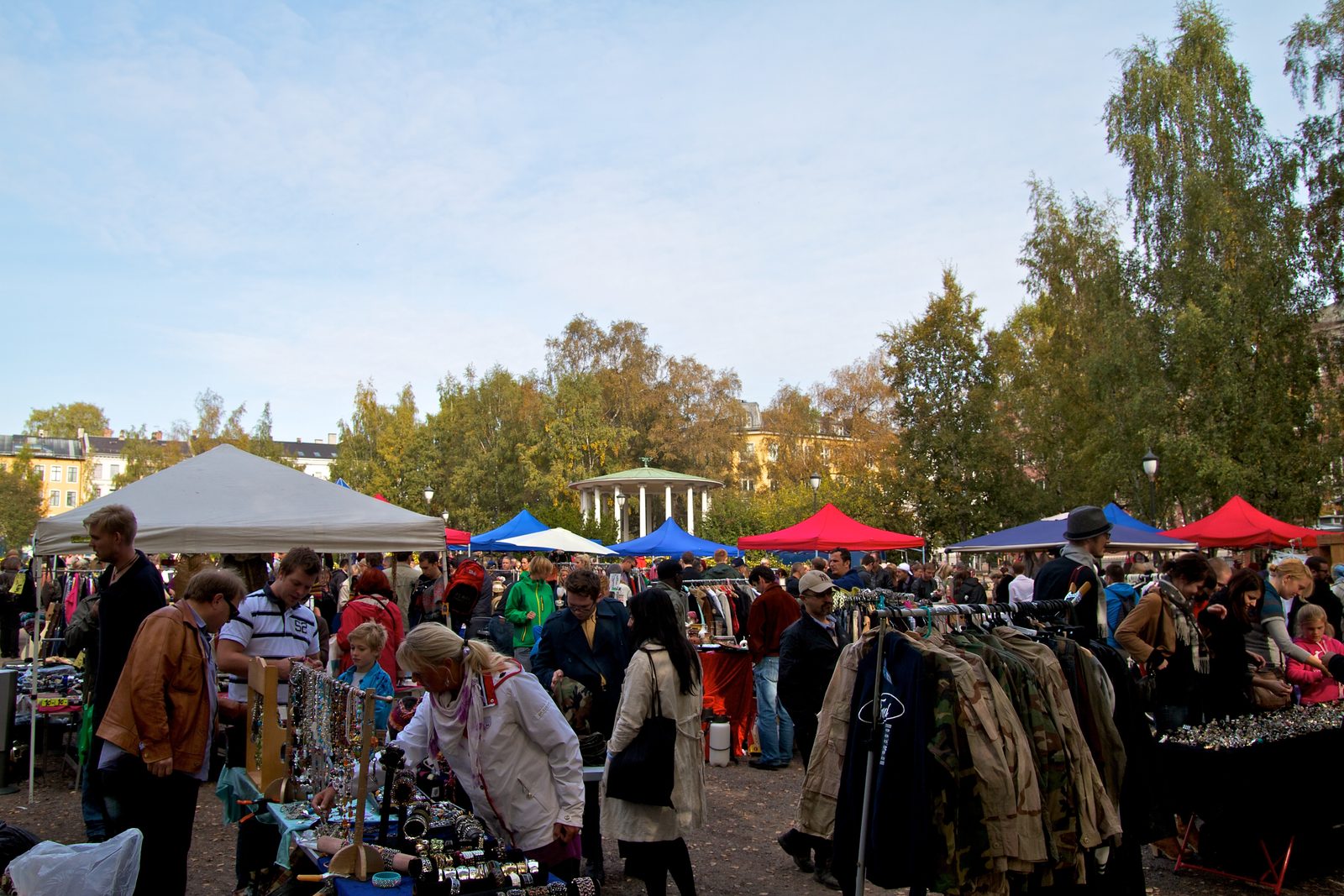
Street Photography in Oslo
Oslo is a compact, walkable capital where modern waterfront architecture meets diverse neighborhoods, and its long summer light and growing street photography scene make it rewarding, though publishing photos of people is stricter than in the UK or US.
- Spots
- 8
- Best time
- May to September
- Lens
- 35mm
- Photographing people
- Strict: ask first
Oslo is good for street photography because it is compact and walkable, with striking modern architecture on the waterfront and real neighborhood life a few minutes inland. Roger Hølmen, a Norwegian photographer, walked from the central station through Barcode and Grønland to Karl Johans gate and the waterfront in a single day. The city also has a growing scene: the Oslo Street Photo Festival, run by the Oslo Street Photography Collective, founded in 2021, was held in June 2026.
The catch is the law. Norway lets you take photos in public, but publishing a photo where a person is the main subject needs their consent, with some exceptions. That pushes you toward silhouettes and people in a larger scene, which suit Oslo's architecture. I'd start at Oslo S early, then walk the waterfront before heading to Grünerløkka.
Best street photography spots in Oslo
Oslo Central Station
Oslo S is the city's main rail station and the natural start for a photo walk. Roger Hølmen, a Norwegian photographer, began his day of street photography here with the early commuters, using the steel and glass to frame people in a hurry. Morning rush hour, roughly 7:00 to 9:00 on weekdays, gives you the most movement. Find a spot above or beside a stream of people and use a slower shutter for motion blur against sharp architecture. Remember that publishing a photo where one person is the clear subject needs their consent in Norway, so shoot crowds and shapes here, or ask.
Oslo Opera House
The Oslo Opera House, designed by Snøhetta and opened in 2008, has a sloping white marble roof that anyone can walk on for free. Chasing Hippoz recommends sunrise, when the angled planes catch first light. For street work, the roof is a giant white stage: small figures against clean diagonals make strong minimal frames. Stand low on the roof and shoot upward so walkers appear against the sky, or shoot from the ridge down toward the water. People here are part of a large scene, which fits Norway's rule that people who are less important than the main content can be published without consent. The marble gets slippery in rain and ice.
Barcode
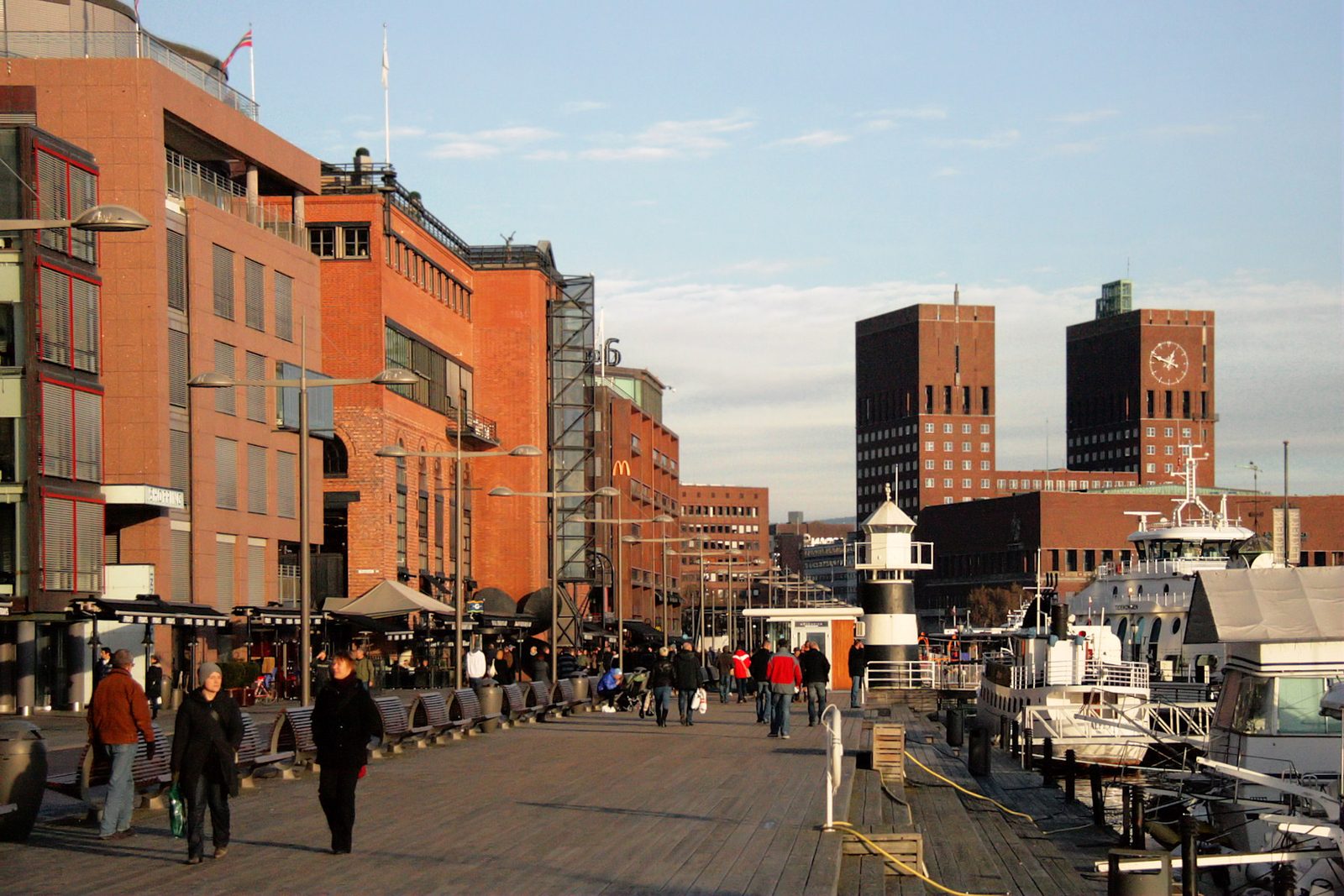
Barcode is the row of narrow, differently shaped high rises along Bjørvika, next to the Opera House and the MUNCH museum. Roger Hølmen found the geometric patterns and city life here ideal for high contrast black and white. The gaps between the towers throw bands of light across the street, so wait for a walker to step into one. Weekday lunchtimes bring office workers out. The Opera House roof, looking east, gives you the classic stacked view of the towers. Keep compositions graphic and people small if you plan to publish without asking.
Grønland
Grønland, just east of Oslo S, is one of the city's most diverse neighborhoods. Roger Hølmen walked through it for its market stalls and street art, with people going about their day. This is everyday Oslo rather than the postcard. Shop fronts and grocers spill onto the pavement, and the light is good in the late afternoon. Many people here are simply at work or shopping, so be respectful: ask before a close portrait, and accept a no. Street scenes where no single person dominates are easier to publish under Norwegian law.
Karl Johans gate
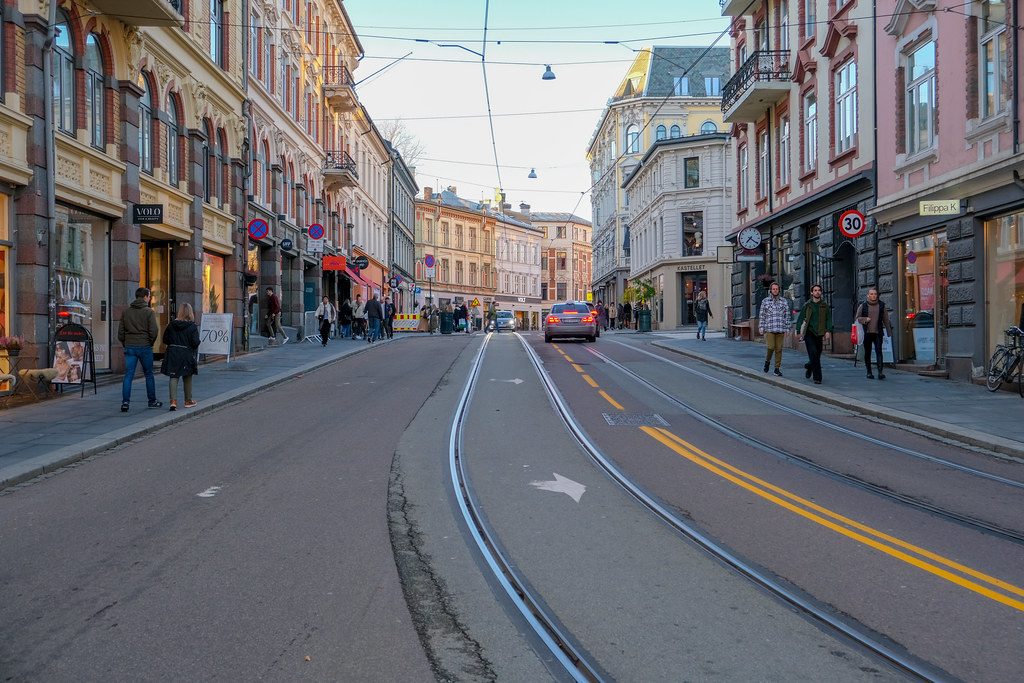
Karl Johans gate runs from the station up to the Royal Palace and is Oslo's main shopping street. Roger Hølmen worked it for street musicians and window shoppers. Egertorget, the square in the middle, is a good base. On 17 May, Constitution Day, the children's parade fills the street with people in traditional dress walking toward the palace, and Chasing Hippoz calls it the most photogenic public celebration in Norway. Parades and gatherings outdoors are one of the exceptions where Norwegian law allows publishing without consent. On normal days, shoot from the edges to avoid blocking the flow.
Aker Brygge
Aker Brygge is the old shipyard turned waterfront promenade, with Tjuvholmen and the Astrup Fearnley Museum at its tip. Restaurants line the water, and in summer the crowds and swimmers add life. Roger Hølmen used the light and reflections here for moody frames. Walk the promenade at blue hour, when windows light up and the water still holds color. Silhouettes against the fjord work well and keep faces anonymous. It is busy on summer evenings, so keep your gear close in the crowd.
Vigeland Park
Vigeland Park, inside Frogner Park, holds more than 200 bronze and granite sculptures by Gustav Vigeland, free to visit. The Monolith, a granite column covered in human figures, is the centerpiece. The best street pictures here pair the sculptures with the living: a visitor copying a pose, a child staring up at a bronze face. Chasing Hippoz notes the park is nearly empty early in the morning, but people make the pictures, so come by midday on a summer weekend. Tram 12 or 19 to Frogner stadion gets you there in about 20 minutes from the centre.
Grünerløkka
Grünerløkka, east of the Akerselva river, was a working class district and is now Oslo's creative neighborhood, with cafés and vintage shops. Chasing Hippoz calls it the most characterful area for street photography and suggests walking from Birkelunden park down Thorvald Meyers gate with a 35mm. On Sunday mornings the flea market at Birkelunden fills the park with vendors and locals. Café windows and murals give you layers. When the light is too harsh at midday, follow the river path north past old mill buildings. Ask traders at the market before close portraits.
Photographing people in Oslo
Strict: local law or custom protects people's image. Ask first, or keep faces out of frame.
Taking photos of people in public is generally legal in Norway. Publishing is where it gets strict. Section 104 of the Copyright Act says a photo of a person may not be shown in public without consent, except when it has current public interest, when the person is less important than the main content, when it shows gatherings or processions outdoors, or in a couple of other narrow cases. Norwegian institutions such as NTNU treat written consent as the main rule for their own photos. This is general information, not legal advice. See is street photography legal.
In practice: shoot freely, but for any frame where one person is clearly the subject, ask before you publish. A direct, friendly request is the simplest approach, and a no should end the conversation. More in how to photograph strangers.
General information, not legal advice. More in is street photography legal?
What to photograph in Oslo
- Architecture as a stage: the Opera House roof and Barcode make small figures look deliberate.
- Waterfront life: swimmers and evening crowds at Aker Brygge in summer.
- Sculpture and people: visitors mirroring the figures at Vigeland Park.
- Everyday neighborhoods: Grønland's shops and Grünerløkka's cafés.
- 17 May: the children's parade in national dress on Karl Johans gate.
- Winter: snow and warm window light on dark afternoons. Figures in heavy coats read well as silhouettes.
- Silhouettes: low sun off the fjord turns walkers into shapes, which also keeps them anonymous.
A one-day photo walk
- 7:30, Oslo Central Station. The morning commute, as Roger Hølmen did.
- 8:30, Oslo Opera House. A five minute walk. Figures on the marble roof in morning light.
- 9:30, Barcode. Next door. Office workers between the towers.
- 11:00, Grønland. A ten minute walk back past the station. Market stalls and street life.
- 13:00, Karl Johans gate. A 15 minute walk west. Buskers and shoppers from Egertorget.
- 18:00, Aker Brygge. Ten minutes on foot from the palace end. Stay for blue hour on the water.
Save Grünerløkka for a Sunday morning and Vigeland Park for a separate afternoon.
When to shoot
May to September. 17 May (Constitution Day) is the biggest street event of the year. Summer evenings stay light until late. Oslo Street Photo Festival was held 5 to 7 June 2026. Winter days are short but give snow and city lights.
The light
Long, low light in summer, with the sun setting close to 23:00 in late June. Crisp, cold winter light with very short days. Fog off the fjord and blue hour on the water.
What to bring
A 35mm prime, as Roger Hølmen and Chasing Hippoz both suggest for street work, and warm gloves and spare batteries in winter.
Safety
Oslo is generally considered safe. Use normal care with bags around the central station and in summer crowds. In winter, ice on pavements and the Opera House roof is the main hazard.
Tips for Oslo
- Lens: a 35mm, which Chasing Hippoz recommends for Grünerløkka and Roger Hølmen used all day. See best lens for street photography.
- 17 May: arrive early on Karl Johans gate for the children's parade.
- Summer evenings: light lasts late in June, so plan your main session after dinner.
- Winter: keep spare batteries warm and watch for ice on the Opera House roof.
- Black and white: Oslo's clean lines suit high contrast monochrome. See street photography settings.
- Consent: carry a way to send photos, so asking afterward feels natural.
- Culture Night: a September evening when venues stay open late and the streets fill.
- Transport: a Ruter ticket covers trams and the metro, plus city ferries.
Frequently asked questions
Is street photography legal in Oslo?
Taking photos in public is generally legal. Publishing is strict: under section 104 of the Norwegian Copyright Act, a photo of a person may not be published without consent unless it has current public interest, the person is less important than the main content, it shows gatherings or processions outdoors, or another narrow exception applies. General information, not legal advice.
Where are the best street photography spots in Oslo?
Start with Oslo Central Station, Oslo Opera House, Barcode, Grønland. Oslo S, the main rail hub. Commuters in steel and glass halls from early morning.
When is the best time for street photography in Oslo?
May to September. 17 May (Constitution Day) is the biggest street event of the year. Summer evenings stay light until late. Oslo Street Photo Festival was held 5 to 7 June 2026. Winter days are short but give snow and city lights.
What lens should I bring to Oslo?
A 35mm prime, as Roger Hølmen and Chasing Hippoz both suggest for street work, and warm gloves and spare batteries in winter.
Is Oslo safe for street photographers?
Oslo is generally considered safe. Use normal care with bags around the central station and in summer crowds. In winter, ice on pavements and the Opera House roof is the main hazard.
More street photography cities
- StockholmSweden
- CopenhagenDenmark
- HamburgGermany
- HelsinkiFinland