
Street Photography in Montreal
Montreal pairs cobbled Old Montreal with mural-covered boulevards, and its summer fills the streets with free festivals and Sunday drum circles on Mount Royal.
- Spots
- 7
- Best time
- Late May to early October for street life and festivals, with the Jazz Festival in late June and early July
- Lens
- 28mm or 35mm
- Photographing people
- Strict: ask first
Montreal is good for street photography because it gives you two cities in one: a cobbled 17th century core in Old Montreal, and a lived-in Plateau of murals and outdoor staircases. Shawn Moreton, who grew up there, describes a city whose walls keep changing, with murals painted over and new ones appearing between visits. Summer adds free festivals that pack the downtown streets, and on Sundays a drum circle takes over the foot of Mount Royal.
The seasons matter more here than in most cities. Summer is loud and full of people outside. Winter is cold and snowy, which empties the streets but gives you clean backgrounds and figures bundled against the weather. The legal side also needs attention. Quebec protects the right to your own image more strongly than the rest of North America, so I'd shoot freely but think carefully before publishing close, identifiable portraits of strangers.
Best street photography spots in Montreal
Old Montreal (Place Jacques-Cartier & Rue Saint-Paul)
Old Montreal is the oldest part of the city, with cobbled lanes and horse-drawn calèches. Travel Bliss Now suggests starting on Rue Saint-Paul and wandering. Place Jacques-Cartier slopes down toward the port and fills with terraces and street performers on summer afternoons. Stand at the top of the square in late afternoon and shoot down the slope, so people walk into the low sun and throw long shadows toward you. Early morning is best for the empty lanes. Expect crowds and slow traffic from calèches on the narrow streets in peak season.
Old Port & Clock Tower Quay
The Old Port runs along the St. Lawrence below Old Montreal. The Clock Tower Quay sits at its eastern end, with the Jacques-Cartier Bridge behind it. According to Travel Bliss Now, the bridge lighting changes colour through the evening, which makes for a moving backdrop at blue hour. The promenade is flat and open, so walkers and cyclists read as clean shapes against the water. Try a low angle with a figure cutting across the lit bridge. It gets windy by the river, and the quays are exposed in winter, so dress for it.
Quartier des Spectacles & Place des Festivals
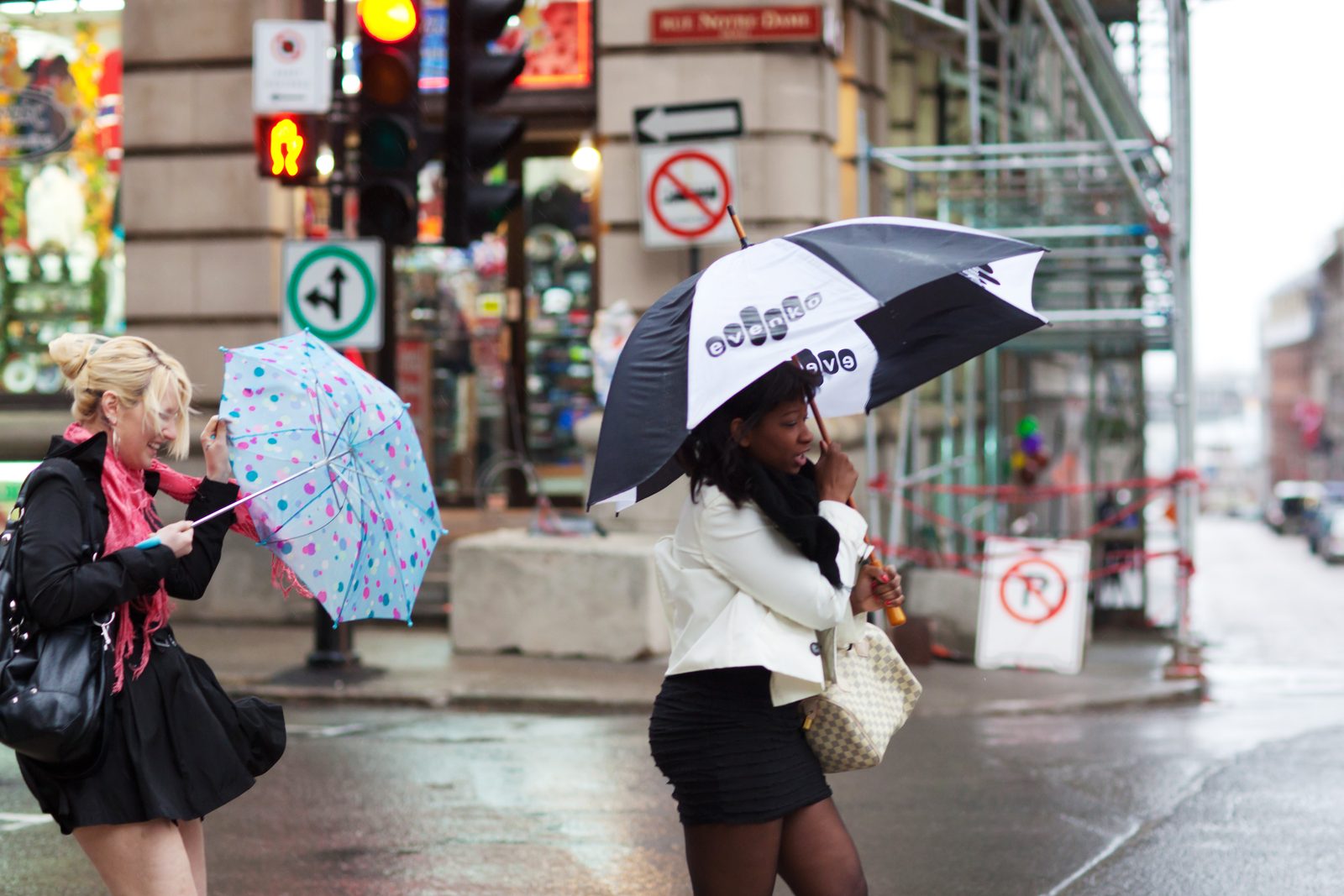
This is the city's festival district, built around Place des Festivals and the streets near Place des Arts. The Festival International de Jazz de Montréal runs its free outdoor stages here, with the 2027 edition set for June 25 to July 4. During festivals, look for faces lit by stage light and people riding on shoulders. Stay on the edges rather than in the middle, where you can move and find layers. Outside festival weeks the square is quieter, so plan around the calendar. Hold your bag close in dense crowds.
Boulevard Saint-Laurent (The Main)
Saint-Laurent is the long boulevard locals call The Main, traditionally seen as the line between the city's English and French sides. Between Sherbrooke and Mont-Royal, the MURAL Festival has painted large walls every June since 2013, and the boulevard turns into an open-air gallery. Moreton points out that the murals change constantly, which means the street never looks the same twice. Use the painted walls as backdrops and wait for a passerby whose colour or gesture echoes the mural. Side alleys off the boulevard add quieter, layered frames. Watch for cyclists and delivery traffic when you step back for a wide shot.
Square Saint-Louis & the Plateau staircases
Square Saint-Louis is a small park ringed by colourful Victorian row houses, near Sherbrooke metro. Travel Bliss Now recommends morning or golden hour for soft light and fewer people. Walk north into the Plateau for the outdoor staircases that Montreal is known for, built outside to save space inside. They give you diagonals and frames within frames. I'd stand across the street and wait for a resident coming down the steps. These are homes, so keep your distance from windows and doorways, and never climb the stairs yourself.
Tam-Tams (George-Étienne Cartier Monument)
Every Sunday in the warmer months, from about noon until sundown, drummers gather around the George-Étienne Cartier Monument on Avenue du Parc. Tourisme Montréal describes a dance floor on the monument steps and a market laid out on blankets around it. This is one of the easiest places in the city to photograph people, because everyone is outside and performing. Work the edge of the circle at hand height and look for hands on drums and dancers in motion. Late afternoon gives you backlight through the trees. Ask before close portraits of musicians.
Jean-Talon Market
Jean-Talon is a large open-air market in Little Italy, with produce stalls under long canopies and vendors calling out prices. It is a working market for locals, so the scenes are everyday rather than staged. Go on a weekend morning for the most activity. The canopies create patches of shade and light, so expose for the bright stalls and let the aisles go dark. Look for hands exchanging produce and faces lit by the open sides. Keep out of the way of shoppers and ask vendors before close shots of their stalls.
Photographing people in Montreal
Strict: local law or custom protects people's image. Ask first, or keep faces out of frame.
Montreal is the one big North American city where the law leans toward the subject. In Aubry v. Éditions Vice-Versa (1998), the Supreme Court of Canada upheld damages against a photographer who published a picture of a young woman sitting on the steps of a Montreal building, without her consent. The ruling applied Quebec's Charter of Human Rights and Freedoms. Taking the photo was not the problem; publishing an identifiable image was. The court made exceptions for people who appear incidentally in a crowd or public scene and for public figures. Photography inside the métro is a separate issue: the STM has said photos there usually need a permit. This is general information, not legal advice. See is street photography legal.
In practice, locals are relaxed about cameras at festivals and the Tam-Tams. For single-subject portraits you plan to publish, ask. A quick exchange in French or English usually works; see how to photograph strangers.
General information, not legal advice. More in is street photography legal?
What to photograph in Montreal
- Murals and changing walls. Saint-Laurent and the Plateau alleys repaint themselves every year, so pair a passerby with whatever is new on the wall.
- Outdoor staircases. Residents coming down iron steps give you diagonals and frames within frames.
- Festival crowds in the Quartier des Spectacles in June and July, lit by stage light after dark.
- Drummers and dancers at the Sunday Tam-Tams, with backlight through the trees late in the day.
- Winter figures. People in heavy coats against snow and grey brick make simple, graphic frames.
- Market life at Jean-Talon: hands, produce and vendors at work.
- Cobbled lanes and calèches in Old Montreal, best before the day's visitors arrive.
- Bilingual signs and shopfronts that mix French and English.
A one-day photo walk
- 8:00, Old Montreal. Start on Rue Saint-Paul while it is empty, then Place Jacques-Cartier. About an hour.
- 9:30, Old Port. A five minute walk down to the Clock Tower Quay for joggers and cyclists on the promenade.
- 11:00, Quartier des Spectacles. About 25 minutes on foot, or the métro from Champ-de-Mars to Place-des-Arts. Best during a festival.
- 13:00, Boulevard Saint-Laurent. Walk north from Sherbrooke through the mural blocks, with side trips into the alleys.
- 15:00, Square Saint-Louis and the Plateau. A few minutes west. Work the staircases in the side streets.
- Late afternoon, the Tam-Tams (Sundays). About 20 minutes on foot to Avenue du Parc. Stay until sundown. On other days, swap in Jean-Talon Market in the morning instead.
When to shoot
Late May to early October for street life and festivals, with the Jazz Festival in late June and early July. Late September to early November for autumn colour. Winter is cold and snowy but quiet and graphic.
The light
Clear, crisp light in autumn and winter, with low sun and long shadows on brick and snow. Hot, bright summer days with harsh light at midday. Heavy snow in winter.
What to bring
A 28mm or 35mm prime for Old Montreal and festival crowds. A 50mm for the Tam-Tams and the market. Gloves that let you work the shutter and spare batteries in winter.
Safety
Safe by big-city standards. Normal care with bags in crowds during festivals. Icy sidewalks and outdoor staircases in winter.
Tips for Montreal
- Jazz Festival: June 25 to July 4, 2027, with free outdoor stages in the Quartier des Spectacles.
- MURAL Festival: every June on Saint-Laurent between Sherbrooke and Mont-Royal. Artists paint live, so you can photograph the work in progress.
- Tam-Tams: Sundays in the warm months, noon to sundown. Arrive mid-afternoon for the biggest crowd.
- Winter: the city gets heavy snow. Carry spare batteries in an inside pocket and let the camera warm up slowly in a bag to avoid condensation.
- Autumn: late September to early November brings colour to Mount Royal and the Plateau.
- Lens: a 28mm or 35mm for crowds and lanes, a 50mm for portraits at the Tam-Tams. See best lens for street photography.
- Métro: check STM rules before photographing inside stations.
Frequently asked questions
Is street photography legal in Montreal?
STRICT on publishing. Taking photos in public is common and generally tolerated, but under Quebec's Charter of Human Rights and Freedoms, as applied by the Supreme Court of Canada in Aubry v. Éditions Vice-Versa (1998), publishing an identifiable photo of a person without consent can infringe their privacy. Exceptions exist for people shown incidentally in a crowd or public scene and for public figures. Photography in the métro generally needs STM permission. General information, not legal advice.
Where are the best street photography spots in Montreal?
Start with Old Montreal (Place Jacques-Cartier & Rue Saint-Paul), Old Port & Clock Tower Quay, Quartier des Spectacles & Place des Festivals, Boulevard Saint-Laurent (The Main). Cobbled lanes, brick facades, cafe terraces and calèches. Busiest in summer afternoons.
When is the best time for street photography in Montreal?
Late May to early October for street life and festivals, with the Jazz Festival in late June and early July. Late September to early November for autumn colour. Winter is cold and snowy but quiet and graphic.
What lens should I bring to Montreal?
A 28mm or 35mm prime for Old Montreal and festival crowds. A 50mm for the Tam-Tams and the market. Gloves that let you work the shutter and spare batteries in winter.
Is Montreal safe for street photographers?
Safe by big-city standards. Normal care with bags in crowds during festivals. Icy sidewalks and outdoor staircases in winter.