
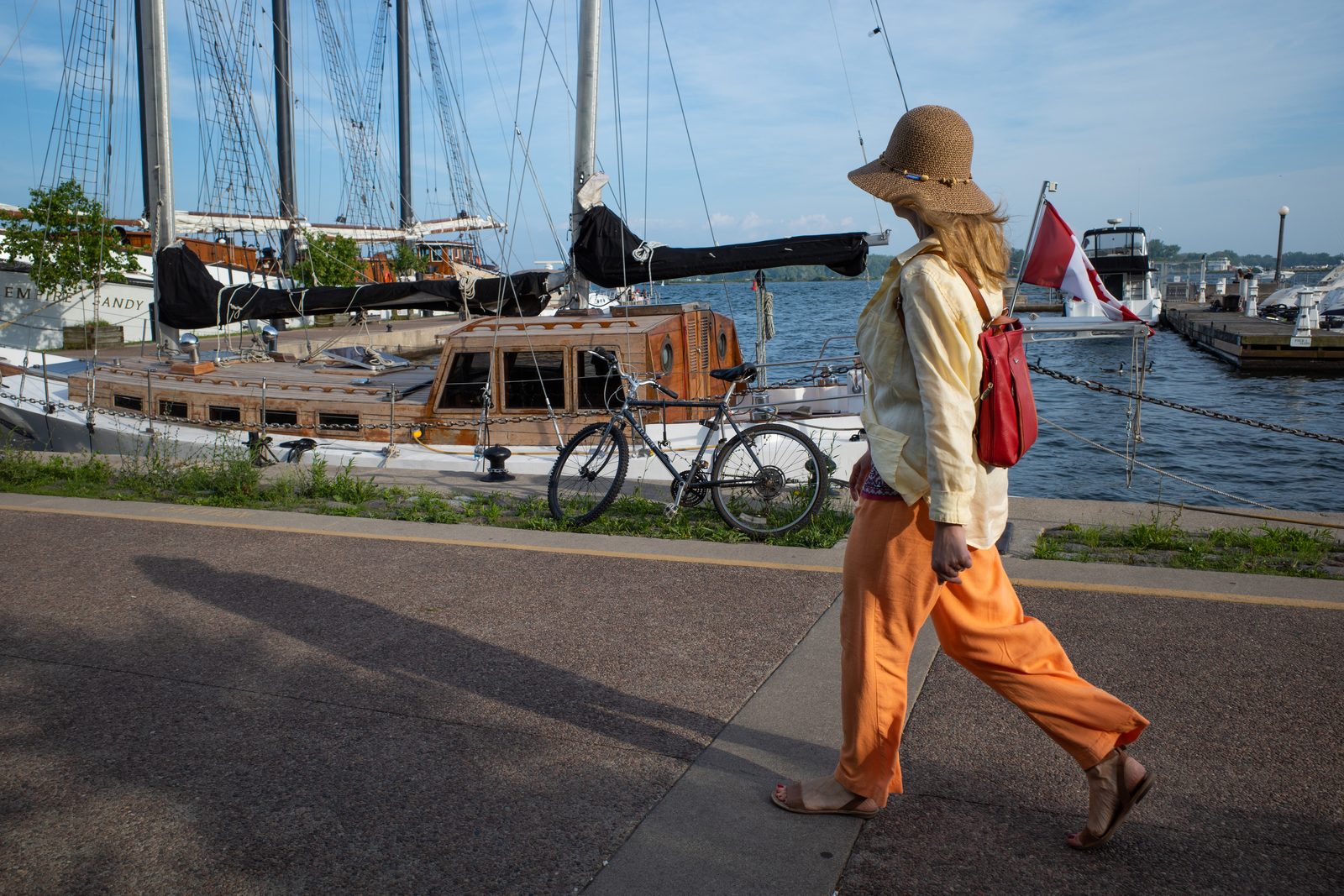
Street Photography in Toronto
One of the most diverse cities in the world, with market streets and street festivals where Toronto's many communities mix in public.
- Spots
- 8
- Best time
- Late May to October for street life and festivals
- Lens
- 28mm or 35mm
- Photographing people
- Generally allowed
Toronto is good for street photography because it is one of the most diverse cities in the world, and its markets and main streets put that diversity on the sidewalk. Kensington Market and Chinatown sit next to each other, and summer brings a festival nearly every weekend. Street Photography Berlin points to the mix of Victorian and modern buildings as part of the appeal.
The city is also safe, and people are polite about cameras. The challenge is the weather. Winters are cold and grey, so the streets thin out from December to March. I'd come between late May and October, base myself around Spadina and Queen, and walk. In winter, go where people gather: the skating rinks and the markets.
Best street photography spots in Toronto
Kensington Market
Kensington Market is a small grid of Victorian houses west of Spadina Avenue, turned into vintage shops and produce stalls that spill onto the sidewalk. Globe Guide calls it one of the best street markets in North America, and Street Photography Berlin says it is the most photographed place in the city. Come on a weekday morning for deliveries and shopkeepers setting up, or on a Pedestrian Sunday, when the streets close to cars and fill with music. Stand at the corner of Augusta and Baldwin and let people walk into the frame against the painted storefronts. Weekends are packed, so keep your bag in front.
Chinatown
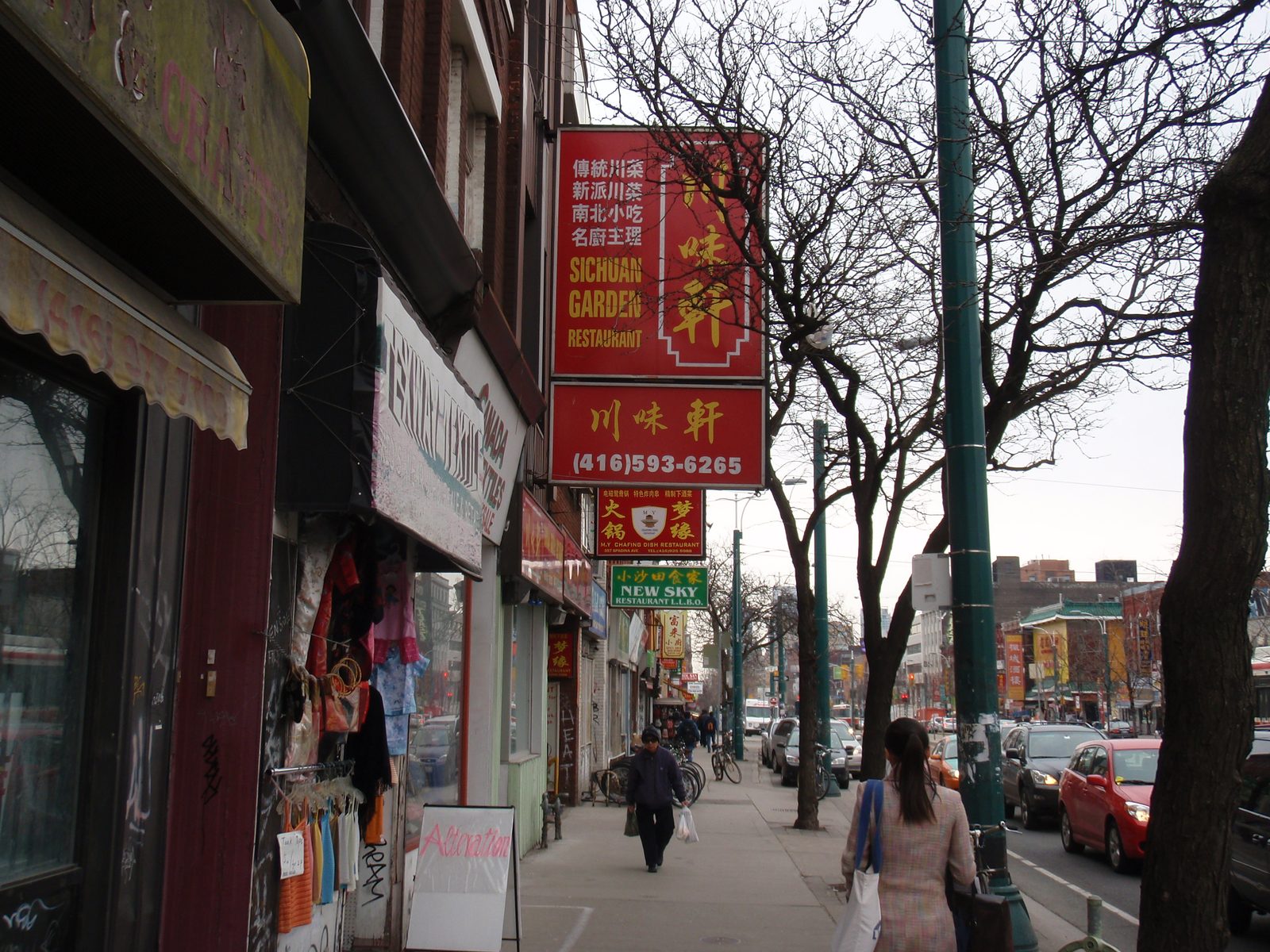
Toronto's main Chinatown centers on the corner of Spadina Avenue and Dundas Street West, a few steps from Kensington. Grocers stack fruit and vegetables on the sidewalk, and older shoppers work through them with bags in hand while streetcars grind past in the middle of the road. Morning is the busiest time for shopping. Stand beside a fruit stand and shoot along the sidewalk, with the red and yellow signs stacked overhead. Streetcar windows make good frames if you wait at a stop. Sidewalks are crowded and narrow, so work quickly and step aside for shoppers.
Graffiti Alley
Graffiti Alley, officially Rush Lane, runs parallel to Queen Street West between Spadina Avenue and Portland Street. Globe Guide describes about a kilometre of ever changing street art, including work by local favorite Uber5000. The walls are the backdrop. The pictures are the people: couples posing, or a cook on a smoke break behind a restaurant. Midday light gets into the alley; morning leaves it in shade. Frame one person against a single bold wall and wait for a gesture. It is a working laneway with trucks and bins, so keep aware of traffic.
Queen Street West
Queen Street West, from University Avenue west past Spadina and on toward Trinity Bellwoods Park, is a long shopping street with streetcars down the middle. It has chain stores near downtown and independent shops as you go west. People dress well here, and the shop windows give you reflections all day. I'd walk it in the late afternoon, when the low sun comes straight down the street from the west and backlights the crowd. Try shooting a streetcar passenger framed by the window as the car stops. Sidewalks are busy, so avoid stopping in the middle of them.
St. Lawrence Market
St. Lawrence Market has been a fixture of Toronto for over two centuries, according to Globe Guide, and more than 120 vendors now sell food there. The South Market building holds butchers and bakers under a high ceiling. Saturday morning is the busiest, with the farmers' market and early shoppers. Get there early and photograph vendors at work behind their counters. Light from the high windows falls on the aisles. Ask before a close portrait of a stallholder. The Gooderham, or Flatiron, Building is a few minutes west, with a busy intersection in front.
Nathan Phillips Square
Nathan Phillips Square is the plaza in front of City Hall, with a reflecting pool that becomes a skating rink in winter and the big Toronto sign along its edge. Globe Guide says the pool creates striking reflections of the curved towers. In summer the square hosts markets and concerts. In winter the skaters are the subject, falling and laughing under the arches. Shoot low across the ice at dusk, when the rink lights come on. People posing at the sign are easy to photograph, since they expect a camera.
Sankofa Square
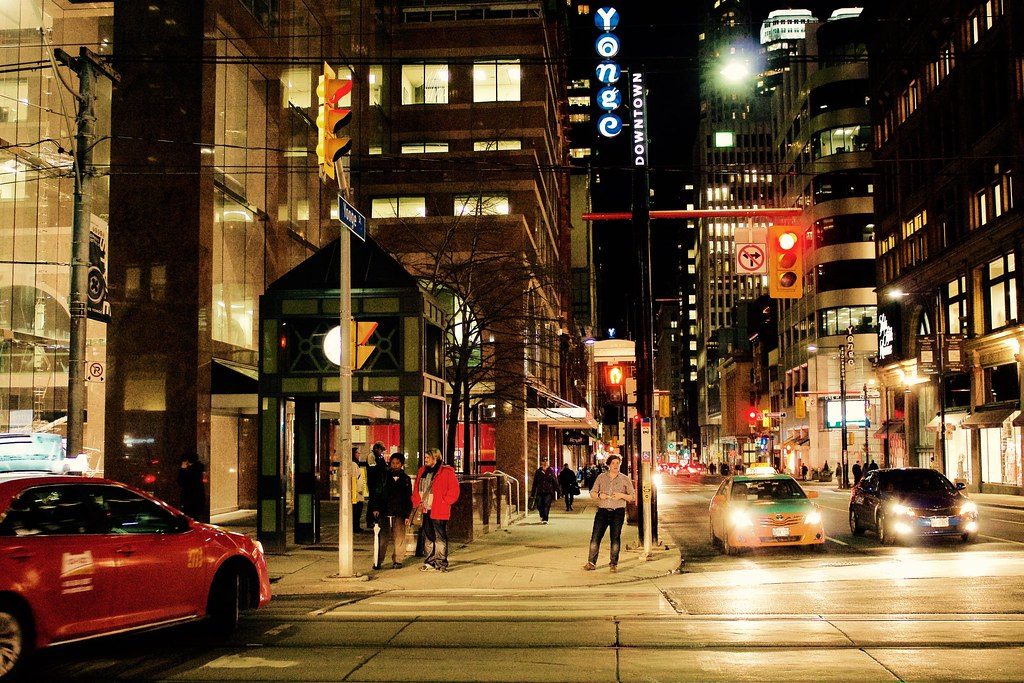
Sankofa Square is the new name, made official in 2025, for Yonge-Dundas Square, the city's answer to Times Square. Big screens and billboards light the crowd, and the square hosts concerts and demonstrations. It is lit all night, which makes it good for handheld night work. Stand on the square's edge and use the screens as your light source, waiting for faces lit by a single color. The Eaton Centre entrance across Yonge Street pours people onto the corner. Watch your bag in the crowd, and step back from any tension at protests.
Distillery District
The Distillery District is a set of Victorian brick buildings from the old Gooderham and Worts distillery, turned into shops and restaurants on car free lanes. Globe Guide counts 47 buildings. The cobbled lanes and brick walls give you good texture and repeating lines, and patios spill out onto them. It is popular with tourists and wedding photographers, so there is a lot of posing to observe. The winter market brings big crowds. It is private property, so staff may stop commercial shoots or tripods. Keep it handheld.
Photographing people in Toronto
In Canada, taking photos of people in public places is generally legal. As blogTO explains, you can photograph anyone in Toronto's public spaces, including police officers and children. The limit is places with a reasonable expectation of privacy, like washrooms and changing rooms, where photos can lead to a voyeurism charge. The TTC allows personal photos, while commercial work needs a permit. Quebec is different: after the Aubry case, publishing a recognizable person's image there generally needs consent. This is general information, not legal advice.
In practice Torontonians are polite and mostly indifferent to cameras. Older shoppers in Chinatown may turn away. Respect that, and ask when you want a face.
General information, not legal advice. More in is street photography legal?
What to photograph in Toronto
- Streetcars. Red cars in the middle of the road, with passengers framed in the windows.
- Market life. Fruit stands and shopkeepers in Chinatown and Kensington.
- Many cultures. Festivals like the Toronto Caribbean Carnival parade in summer, and neighborhoods from Little Portugal to Greektown.
- Winter. Skaters at Nathan Phillips Square and breath in the cold air.
- Reflections in glass towers downtown and in the City Hall pool.
- Street art in Graffiti Alley and the laneways around it.
- Photography itself. The city hosts a large photography festival each May, with shows in public spaces.
A one-day photo walk
- 9:00, St. Lawrence Market. Early shoppers and vendors, best on a Saturday.
- 10:30, Distillery District. A 15 minute walk east. Brick lanes before the crowds.
- 12:30, Chinatown. Streetcar west along King then north on Spadina, about 25 minutes. Midday shoppers.
- 13:30, Kensington Market. Two minutes west. Lunch and the busiest hours.
- 16:00, Graffiti Alley and Queen Street West. A ten minute walk south. Afternoon light down Queen.
- 19:00, Nathan Phillips Square, then Sankofa Square. A 15 minute streetcar ride east on Queen. Night light and crowds.
When to shoot
Late May to October for street life and festivals. Pedestrian Sundays on the last Sunday of each month in Kensington Market. Winter for skaters and snow.
The light
Tall downtown towers make shaded canyons with slices of sun. Low winter sun, and golden autumn light in October.
What to bring
A 28mm or 35mm lens. Gloves that let you work the camera in winter.
Safety
Very safe for a big city. Use normal care around Sankofa Square and on crowded streetcars at night.
Tips for Toronto
- Pedestrian Sundays: Kensington closes to cars on the last Sunday of the month, May to October, from noon.
- Winter: short days and cold hands. Shoot the rinks at dusk and keep a spare battery warm in a pocket.
- Summer festivals: check the city calendar. Big parades fill the streets in June and early August.
- Lens: a 28mm or 35mm suits the narrow Kensington sidewalks. See best lens for street photography.
- Streetcars: the 510 on Spadina and the 501 on Queen link most spots.
- Private spaces: the PATH tunnels and malls are private property, so security can ask you to stop. See is street photography legal.
Frequently asked questions
Is street photography legal in Toronto?
Permissive in Ontario. Photographing people in public places, and publishing those photos, is generally legal in Canada. Quebec is the exception, with stricter image rights. Private properties like the Distillery District set their own rules. TTC allows personal photos.
Where are the best street photography spots in Toronto?
Start with Kensington Market, Chinatown, Graffiti Alley, Queen Street West. Victorian houses turned into shops and produce stalls. Pedestrian Sundays in summer.
When is the best time for street photography in Toronto?
Late May to October for street life and festivals. Pedestrian Sundays on the last Sunday of each month in Kensington Market. Winter for skaters and snow.
What lens should I bring to Toronto?
A 28mm or 35mm lens. Gloves that let you work the camera in winter.
Is Toronto safe for street photographers?
Very safe for a big city. Use normal care around Sankofa Square and on crowded streetcars at night.
More street photography cities
- DetroitUnited States
- OttawaCanada
- PittsburghUnited States
- MontrealCanada