
Street Photography in Chongqing
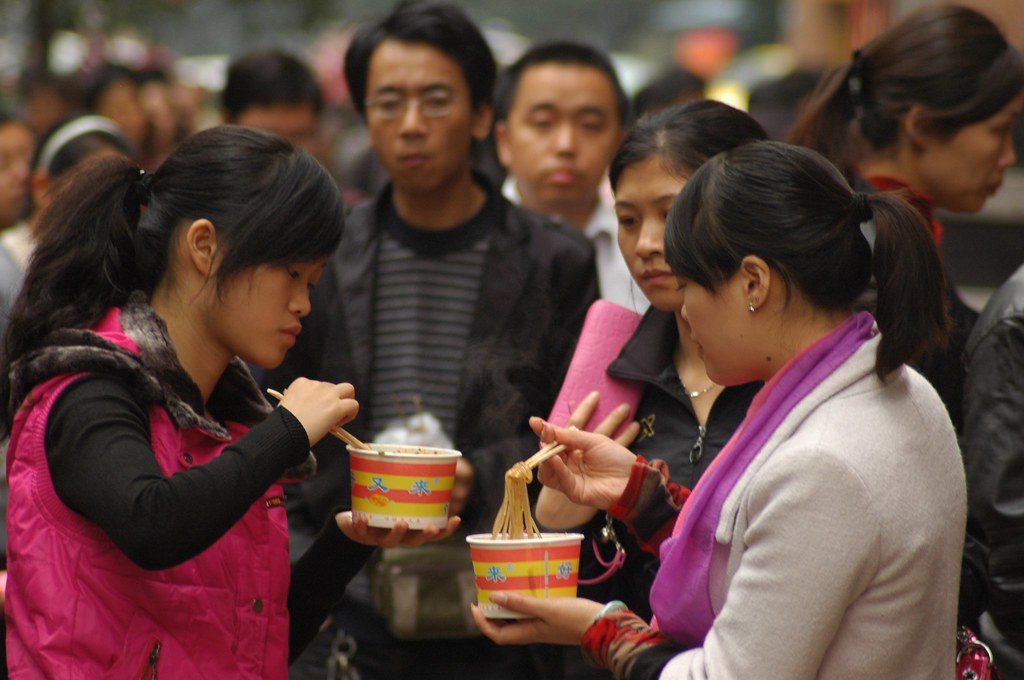
Chongqing is a vertical city of stairways and fog, where porters and commuters layer up in every frame.
- Spots
- 8
- Best time
- March to May and October to November
- Lens
- 28mm or 35mm
- Photographing people
- Strict: ask first
Chongqing is good for street photography because it is built in three dimensions. The city climbs steep ridges where the Yangtze and Jialing rivers meet, so streets stack on top of each other and you can walk out of a building's twentieth floor onto a road. Stairways and skybridges give you layers and frames at every turn. Locals call it the Fog City, and the soft gray light suits moody pictures.
People are the other reason. Porters called bang bang men still carry loads up the hills on bamboo poles, though fewer every year. Hot pot cooks work outside, and the old lanes spill onto the steps. I'd base myself in Jiefangbei, where most spots are walkable, and plan the evenings around the lights. Many landmarks are only lit on weekends, and Fabio Nodari, who lived in China for years, says Chongqing is actually better at the end of the week.
Best street photography spots in Chongqing
Jiefangbei
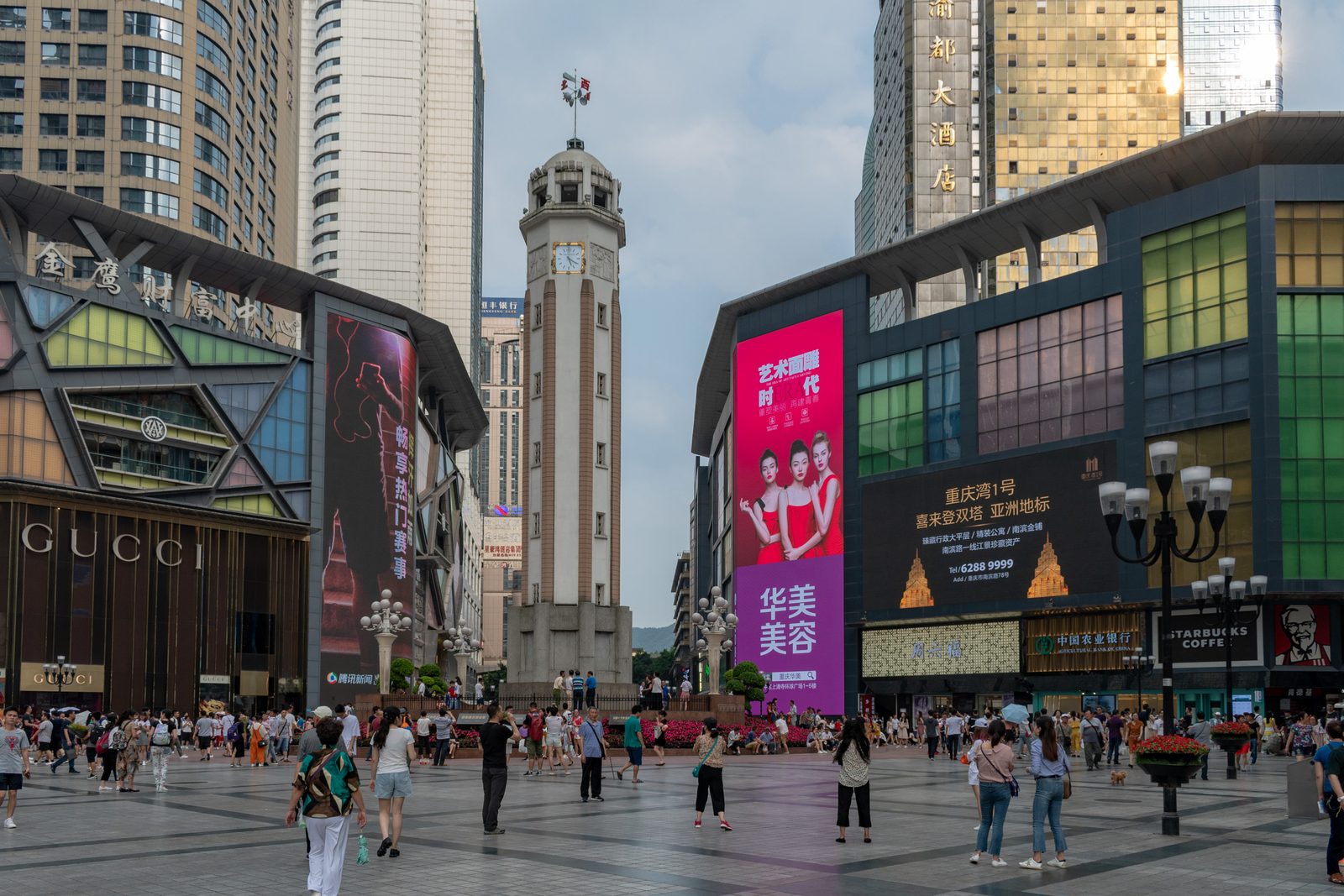
Jiefangbei is the pedestrian square around the People's Liberation Monument, the center of the peninsula and of modern Chongqing. Fabio Nodari says the area captures the spirit of the city best in the evening, when the lights come on. The square is a constant stream of shoppers and office workers. Stand on one of the raised walkways at the edge and shoot down into the crowd, using the lit signs as your background. The hard part is separation. Wait for a gap and one clear figure. It is very crowded at weekends, so keep your bag in front.
Luohan Temple
Luohan Temple dates back to the Song dynasty and is still an active Buddhist temple, now surrounded by commercial towers. The contrast is the picture. Roam and Ridge suggests getting low in the courtyard and looking up, so the curved eaves frame the glass walls above. For street work, watch the worshippers with incense and candles, and the smoke moving through the light. Come in the morning, when it is calm. Metro Line 1 or 6 to Xiaoshizi, Exit 6, is a five minute walk. Be quiet and ask before photographing monks or anyone praying.
Chaodonglu
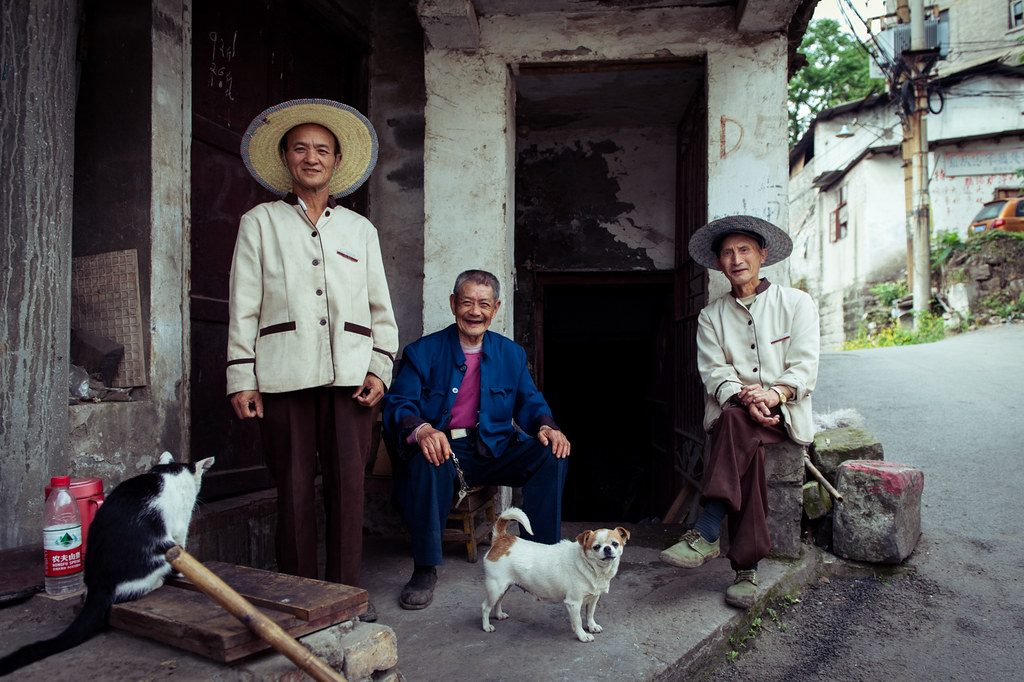
Chaodonglu is a working street near Chaotianmen that has become famous with photographers. Fabio Nodari explains why: with a telephoto, you can stack local warehouse workers loading and unloading trucks against the towers of Raffles City behind them. This is a compression shot, so stand well back and use 100mm or longer. Go in the daytime, when the loading is active. The workers are busy and this is their workplace, so stay out of the way of trolleys and trucks. A nod goes a long way if someone notices you.
Hongyadong
Hongyadong is a stack of wooden buildings in the style of traditional stilt houses, built into the cliff above the Jialing River. At night it lights up gold and turns into the most photographed scene in the city. For street work, the crowds on the terraces are the subject: people posing and filming. Fabio Nodari notes the classic view of the building is from across the river, where there is a big pedestrian area. I'd shoot the building from there, then cross back and work the crowd inside. Lights usually come on in the evening. It gets packed, so watch your gear.
Shibati
Shibati means Eighteen Steps. It was a maze of stairways and wooden houses linking the upper and lower city, and it has been rebuilt to keep the old look with new businesses inside. 240 Hours in China suggests entering from Jiaochangkou station and walking downhill past tea houses and an old well. The stairs are the composition tool. Stand at the top of a flight and wait for a figure climbing toward you. It works best in the evening, when the lanterns come on. Some of the charm is staged now, so look for the locals in the tea houses.
Yangtze River Cableway
The cable car crosses the Yangtze from the Jiefangbei side to the south bank. Fabio Nodari photographs it from the Dongshuimen Bridge, with the cabin hanging in front of the apartment towers. Ride it too. Inside, you get faces against the window with the city dropping away behind. Queues are long on weekends and at sunset, so book a few hours ahead. For the outside view, a longer lens isolates the cabin. Stay clear of the queue barriers when shooting, as staff move people along fast.
Longmenhao Old Street
Longmenhao is a renovated neighborhood on the south bank of the Yangtze, where the cable car lands. Fabio Nodari describes narrow alleys and old shop signs that evoke 1930s Chongqing, with fewer tourists than Hongyadong. Many houses are now cafes and boutiques, so this is more about setting than daily life. I'd use it for figure and ground: a single walker against the old signs. Late afternoon has the best light, and at night you get views back across the river to the lit skyline. It is quiet, so candids feel more exposed.
Liziba Station
At Liziba, the Line 2 monorail runs straight through the middle floors of a residential building. It is a tourist favorite, and the viewing platform below fills with people raising phones every time a train passes. That crowd is your street picture. Turn around and shoot the viewers, with the train sliding into the building behind them. Trains come every few minutes, so you get many tries. Pre-focus on the platform and time the moment the phones go up. It is busy on weekends, so come on a weekday morning.
Photographing people in Chongqing
Strict: local law or custom protects people's image. Ask first, or keep faces out of frame.
Chongqing people are busy and direct, and most are used to phones and cameras everywhere. The city's viral fame means you'll share the famous spots with many photographers. Candid photography of street life is normal. Close portraits of workers, especially porters and cooks, go better when you ask, and a smile or a gesture toward the camera is usually enough. If someone waves you off, move on.
On paper China's law is strict. Article 1019 of the Civil Code says no one may make or publish a person's image without consent, and article 1020 lists exceptions such as showing a public setting. General scenes with people in them are one thing. A tight portrait published or sold is another. This is general information, not legal advice. Don't photograph police or security checks, and register any drone before you fly it.
General information, not legal advice. More in is street photography legal?
What to photograph in Chongqing
- Stairs. Long flights with figures climbing, shot from the top or bottom.
- Bang bang men. Porters with bamboo poles and rope, waiting on corners or carrying loads uphill. Ask before close portraits.
- Hot pot. Cooks stirring huge woks of red chili and beef tallow, steam everywhere.
- Layers. Pedestrian bridges and towers compressed with a long lens.
- Yellow taxis. Queues of them under concrete overpasses, a strong color against gray.
- Fog. Figures fading into mist on the riverbanks.
- Night crowds. Neon signs and the Saturday drone show crowd.
- Mahjong and tea. Old men playing in tea houses and on the street.
A one-day photo walk
- 8:00, Luohan Temple. Start with incense and morning worshippers. One hour.
- 9:30, Chaodonglu. A 10 minute walk east. Catch the loading with a long lens.
- 11:00, Yangtze River Cableway. About 15 minutes on foot. Cross to Longmenhao Old Street and have lunch there.
- 14:30, back across and on to Shibati. Taxi or metro to Jiaochangkou, about 20 minutes. Walk down through the lanes.
- 17:30, Jiefangbei. A 10 minute walk. Shoot the square as the lights come on.
- 19:30, Hongyadong. A 10 minute walk north. Work the crowds, then cross the river for the lit view. On Saturdays, the drone show is usually around 20:30.
When to shoot
March to May and October to November. Summer is extremely hot and humid. Saturdays for the drone show and lit landmarks.
The light
Overcast and foggy most of the year, which suits moody frames. Night is the strongest time, with neon and building lights.
What to bring
A 28mm or 35mm for the lanes and stairs. A telephoto (100mm or longer) for compressed layers of bridges and towers.
Safety
Safe. The real hazards are the steep stairs and the summer heat.
Tips for Chongqing
- Season: March to May and October to November. July to September is among the hottest in China.
- Weekends: many landmarks light up only on weekends, usually from about 20:00. The drone show is on Saturdays when weather allows.
- Long lens: bring 100mm or more for compression. Fabio Nodari used 400mm for a temple and towers shot.
- Fog: don't wait for blue sky. Expose for faces and let the mist carry the mood. See street photography settings.
- Shoes: you will climb hundreds of steps a day.
- Cable car: book ahead for sunset and weekends.
- Apps: Google is blocked in mainland China. Set up offline maps and a payment app first.
Frequently asked questions
Is street photography legal in Chongqing?
Street photography is common and phones are everywhere. China's Civil Code (article 1019) requires consent to make or publish a person's image, with exceptions such as showing a public setting (article 1020). Avoid photographing police and security. Drones must be registered.
Where are the best street photography spots in Chongqing?
Start with Jiefangbei, Luohan Temple, Chaodonglu, Hongyadong. Main pedestrian square around the Liberation Monument. Crowds and neon at night.
When is the best time for street photography in Chongqing?
March to May and October to November. Summer is extremely hot and humid. Saturdays for the drone show and lit landmarks.
What lens should I bring to Chongqing?
A 28mm or 35mm for the lanes and stairs. A telephoto (100mm or longer) for compressed layers of bridges and towers.
Is Chongqing safe for street photographers?
Safe. The real hazards are the steep stairs and the summer heat.