
Street Photography in Krakow
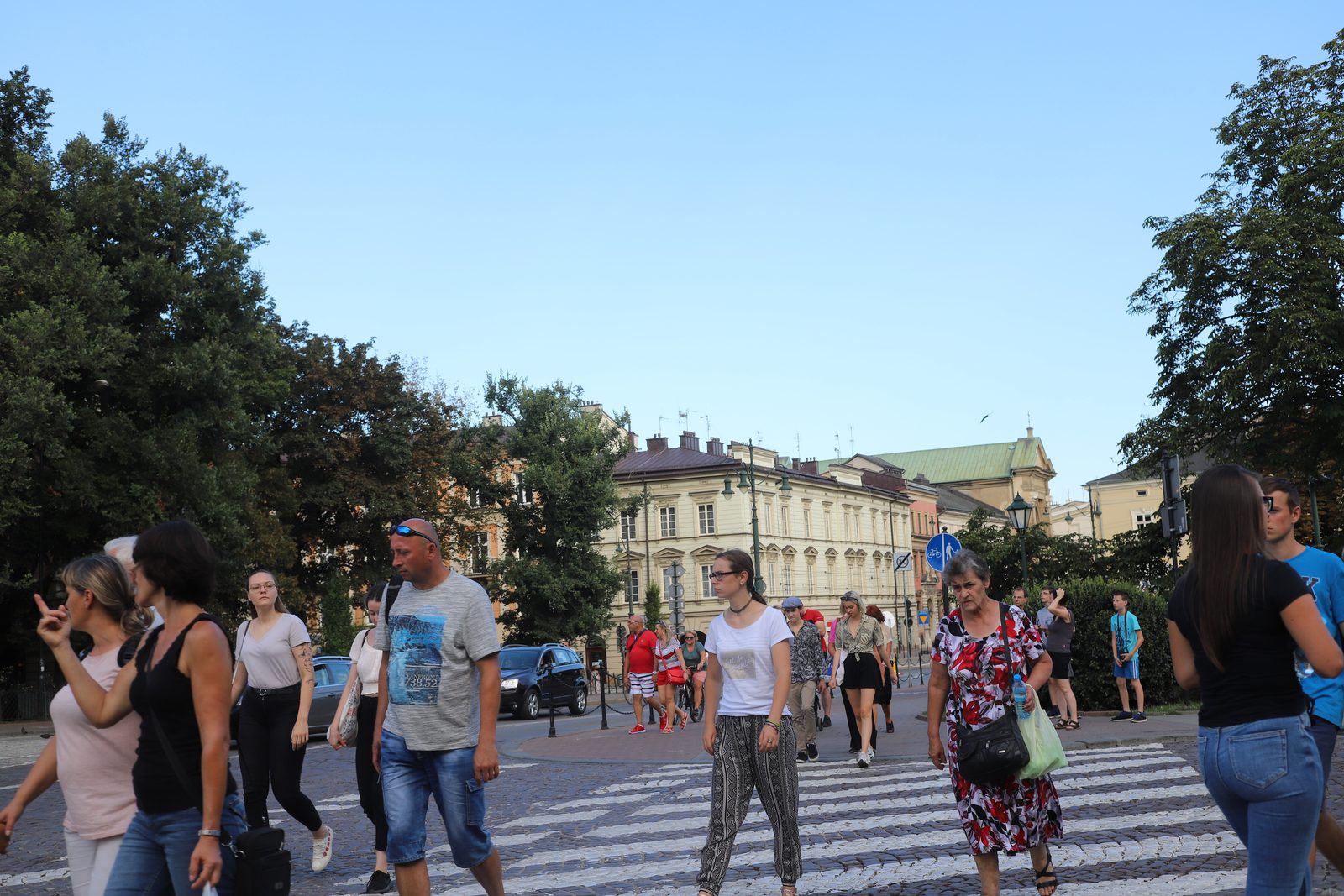
Kraków puts one of Europe's largest medieval squares a short walk from the old Jewish quarter of Kazimierz, and street photographers report that Poles rarely react badly to a camera.
- Spots
- 8
- Best time
- May to June and September to October
- Lens
- 28mm or 35mm
- Photographing people
- Strict: ask first
Kraków is a very good city for street photography because so much of life in the city funnels through one enormous medieval square, and the neighborhoods around it change character every few hundred meters. F. D. Walker of Shooter Files found Eastern Europe friendlier to street photography than most regions, and says he never had an angry reaction in Kraków. People may not understand why you want their photo, but they rarely mind.
The center is small. The Old Town sits inside a ring of park, Kazimierz is a 15 minute walk south, and the river runs just beyond. That makes it easy to cover on foot. It is also a big student city, so the streets are young and busy in term time. I'd spend one day in the center and give a second half day to Nowa Huta, which looks like a different country.
Best street photography spots in Krakow
Rynek Główny
The Rynek Główny is one of the largest medieval squares in Europe, with the Cloth Hall in the middle and St. Mary's Basilica on one corner. Every hour a trumpeter plays the hejnał from the church tower, and the crowd below stops and looks up. Turn around and shoot the upturned faces. The square also has a lot of pigeons, which kids chase all day. Walk the edges early in the morning, when delivery vans and cleaners own the space. It is very touristy by midday, so work the crowds rather than fighting them.
Kazimierz & Plac Nowy
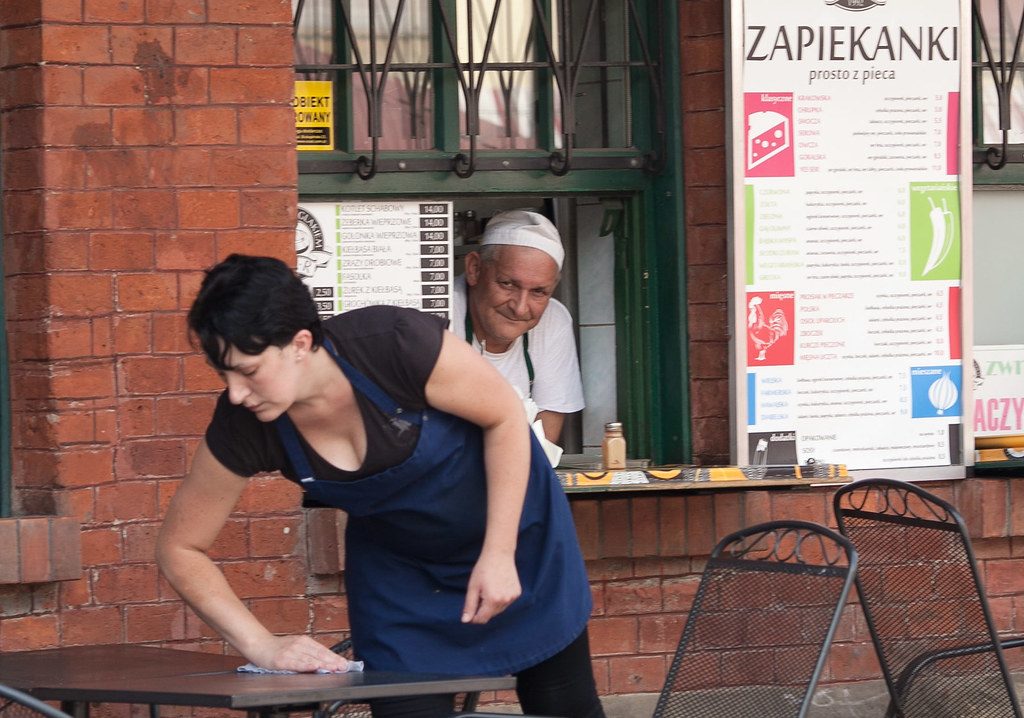
Kazimierz was the center of Jewish life in Kraków for over 500 years before the war. Today it mixes synagogues and old shop signs with bars full of students. Plac Nowy is its heart: a small square around a round market hall, the Okrąglak, where hatches sell zapiekanki, the local open faced baguette. Shoot the late night queue at the hatches, lit from inside. In the daytime, use a mural as a background and wait for a passerby. Be respectful near synagogues and the old cemeteries, and do not treat memorials as props.
Planty
The Planty is a narrow park that circles the whole Old Town where the medieval walls once stood. It is a corridor of benches and lamp posts, with locals walking dogs and cutting through on the way to work. Lomography recommends it in autumn, when the lanes fill with fog and fallen leaves. Early morning is best. Frame a single walker between two rows of trees, or shoot a figure on a bench under a lamp. Near the train station the park gets rougher at night.
Vistula Boulevards
The Vistula boulevards are riverside paths below Wawel Castle. On warm evenings locals come down to sit on the grass, drink on the boat bars and watch the sunset. Below the castle stands a metal dragon statue that breathes real fire every few minutes, and families gather to wait for it. Shoot the crowd flinching as the flame comes out. Later, walk east along the river and shoot silhouettes against the water. The grass slopes are good for a low angle. Summer weekends are busy and relaxed.
Podgórze
Podgórze is across the river from Kazimierz. The wartime ghetto was here, not in Kazimierz, and Plac Bohaterów Getta holds a memorial of large metal chairs. Schindler's factory and the MOCAK contemporary art museum are nearby. Beyond those, the district is quieter and more working class, with corner shops and residents going about their day. Shooter Files found it less polished and more authentic. Walk the side streets in the late afternoon. At the memorial square, photograph with care and never pose people on the chairs.
Hala Targowa
Every Sunday a flea market sets up around the Hala Targowa building on Grzegórzecka Street, a short walk east of the Old Town. Vendors arrive around 7:00 to 8:00 and lay out furniture, old cameras, military badges and junk on tables and blankets. It is one of the best places in the city for characters. Go early, when the light is low and the haggling is serious. Crouch at the end of a table so the objects lead to the seller. Many sellers are older men who may not want a photo, so ask when you get close.
Stary Kleparz
Stary Kleparz is a long running market just north of the Old Town, a few minutes past the Barbican. It is a local place, with produce stalls and regular shoppers carrying bags home. Morning is the best time, when the stalls are full. The awnings soften the light, which suits faces and hands. Frame a vendor weighing fruit through a gap in the stalls. It is compact, so move slowly and buy something; people notice a camera quickly in a small market.
Nowa Huta
Nowa Huta was built in the 1950s as a model socialist town for steelworkers, and it is now part of Kraków. Plac Centralny opens onto wide avenues of arcaded blocks laid out in a fan. The scale and symmetry give you strong graphic frames, with pensioners and kids on bikes crossing the space. Lomography suggests starting on Aleja Przyjaźni. Morning and late afternoon light works best along the avenues. It is about 25 minutes by tram from the center, and it feels far from the tourist Kraków.
Photographing people in Krakow
Strict: local law or custom protects people's image. Ask first, or keep faces out of frame.
Taking photos of people in public is not banned in Poland. The rule that matters is about publishing. Article 81 of the Copyright Act says distributing a person's image needs their consent, with exceptions for public figures and for people who are only a detail of a larger whole, such as a gathering or a landscape. The Civil Code also protects a person's image as a personal right. The Wikimedia Commons summary sets this out. This is general information, not legal advice.
On the street, Kraków is calm about cameras. Shooter Files never ran into problems. Older people can be reserved, and markets are where you are most likely to be asked not to shoot. A nod and a dzień dobry help. Ask before any close portrait you plan to publish. See how to photograph strangers.
General information, not legal advice. More in is street photography legal?
What to photograph in Krakow
- The hejnał moment. Crowds looking up at St. Mary's tower when the trumpet sounds on the hour.
- Pigeons on the Rynek, which Lomography's community shoots again and again.
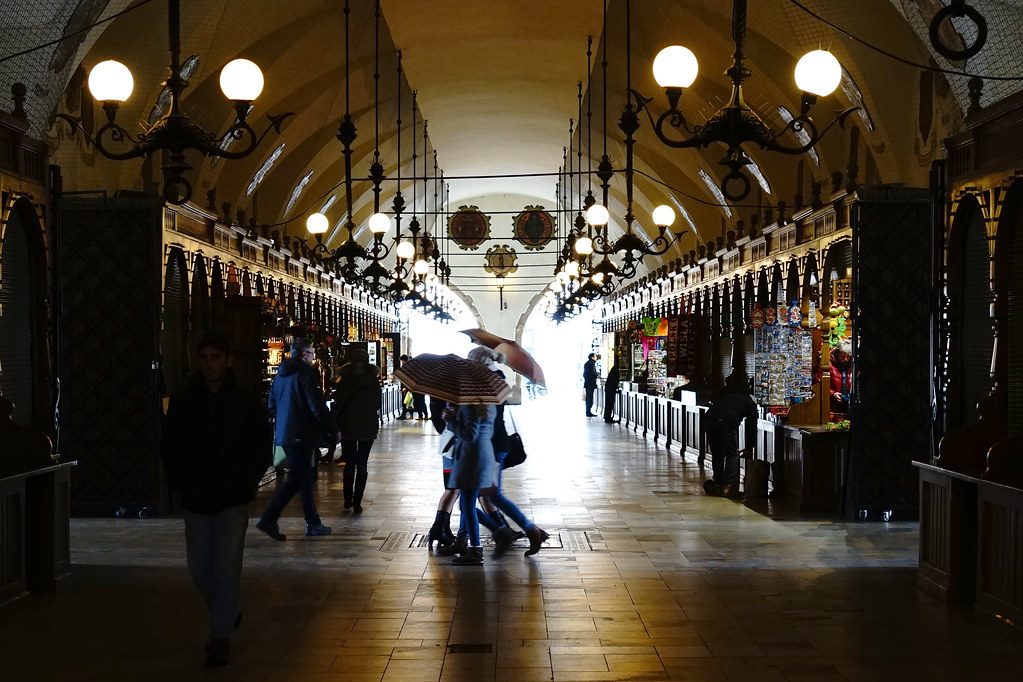
- Rain at night. The photographer behind Burnimage shot Kraków in torrential rain and found the wet cobbles and umbrellas under street lamps ideal.
- Students in Kazimierz and around the university, especially in term time.
- Socialist realist architecture in Nowa Huta, with small figures against huge facades.
- Flea market characters at Hala Targowa on Sunday mornings.
- Obwarzanek sellers. Blue carts selling ring shaped bread on street corners.
- Riverside life on the Vistula boulevards on summer evenings.
A one-day photo walk
- 7:30, Rynek Główny. Delivery vans on an empty square, and the first trumpet calls. About an hour.
- 9:00, Stary Kleparz. Ten minutes north past the Barbican. Market stalls in the morning.
- 10:30, Planty. Walk the park ring south toward Wawel. About 30 minutes.
- 12:00, Kazimierz and Plac Nowy. A 15 minute walk. Lunch at the Okrąglak, then murals and side streets.
- 15:30, Podgórze. Cross the footbridge from Kazimierz, 10 minutes. Side streets and the memorial square.
- 18:30, Vistula Boulevards. Walk back along the river to Wawel for sunset and the dragon.
- After dark, Plac Nowy. Return for the zapiekanka queues and bar light.
When to shoot
May to June and September to October. Autumn brings fog and gold leaves in the Planty. The Jewish Culture Festival runs in late June and early July. Nativity scene (szopki) displays on the Rynek in early December.
The light
Soft and often overcast, with long summer evenings. Rain and wet cobbles at night give strong reflections from street lamps. Winter days are short and gray.
What to bring
A 28mm or 35mm prime, and a weather sealed body if you want to work rainy nights.
Safety
Very safe. Police enforce the ban on drinking in public and on jaywalking. The Old Town gets loud with stag parties late at night.
Tips for Krakow
- Season: late spring and early autumn. October fog in the Planty is worth planning for.
- Jewish Culture Festival: late June to early July in Kazimierz, ending with a big open air concert on Szeroka Street.
- Lajkonik: in June, on the Thursday after Corpus Christi, a costumed rider parades from Zwierzyniec to the Rynek.
- Szopki: on the first Thursday of December, builders display ornate nativity scenes around the Mickiewicz statue on the Rynek.
- Rain: don't stay in. Wet cobbles at night give the best reflections, and a weather sealed camera helps. See street photography settings for night exposure.
- No beer on the street: drinking in public is illegal and police enforce it in the Old Town.
- Lens: a 28mm or 35mm covers most of the center. See best lens for street photography.
Frequently asked questions
Is street photography legal in Krakow?
STRICT on publishing. Taking photos in public is not banned in Poland. Article 81 of the Copyright Act requires consent to distribute a person's image, except for public figures and people who are only a detail of a larger whole such as a gathering or a landscape. The Civil Code protects image as a personal right. General information, not legal advice.
Where are the best street photography spots in Krakow?
Start with Rynek Główny, Kazimierz & Plac Nowy, Planty, Vistula Boulevards. The giant main square. Pigeons and the hourly trumpet call from St. Mary's tower.
When is the best time for street photography in Krakow?
May to June and September to October. Autumn brings fog and gold leaves in the Planty. The Jewish Culture Festival runs in late June and early July. Nativity scene (szopki) displays on the Rynek in early December.
What lens should I bring to Krakow?
A 28mm or 35mm prime, and a weather sealed body if you want to work rainy nights.
Is Krakow safe for street photographers?
Very safe. Police enforce the ban on drinking in public and on jaywalking. The Old Town gets loud with stag parties late at night.