
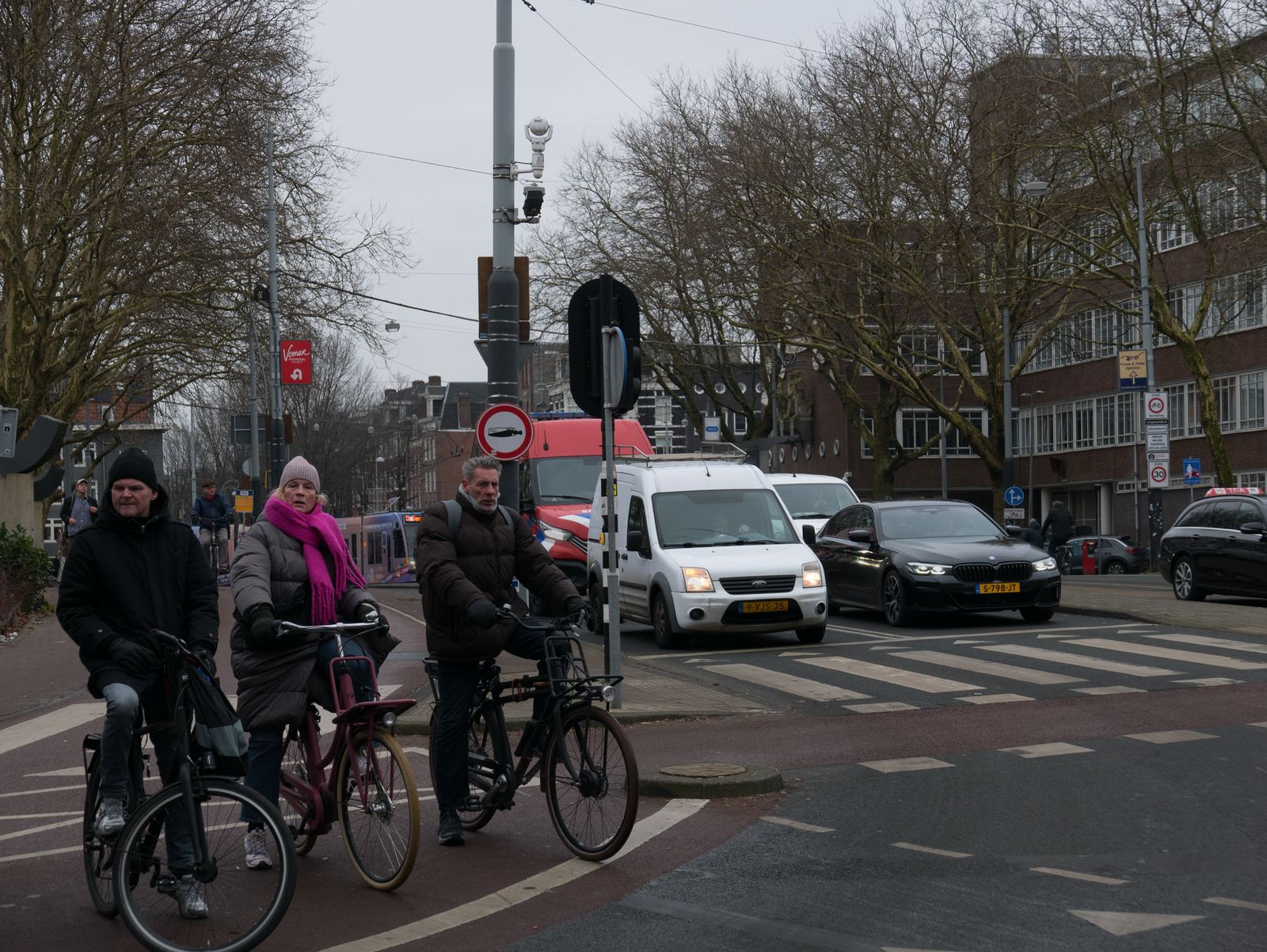
Street Photography in Amsterdam
Bikes, boats and canals in beautiful low light, with polite, relaxed locals.
- Spots
- 7
- Best time
- Spring (tulips, King's Day in April) and summer festivals
- Lens
- 35mm or 50mm
- Photographing people
- Generally allowed
Amsterdam is a very good city for street photography because it packs canals full of bikes and boats into a small, walkable center with low, gentle light for most of the day. The canal belt fits inside a two kilometer semicircle, so you can cover the best areas on foot, and Eric Kim picks the city specifically for its beautiful light. Photographer Panagiotis Stergianos told the Inspired Eye that his Ricoh GR went unnoticed, and that people there are polite and respectful.
The city has two sides. One is the party town of De Wallen and the stag groups. The other is quiet canals, markets and locals riding to work with kids and dogs in cargo bikes. Both make pictures. The real challenge is clutter: parked vans and trees can crowd a frame, so slow down and simplify. The one hard rule is that you never photograph sex workers in the windows.
Best street photography spots in Amsterdam
Dam Square
Dam Square is the big open square in front of the Royal Palace. It fills with tourists, locals, pigeons and street performers, and there is always something happening. Shoot in the morning when low sun comes across the square, or late afternoon for long shadows. Stand near the National Monument and look toward the palace for a clean, pale backdrop. Composition idea: a burst of pigeons with one person caught in the middle. Caution: it is a tourist hub, so pickpockets work here. Keep your bag closed and your strap on.
Amsterdam Centraal
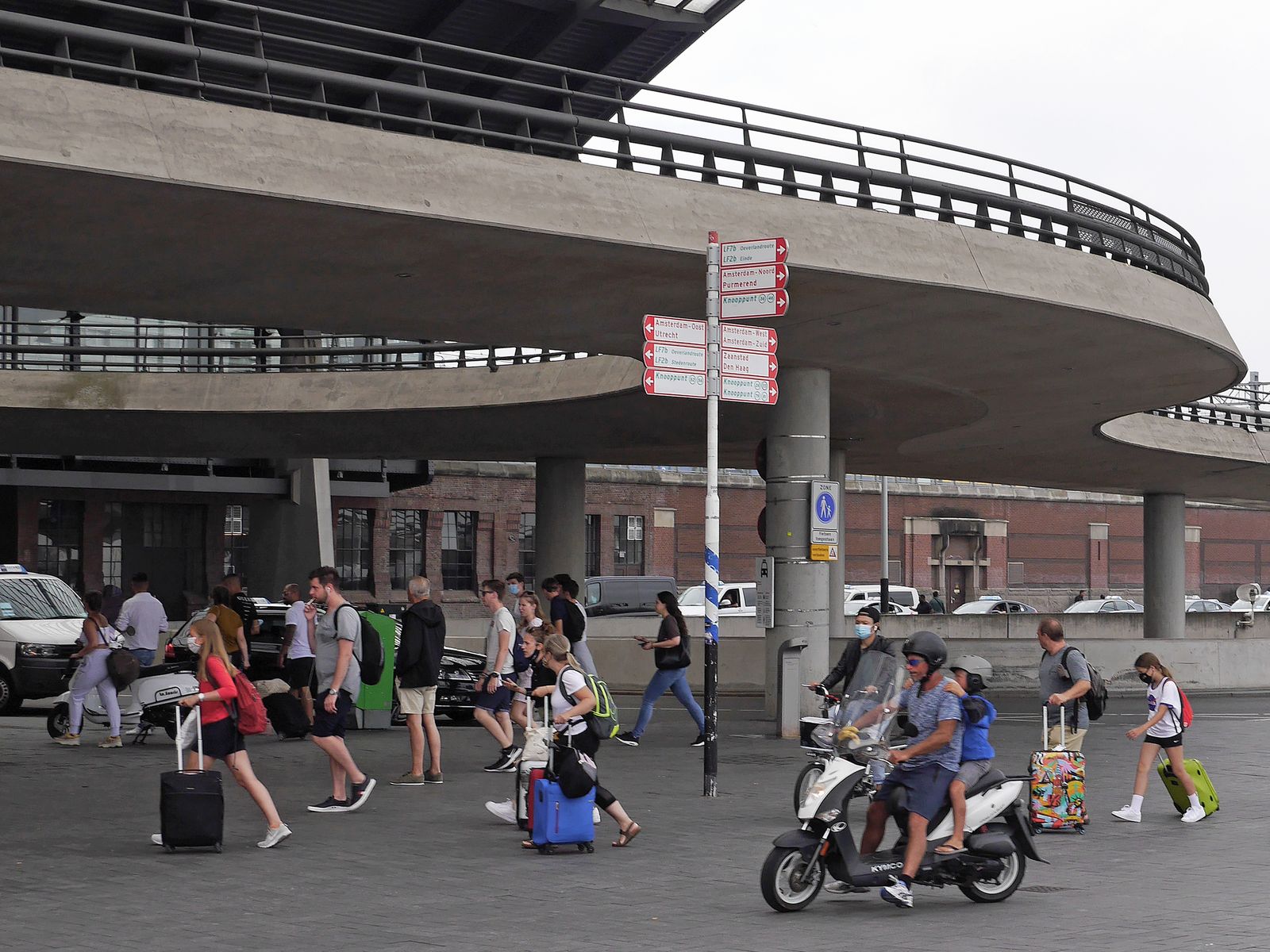
More than 250,000 people pass through Centraal every day. The long front plaza opens onto the city, with trams and cyclists in front and ferries behind. Go early morning for commuters and the light on the facade. Stand by the huge bike parking area to catch riders pouring in, or walk through to the free ferries on the IJ side and shoot passengers with bikes. Composition idea: a line of cyclists crossing in front of the station's red brick. Caution: the bike paths here are fast. Never stand on one.
Jordaan
The Jordaan is a former working-class neighborhood of narrow streets and quiet canals, now one of the most sought-after areas in the city. Come at 7 or 8 am, before the cafes open and delivery bikes start. Pick a canal bridge with a straight approach from both sides, and wait as cyclists cross in clusters. The Noordermarkt runs on Saturday mornings. Composition idea: a cyclist on the arc of a bridge, with the canal house reflections below. Caution: this is a residential area and people live on the houseboats, so do not shoot into windows.
De Wallen (Red Light District)
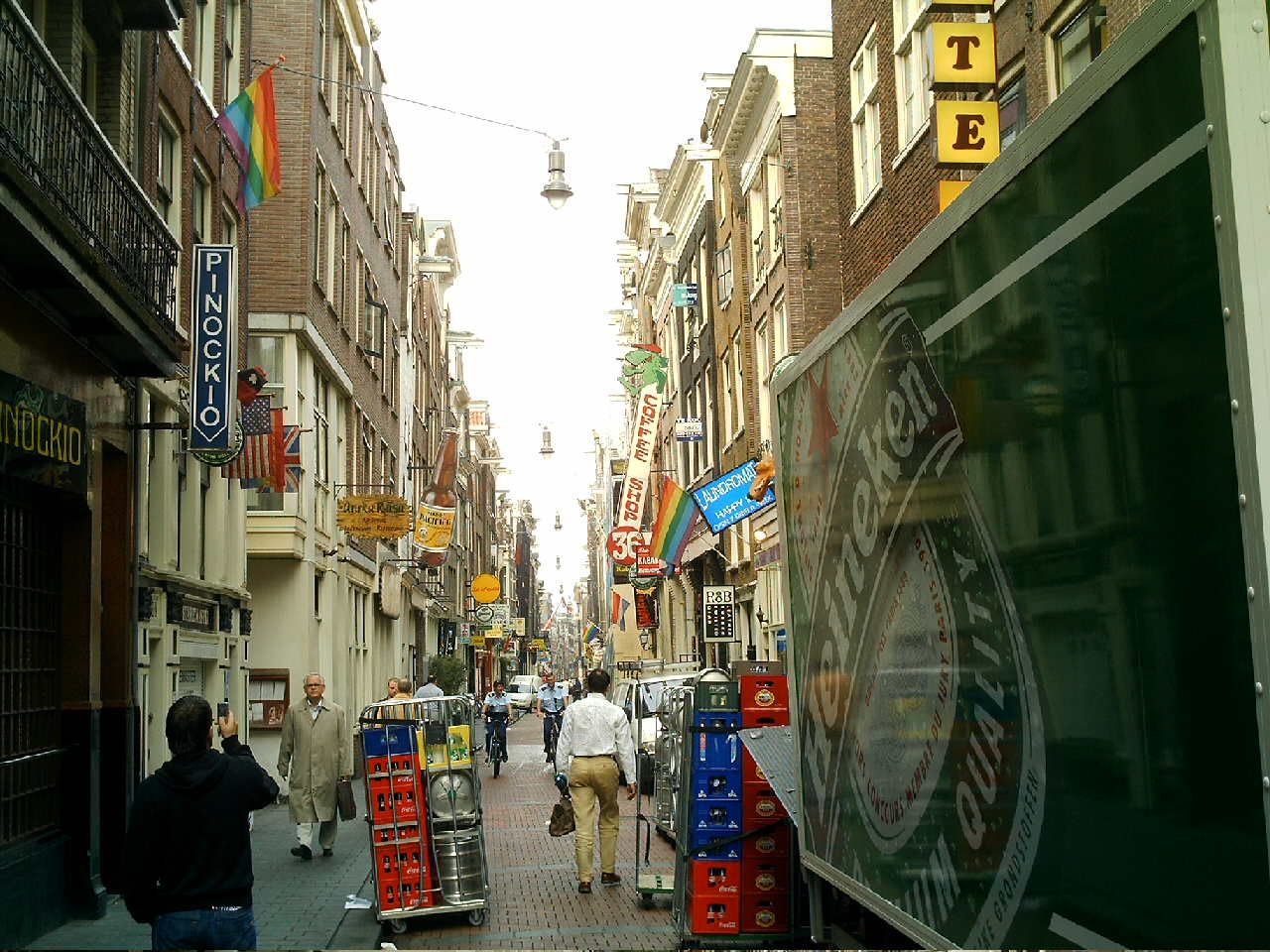
De Wallen is the oldest part of the city, with the 14th-century Oude Kerk and a steady stream of tourists and stag parties. You can photograph the canals and the crowds. You cannot photograph the sex workers in the windows. The ban is enforced on the spot, and visitors who ignore it risk being confronted or removed from the area. Go at dusk for the red light on the canals. Composition idea: a crowd on a bridge with the neon reflected in the water, windows out of the frame. Caution: keep your lens away from windows at all times.
Albert Cuypmarkt
Albert Cuypmarkt in De Pijp is the busiest market in the Netherlands, with around 300 stalls selling fish, fabric, spices and stroopwafels. It runs Monday to Saturday, and Saturday is busiest. A 35mm at around f/4 lets you move with the crowd and keep both face and stall in focus. Stand by a stall with a lot of action and let the flow pass you. Composition idea: a vendor handing over a hot stroopwafel with the steam backlit. Caution: vendors are working, so step aside when customers need to get through.
IJ-Hallen flea market (NDSM)
IJ-Hallen calls itself the biggest flea market in Europe, with hundreds of stalls in and around old shipyard halls at the NDSM wharf. It runs one weekend a month, and there is an entrance fee. Check the dates on the official site before you go. Take the free ferry from behind Centraal, about 15 minutes. The industrial setting gives you raw light through big doors and graffiti backdrops. Composition idea: a buyer examining an object, framed by piles of junk. Caution: some sellers dislike photos of their goods, so ask before a close shot.
Nine Streets (De 9 Straatjes)
The Nine Streets are small shopping streets crossing the main canals between Singel and Prinsengracht, full of boutiques and cafes. Go on a weekday morning. By midday in summer it is packed. Stand on a bridge where a shopping street crosses a canal and shoot along the street, or turn around and use the canal as a leading line. Composition idea: a well-dressed shopper framed in a boutique window with the canal reflected in the glass. Caution: cyclists come through fast and silently, so look both ways before you step back.
Photographing people in Amsterdam
Photographing people in public is legal in the Netherlands. The portrait right in Article 21 of the Dutch Copyright Act only lets a person block publication of a photo they did not commission when they have a reasonable interest, such as privacy or commercial exploitation. Courts weigh that against freedom of expression case by case. Showing someone in an embarrassing or sensitive situation is the main risk, and so is using their face in advertising. The big local exception is De Wallen. Photographing sex workers is banned there, and people around you will act on it fast. Beyond that, the Dutch are direct. If someone does not want a photo, they will tell you plainly, and you should respect it and delete if asked. Most people ignore cameras. This is general information, not legal advice. See is street photography legal.
General information, not legal advice. More in is street photography legal?
What to photograph in Amsterdam
- Cyclists of every kind: commuters in suits, or parents with kids and dogs in cargo bikes. There are more bikes than people.
- Boats and houseboats, with owners having drinks on deck in summer.
- Canal reflections of gabled houses, with people crossing bridges above.
- Market life at Albert Cuyp and the Noordermarkt.
- Party crowds: stag groups in costumes, or orange crowds on King's Day.
- Tram windows, which Stergianos used to shoot passengers and street scenes on the move.
- Window life, since the Dutch famously leave their curtains open. Keep this to wide frames and never make private people the subject.
A one-day photo walk
- 7:30 Amsterdam Centraal. Shoot commuters and the bike flow for an hour.
- 8:45 Jordaan. Walk west, about 15 minutes. Work the canals and bridges while the streets are quiet.
- 10:30 Nine Streets. Walk south along Prinsengracht, 10 minutes. Shoot shoppers and bridges as the boutiques open.
- 12:00 Dam Square. Walk east, 10 minutes. Street performers and crowds around the palace.
- 13:30 Albert Cuypmarkt. Tram or metro to De Pijp, about 15 minutes. Market until it winds down in late afternoon.
- 18:30 De Wallen. Metro back toward Centraal and walk in, about 20 minutes total. Shoot the canals and crowds at dusk, with the windows out of your frame.
When to shoot
Spring (tulips, King's Day in April) and summer festivals. Low sun in morning and evening.
The light
Low but gentle light through the day; reflections in canals.
What to bring
35mm; 50mm for canal compression.
Safety
Very safe (Shooter Files 8/10); watch for bikes.
Tips for Amsterdam
- A 35mm handles most of the center. Add a 50mm or short telephoto for compressing cyclists on canal bridges. See best lens for street photography.
- Pre-focus on a point on a bridge and shoot in bursts as cyclists pass. A shutter of 1/500 freezes them. See street photography settings.
- April and May bring tulips and long evenings. September and October are quieter with raking afternoon light. Mid-July to mid-August is the most crowded.
- King's Day on April 27 turns the city orange, with street markets and party boats on every canal.
- The Pride canal parade in early August and the Amsterdam Light Festival in winter give you night scenes on the water.
- Rain is common. Use it for umbrellas on bikes and reflections on wet cobbles.
- Never step into a bike lane without looking. It is the most dangerous thing you will do here.
Frequently asked questions
Is street photography legal in Amsterdam?
Moderate. Photography in public is legal; portrait rights (portretrecht) limit publishing when a person has a reasonable interest. Do not photograph sex workers in De Wallen.
Where are the best street photography spots in Amsterdam?
Start with Dam Square, Amsterdam Centraal, Jordaan, De Wallen (Red Light District). Crowds and pigeons in the center.
When is the best time for street photography in Amsterdam?
Spring (tulips, King's Day in April) and summer festivals. Low sun in morning and evening.
What lens should I bring to Amsterdam?
35mm; 50mm for canal compression.
Is Amsterdam safe for street photographers?
Very safe (Shooter Files 8/10); watch for bikes.
More street photography cities
Further reading: the Inspired Eye guide to Amsterdam.