
Street Photography in Adelaide
Adelaide's city centre is a flat, compact grid, so you can walk from mall reflections to lit laneways in one day, then take the tram to the beach at Glenelg for sunset.
- Spots
- 8
- Best time
- March, when the Adelaide Fringe (late February to late March) fills the East End with crowds
- Lens
- 28mm or 35mm
- Photographing people
- Generally allowed
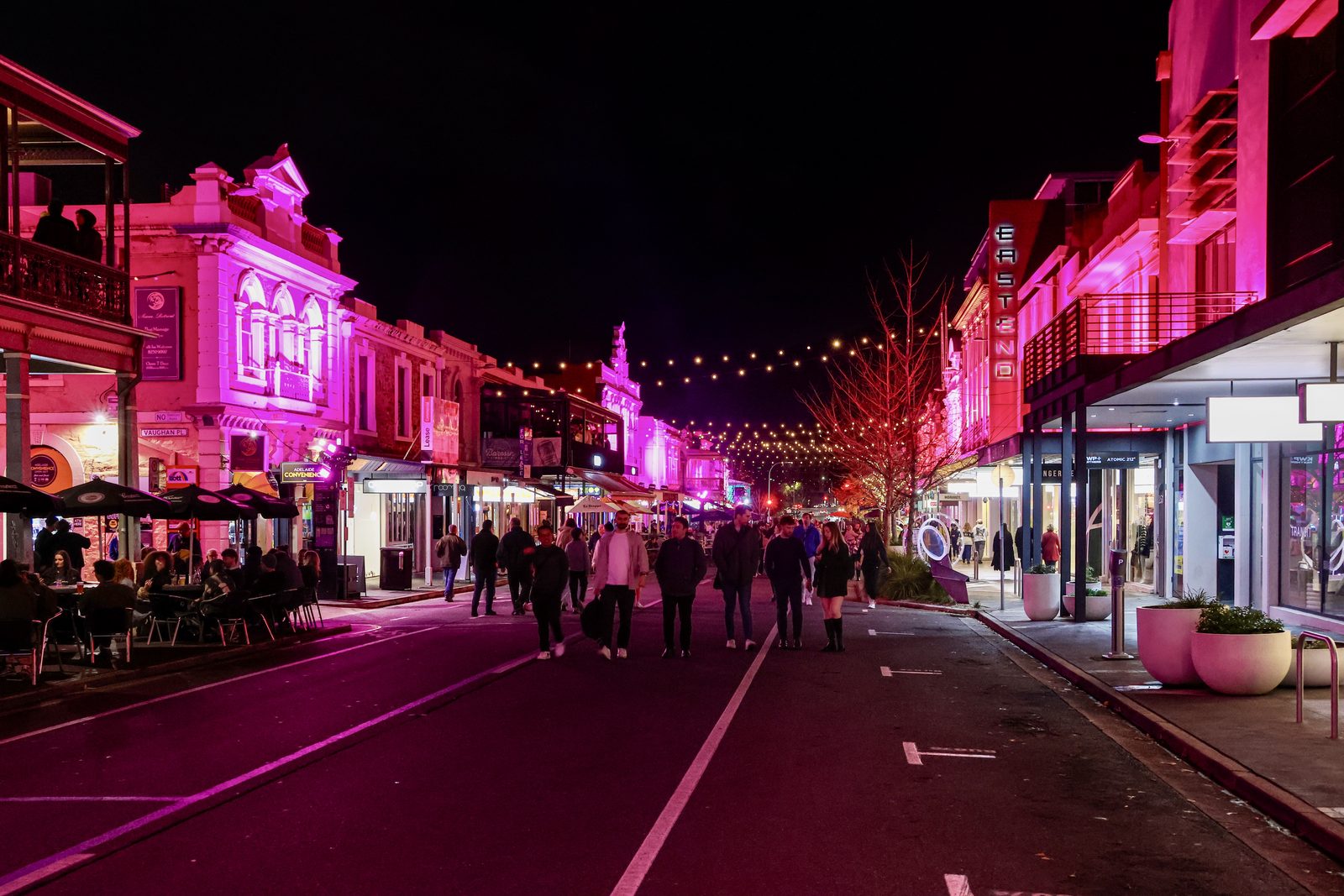
Adelaide is a good city for street photography if you like a small, easy stage: the centre is a flat grid of wide streets, and nothing in it is more than a ten minute walk away. Wedding photographer James Devine, who shoots his hometown with an X100, admits Adelaide has a reputation for being vanilla. Then he shows it after dark as gritty and a little mysterious. That is a fair brief. The daytime city is clean and bright, so the good frames come from reflections and from people under artificial light.
Most people searching for Adelaide photo spots live here, so this guide works for a weekday walk as much as for a visit. I'd give the mall and the Central Market the morning and save the laneways for dark. When you want a horizon, the tram runs to Glenelg for sunset. Port Adelaide has the murals and deserves its own half day.
Best street photography spots in Adelaide
Rundle Mall
Rundle Mall is the city's main pedestrian street and the easiest place to find a crowd on a weekday. The Mall's Balls, two stacked steel spheres in the middle of the mall, reflect the whole street, so you can frame a shopper and a warped double of the crowd in one picture. Stand close with a wide lens and wait for someone to walk into the curve. The mall runs east to west, so early and late sun comes straight down it and stretches the shadows of commuters. The shopping centres off the mall are private, and security may stop you inside them.
Rundle Street & Rundle Lantern
Rundle Street carries on from the mall into the East End. Devine calls it the heart of Adelaide, where people dine and celebrate, and it is best in the evening. On the corner with Pulteney Street, the Rundle Lantern is a wall of 748 programmable light panels that washes passers-by in changing colour after dark. Put a figure in front of it for a silhouette, or use its colour on faces at the crossing. During the Fringe in February and March this is the busiest street scene the city gets all year. Late at night, stay aware around the bars.
Adelaide Central Market
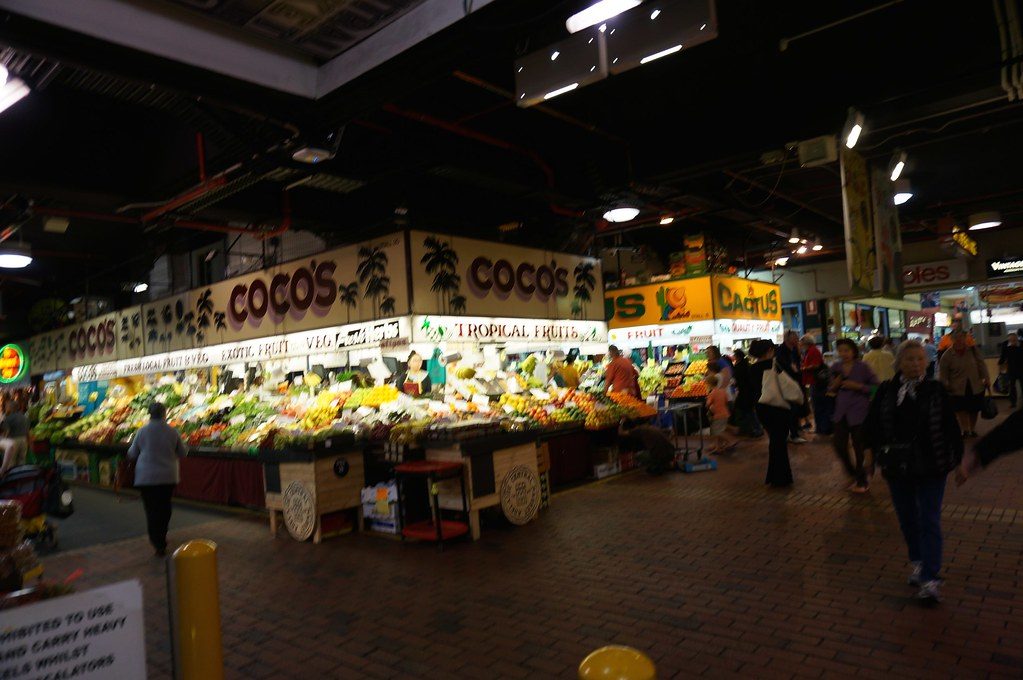
Devine calls the Central Market the perfect place to people watch, and its dim light under the roof gives you moody frames. Stallholders call out prices and shoppers push through the aisles with bags of produce. Work the ends of the aisles and use the pools of overhead light to isolate faces. Come in the morning, before the lunch crowd. One caution: the market is private, and its own website asks anyone who wants to film or photograph to apply for approval. Apply through that page before a serious shoot, and ask stallholders before close portraits.
Chinatown (Moonta Street)
Moonta Street is the pedestrian spine of Adelaide's Chinatown, right beside the Central Market, with a gateway arch and red lanterns overhead. It is short and tight, which is good for layers: the arch in front, diners and shoppers behind. Restaurants along Moonta and Gouger Street fill up at lunch and again in the evening, when the signs come on. At dusk, try a slower shutter to blur walkers under the lanterns. People at outside tables are in public, but a tight shot of someone eating rarely goes down well, so work wider or ask.
Leigh Street & Peel Street
Leigh Street and Peel Street are narrow laneways off Hindley Street, lined with small bars. By day they are shaded and quiet. After dark, bar light spills onto the paving and groups gather outside, which is the look Devine chased with a mist filter to imitate Cinestill film. He also likes Eliza Street for its Melbourne feel. Stand at the Hindley Street end and let people walk into the lit patches, or shoot through bar windows for reflections. Weeknights are easier to work than Saturday. If a group waves you off, move on.
North Terrace & Adelaide Railway Station
North Terrace is the city's cultural boulevard, lined with sandstone buildings and the university. Adelaide Railway Station sits at its western end, and weekday commuter rushes give you steady streams of people on the steps and concourse. Use the station's columns as a frame, and shoot along the terrace early when the sun is low in the east. Behind the station, the Riverbank footbridge leads to Adelaide Oval, and crowds pour across it before football and cricket matches. The station is operator property, so keep a low profile inside and step out if staff object.
Glenelg Jetty & Jetty Road
Glenelg is Adelaide's beach suburb, at the end of the tram line from the city. Jetty Road runs down to Moseley Square and the jetty. The beach faces west, so the sun sets over the water behind anyone walking out along the jetty. That makes it the place for silhouettes. Arrive an hour before sunset, stand on the sand beside the jetty and wait for walkers and fishermen to break the skyline one at a time. In summer the foreshore is packed with families. Swimwear and children call for extra care: keep it wide and don't single anyone out.
Port Adelaide
Port Adelaide is the old harbour town north-west of the centre, and it is Adelaide's street art capital. The Wonderwalls festivals brought big murals here from 2015, and Exploring South Australia counts over fifty large pieces. Many sit near the lighthouse, and some hide down back lanes. A mural makes a strong backdrop if you wait for a person to cross in front of it. Weekends bring more life to the wharf, while weekday afternoons can be very quiet. Pick up a street art map at the visitor centre.
Photographing people in Adelaide
Australia is relaxed about street photography. The Arts Law Centre says it is generally possible to photograph people in public without asking, and that there are no publicity or personality rights. South Australia's Law Handbook says there are no general restrictions on photos taken in or from a public place, with exceptions such as indecent images and commercial use. Markets and shopping centres are private property and can set their own rules. This is general information, not legal advice. See is street photography legal.
Adelaide people are mostly easygoing, but in a quiet street a camera gets noticed. Arts Law notes that police sometimes respond to complaints about photos of children, often from people who wrongly think a parent's consent is required. Be open and explain what you are doing. For a portrait, ask; see how to photograph strangers.
General information, not legal advice. More in is street photography legal?
What to photograph in Adelaide
- Reflections in the Mall's Balls and in shop glass along Rundle Mall.
- Office workers crossing wide intersections, with long shadows early and late.
- Market life, from stallholders calling out prices to shoppers weighed down with bags.
- Laneway bars after dark and the colour wash from the Rundle Lantern.
- Fringe crowds in February and March, around Rundle Street and the Garden of Unearthly Delights in the East End parklands.
- Silhouettes on Glenelg jetty at sunset.
- People passing murals in Port Adelaide.
Winter is quieter, but rain gives you wet pavement and puddle reflections that the dry months rarely do. Weekday lunchtimes are the most reliable crowds in the grid.
A one-day photo walk
- 7:30, North Terrace and the station. Commuters in low eastern sun. About 45 minutes.
- 8:30, Rundle Mall. A 5 minute walk. Reflections as the shops open.
- 10:00, Central Market and Chinatown. About 10 minutes south on foot, or the free city tram down King William Street. Stay through lunch.
- 15:00, Glenelg. The tram from Victoria Square takes about half an hour. Walk Jetty Road, then wait on the sand for sunset.
- After dark, the laneways and Rundle Street. Tram back to the city. Work the laneways off Hindley Street, then finish under the Rundle Lantern.
Save Port Adelaide for another half day, by train from Adelaide Railway Station.
When to shoot
March, when the Adelaide Fringe (late February to late March) fills the East End with crowds. Autumn and spring have softer light than summer. The Central Market is best in the morning. Glenelg is best in the hour before sunset.
The light
Dry, bright and often cloudless, so the sun is hard from mid morning in summer. Rundle Mall and Hindley Street run east to west, so low sun shoots straight down them early and late. Local photographer James Devine works the city after dark for a moodier look.
What to bring
A 28mm or 35mm prime. Something fast or good at high ISO for the laneways after dark.
Safety
Generally safe. Hindley Street's clubs can get rowdy late on weekend nights, so keep your gear close there after midnight. Summer heatwaves are common: carry water and a hat.
Tips for Adelaide
- Fringe: the Adelaide Fringe runs from late February to late March. It is the best time of year for crowds and light, as Devine says.
- Illuminate Adelaide: a winter light festival, usually in July. Devine shot it for his second street diary.
- Christmas Pageant: a big parade through the city, usually in November, with families lining the kerbs.
- Jacarandas: purple blooms line some streets in November.
- Hard light: in summer the sun is harsh by mid morning. Use shadows as shapes and expose for the highlights. More in street photography settings.
- Lens: a 28mm or 35mm prime suits the grid and the laneways. See best lens for street photography.
- Transport: the tram is free within the city centre, so use it to hop between North Terrace and Victoria Square.
Frequently asked questions
Is street photography legal in Adelaide?
Relaxed. Australia has no publicity or personality rights, and the Arts Law Centre says you can generally photograph people in public without asking. South Australia's Law Handbook lists exceptions such as indecent images and commercial use. Markets and shopping centres are private property: the Central Market asks for an approval application before filming or photography. General information, not legal advice.
Where are the best street photography spots in Adelaide?
Start with Rundle Mall, Rundle Street & Rundle Lantern, Adelaide Central Market, Chinatown (Moonta Street). The main pedestrian street. Busy with shoppers, plus the Mall's Balls, two steel spheres that reflect the whole street.
When is the best time for street photography in Adelaide?
March, when the Adelaide Fringe (late February to late March) fills the East End with crowds. Autumn and spring have softer light than summer. The Central Market is best in the morning. Glenelg is best in the hour before sunset.
What lens should I bring to Adelaide?
A 28mm or 35mm prime. Something fast or good at high ISO for the laneways after dark.
Is Adelaide safe for street photographers?
Generally safe. Hindley Street's clubs can get rowdy late on weekend nights, so keep your gear close there after midnight. Summer heatwaves are common: carry water and a hat.