
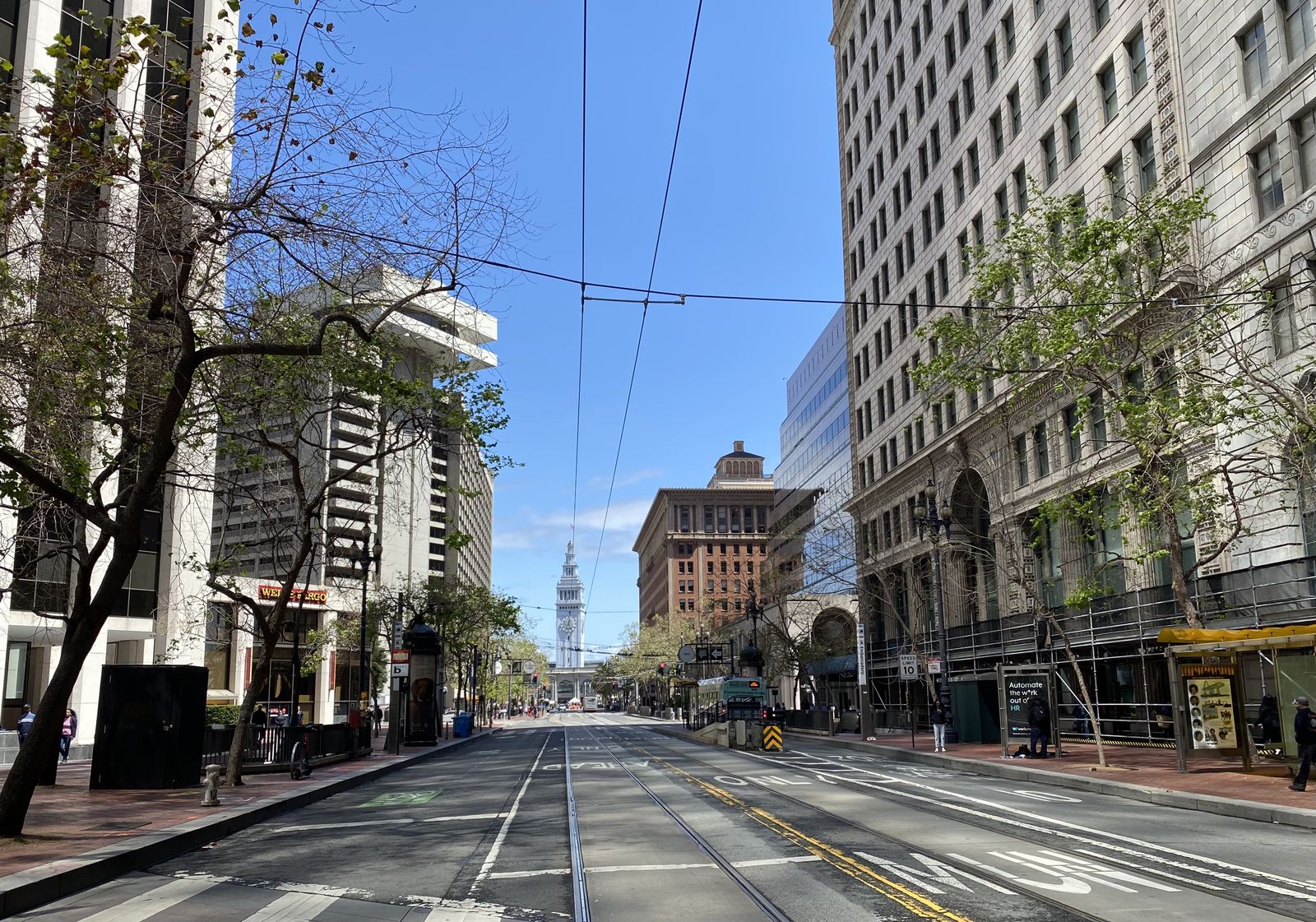
Street Photography in San Francisco
Fog, hills and hard sun give it a look no other US city has, and every neighborhood has its own crowd.
- Spots
- 7
- Best time
- September and October are clearest
- Lens
- 28mm or 35mm
- Photographing people
- Generally allowed
San Francisco is very good for street photography because it packs very different neighborhoods into a small, walkable grid, and the light changes by the hour. Fog softens the mornings. Late sun on the hills throws long shadows down the streets. Nick Gunn calls it the New York of the West Coast, and Eric Kim puts it in his top five cities, mainly for the Mission.
The weather is the thing to plan around. Locals call the summer fog Karl. From roughly May to August it often sits on the coast and the bay in the morning, then clears inland in the afternoon. Chinatown and the Mission work in any weather, so I'd save them for grey days. September and October are the clearest months.
Watch your safety in parts of the Tenderloin and near 6th and Market, and never leave a bag in a parked car.
Best street photography spots in San Francisco
Union Square
Union Square is the shopping heart of the city, with steady foot traffic all day. Nick Gunn's best San Francisco work came from here in golden hour, when low sun cuts between the buildings and lights up faces. Walk two blocks south to the cable car turnaround at Powell and Market, where crews push the cars around by hand while a queue of tourists watches. Stand on the corner opposite and shoot the crowd, not just the car. Caution: this edge of Market Street gets rough, so keep your gear close.
Chinatown (Grant Avenue)
Grant Avenue has lanterns strung overhead and dense sidewalk traffic. The best street life is one block west on Stockton Street, where locals shop for produce and fish. Ross Alley, home of the Golden Gate Fortune Cookie Factory, is narrow and good for tight frames. Come in the late afternoon so you get daylight and lit lanterns together. Frame a figure under the lantern lines with a 35mm or 50mm. Caution: leave the tripod in the bag and don't push a lens into shop doorways.
North Beach & Columbus Avenue
North Beach is the old Italian quarter, full of cafes and restaurants with sidewalk tables. Columbus Avenue cuts across the grid at an angle, which gives you odd corners and long diagonal views. City Lights bookstore and Vesuvio bar face each other across Jack Kerouac Alley. Washington Square is the park at the center, with Saints Peter and Paul Church behind it. Mornings there often bring older residents exercising. In the evening, frame diners through restaurant windows from across the street. Caution: some hosts dislike cameras pointed at their customers, so keep it brief.
Mission District (Mission St, 24th St, Valencia)
This is Eric Kim's favorite part of the city. You get murals, produce stands, taquerias and a mostly Latino street life on Mission Street and 24th Street, with cafes and bars on Valencia. Balmy Alley, a block of murals between 24th and 25th Streets, has been painted since 1973. Clarion Alley near 17th Street is rougher and more political. The Mission often clears of fog in the afternoon. Put a walker against a mural and wait for a color or gesture to echo it. Caution: be discreet with gear around 16th and Mission BART.
Financial District & Market Street
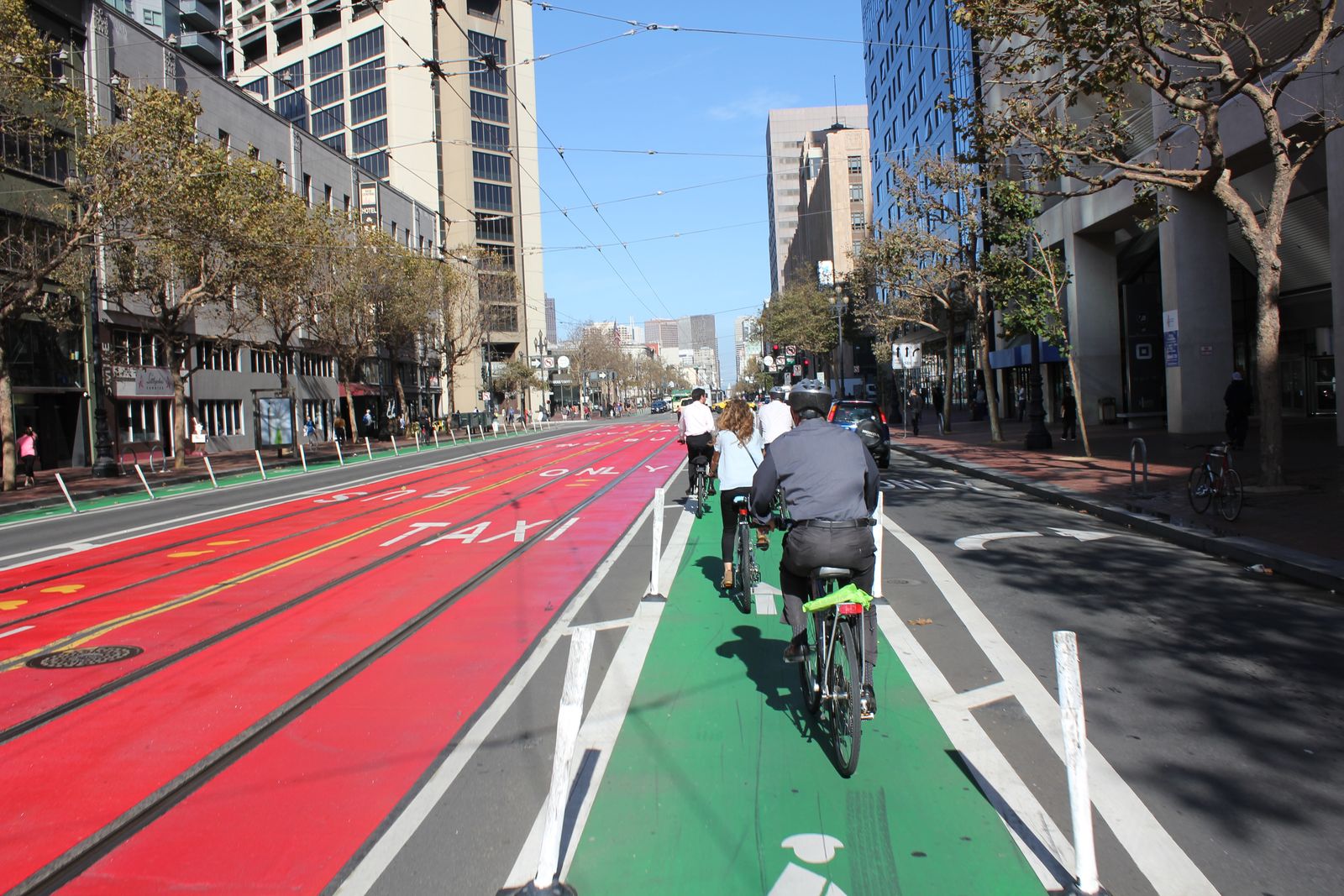
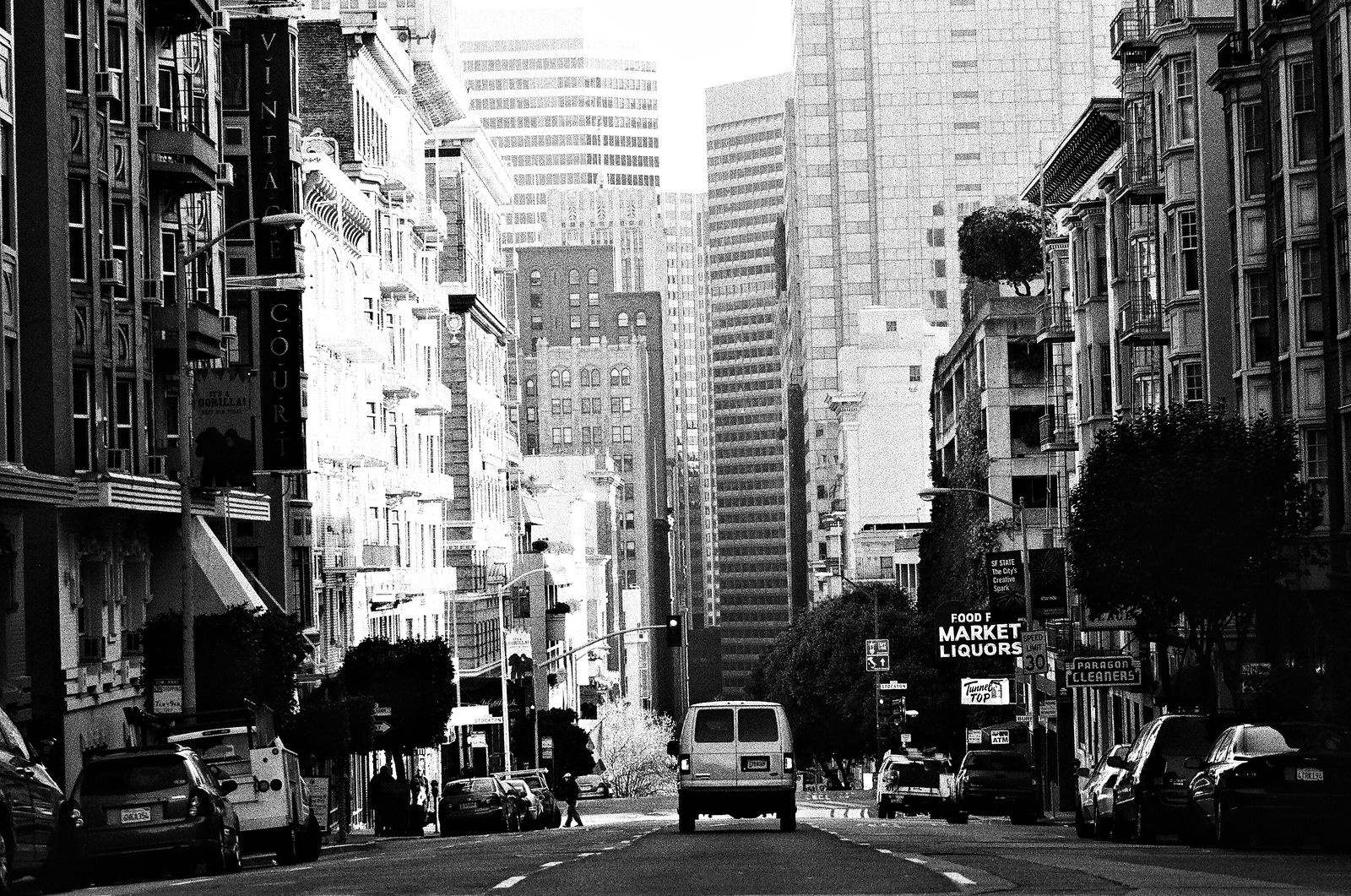
This is towers and commuters in deep shadow. Come on a weekday at lunch or around 5pm, when office workers flood Montgomery and Market Streets and pour out of the BART exits. The tall buildings make light canyons: shafts of sun between blocks of shade. Expose for the highlights and let the shadows go black. Bump the ISO, since you are often shooting in the shade of towers. Caution: Market Street changes character block by block, and west of 5th Street it gets rougher.
Haight-Ashbury & Golden Gate Park
Haight Street still trades on its hippie past. You'll find vintage shops, buskers, travelers and long-time locals with strong personal style. Walk west on Haight to the edge of Golden Gate Park, where drummers and people lounging on the grass fill the east end on weekends. Afternoons are best, after the fog lifts. Try a portrait against a painted shop front, or step back and shoot the park crowd with the trees as a frame. Caution: some people here will ask for money or a tip for a photo.
Embarcadero piers
Start at the Ferry Building, which is busiest on Saturday mornings for the farmers market. Then walk north toward Pier 39, with a stop at Pier 7, a long wooden pier with lamps that gives you strong leading lines. Vintage streetcars run along the Embarcadero, so you can frame a pedestrian against a passing car. Go early, before the joggers and tour groups, or at blue hour when the lamps come on. Caution: waterfront wind is cold even in summer, so bring a layer.
Photographing people in San Francisco
In the United States you can photograph people and anything else plainly visible from a public place. According to the ACLU, that includes police officers doing their jobs. If you are not under arrest, officers generally need a warrant to take your camera or look through your images. Private property is different: malls and many building lobbies set their own rules, and security can ask you to leave. Using an identifiable person's picture in an advert is also a different matter from showing it as art.
San Franciscans are used to cameras, and most people ignore you. Chinatown is the exception. Some older residents and shopkeepers turn away or wave you off, so respect a no. In the Mission, be careful around people who are clearly unhoused or struggling. Shooting them for a quick picture is easy and rarely good. This is general information, not legal advice. More on is street photography legal.
General information, not legal advice. More in is street photography legal?
What to photograph in San Francisco
- Fog. Figures fading into grey on the hills or along the piers. Silhouettes work well in it.
- Hills. Walkers leaning into steep streets. A telephoto compresses a hill into stacked layers of cars and people.
- Cable cars and streetcars. Riders hanging off the sides, and crews turning cars at Powell and Market.
- Murals. The Mission's painted walls work as backdrops for passers by.
- Chinatown life. Shoppers carrying bags of produce under the lantern lines. Elders playing cards in Portsmouth Square.
- Office crowds. Suits in shafts of light between Financial District towers.
- Characters. Buskers and dressed up regulars on Haight Street and around the Castro's rainbow crosswalks.
A one-day photo walk
- 8am, Embarcadero. Start at the Ferry Building and walk to Pier 7 while the light is soft.
- 9:30am, Financial District. Walk about 10 minutes inland to Montgomery Street for the morning commute.
- 11am, Chinatown. Walk about 10 minutes up to Grant Avenue and Stockton Street. Eat lunch here.
- 1pm, North Beach. Walk north on Grant or Columbus to Washington Square, about 10 minutes.
- 3pm, Mission District. Take a bus or rideshare south, about 25 minutes, or walk to Montgomery BART and ride to 24th St Mission. Work 24th Street and Balmy Alley.
- Golden hour, Union Square. Ride BART back to Powell Street for low light around the square and the cable car turnaround.
When to shoot
September and October are clearest. Fog mornings in summer; golden hour on the hills.
The light
Fog softens mornings; hills and street grid give long shadows late in the day.
What to bring
28mm or 35mm; a telephoto for compressing hills.
Safety
Take care in parts of the Tenderloin and around 6th and Market; watch car break-ins if driving.
Tips for San Francisco
- Check the fog before you leave. Karl usually burns off inland first, so start downtown or in the Mission and save the coast for later.
- September and October bring the clearest skies and the warmest days of the year.
- Use a 28mm or 35mm for the neighborhoods. Pack a short telephoto to compress the hills. See best lens for street photography.
- Leave the tripod at the hotel. It slows you down and draws attention in Chinatown and the Mission.
- Chinese New Year brings a big evening parade to Chinatown and downtown, usually in February or early March.
- Bay to Breakers in May fills the streets with costumed runners. Pride takes over Market Street on the last weekend of June.
- Never leave anything visible in a car. Break-ins are common.
- In hard sun, meter for the light and let the shadows fall off. More in street photography settings.
Frequently asked questions
Is street photography legal in San Francisco?
Permissive. Legal to photograph in public.
Where are the best street photography spots in San Francisco?
Start with Union Square, Chinatown (Grant Avenue), North Beach & Columbus Avenue, Mission District (Mission St, 24th St, Valencia). Heart of the city; golden hour glow.
When is the best time for street photography in San Francisco?
September and October are clearest. Fog mornings in summer; golden hour on the hills.
What lens should I bring to San Francisco?
28mm or 35mm; a telephoto for compressing hills.
Is San Francisco safe for street photographers?
Take care in parts of the Tenderloin and around 6th and Market; watch car break-ins if driving.
More street photography cities
- OaklandUnited States
- SacramentoUnited States
- Los AngelesUnited States
- Las VegasUnited States